THE ADVENTURE COLLECTIVE® · Independent discovery and booking for outdoor travel

A two-day, small-group journey from Alice Springs that pairs Uluru’s world-famous sunset and sunrise with a Walpa Gorge walk in Kata Tjuta. Expect clear logistics, cultural context from Anangu guides, and a sunset BBQ at the rock’s rim.
A two-day, small-group journey from Alice Springs that pairs Uluru’s world-famous sunset and sunrise with a Walpa Gorge walk in Kata Tjuta. Expect clear logistics, cultural context from Anangu guides, and a sunset BBQ at the rock’s rim.
You step off the coach as the outback exhales—red dust lifting in lazy eddies and the country stretching flat to an impossible horizon. Uluru looms, not distant but immediate: a hulking arkose monolith whose skin shifts from copper to deep rust as the sun leans toward the horizon. The group settles onto blankets while a guide lays out canapés and pours a glass of sparkling; the rock seems to drink the light and answer back.
Verified experiences and guided adventures in the surrounding area.
Operated by Emu Run Experience · Yulara, Northern Territory
You step off the coach as the outback exhales—red dust lifting in lazy eddies and the country stretching flat to an impossible horizon. Uluru looms, not distant but immediate: a hulking arkose monolith whose skin shifts from copper to deep rust as the sun leans toward the horizon. The group settles onto blankets while a guide lays out canapés and pours a glass of sparkling; the rock seems to drink the light and answer back.
This overnight trip from Alice Springs (or pickup from Ayers Rock Resort if you’re already in Yulara) compresses two essential experiences into about 48 hours: the color drama of Uluru at sunset and sunrise, and the sculpted domes of Kata Tjuta via the Walpa Gorge walk. Uluru is a 348-meter-high sandstone inselberg formed from ancient river sediments; its grooves and grooves are pages of geological history, while Kata Tjuta—made of conglomerate—is a crinkled counterpoint that rewards a slower pace and careful footing.
Culturally, this place is lived-in country. The Anangu people are the traditional owners; interpretive stops introduce Tjukurpa (Law) stories and explain why certain areas are closed or photographed only from particular angles. That cultural context animates the landscape: rocks that speak, dry riverbeds that remember rain. Mount Connor, visible along the route from Alice Springs, offers a geological sidebar—often mistaken for Uluru by first-time travelers.
The itinerary is deliberately relaxed. Day one: a coach run with coffee at Erldunda, free time in Yulara, short base walks around Uluru, and a sunset BBQ with drinks before an overnight at the Outback Pioneer Hotel. Day two: pre-dawn coffee at a sunrise vantage, return for breakfast, then a 1–2 hour Walpa Gorge walk through narrow rock walls and shaded pockets before the trip winds back.
Practicalities matter out here. Temperatures swing widely—summer heat can be dangerous—so wake early and plan your movements around cooler windows. Footing is generally flat at Uluru but the full base is about 10.6 km; Walpa Gorge is a steep-sided, roughly 2–3 km return walk with uneven rock underfoot. Guides carry park fees and handle logistics; entry to Uluru-Kata Tjuta National Park is included.
Respect is non-negotiable: climbing Uluru is discouraged and has been permanently closed; drones are prohibited. Bring sun protection, plenty of water (minimum 2–3 liters per person for daytime walks), and sturdy shoes. The payoff is immediate—raw light, ancient rock, and the rare chance to watch the desert slow down around you overnight with a barbecue and a blazing sunset as a memorable orchestrator.
moderate.
2 days (approx. 48 hours).
A moderate fitness level is needed: able to walk up to 10 km over flat ground and handle short sections of uneven terrain.
No—climbing Uluru is permanently closed out of respect for Anangu cultural wishes; this tour focuses on base walks and culturally sensitive viewpoints.
Yes, Uluru-Kata Tjuta National Park fees are included in the tour price.
Sunrise viewings require an early start—expect pickups around 4:00–4:30 AM when departing from Yulara; pickup times from Alice Springs vary and are earlier due to the drive.
Moderate fitness: you should be comfortable walking 1–3 hours and handling stairs or uneven rock sections in Walpa Gorge.
Yes—accommodation at Ayers Rock Resort’s Outback Pioneer Hotel (or equivalent within the resort) is included for the overnight stay.
No—drones are prohibited inside Uluru-Kata Tjuta National Park; any aerial activity requires special permits and is generally not part of this tour.
Uluru and Kata Tjuta are part of a living cultural landscape for the Anangu people, whose oral histories and law (Tjukurpa) are tied to the land’s features.
Visitors are asked to stick to marked paths, avoid touching rock art, and follow park guidelines; the tour operator includes park fees that fund conservation and local community programs.
Emu Run Experience operates guided outdoor trips and adventures with an emphasis on safety, stewardship, and memorable experiences.
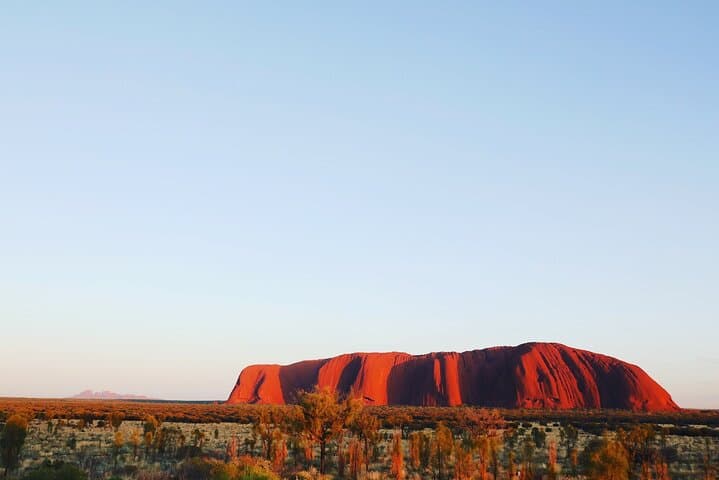
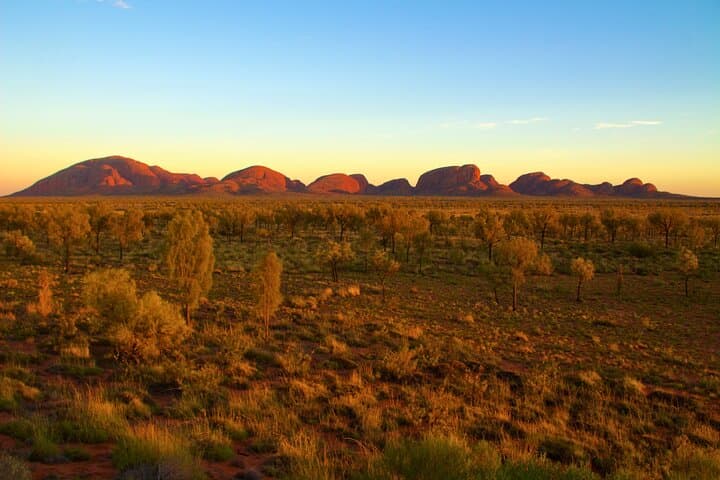
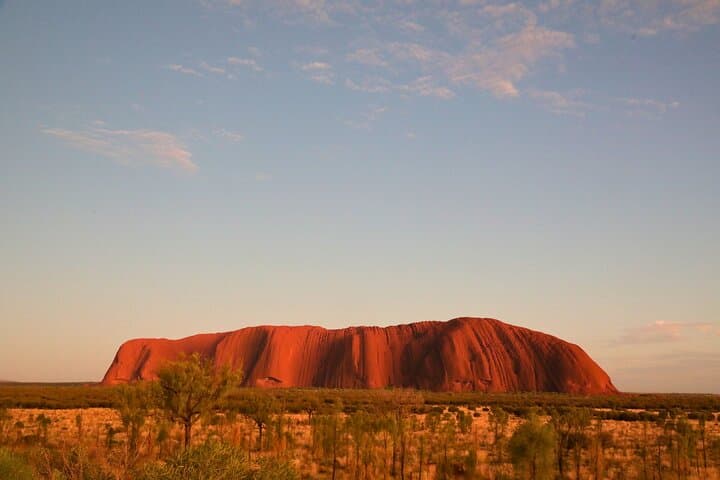
You step off the coach as the outback exhales—red dust lifting in lazy eddies and the country stretching flat to an impossible horizon. Uluru looms, not distant but immediate: a hulking arkose monolith whose skin shifts from copper to deep rust as the sun leans toward the horizon. The group settles onto blankets while a guide lays out canapés and pours a glass of sparkling; the rock seems to drink the light and answer back.
You step off the coach as the outback exhales—red dust lifting in lazy eddies and the country stretching flat to an impossible horizon. Uluru looms, not distant but immediate: a hulking arkose monolith whose skin shifts from copper to deep rust as the sun leans toward the horizon. The group settles onto blankets while a guide lays out canapés and pours a glass of sparkling; the rock seems to drink the light and answer back.
This overnight trip from Alice Springs (or pickup from Ayers Rock Resort if you’re already in Yulara) compresses two essential experiences into about 48 hours: the color drama of Uluru at sunset and sunrise, and the sculpted domes of Kata Tjuta via the Walpa Gorge walk. Uluru is a 348-meter-high sandstone inselberg formed from ancient river sediments; its grooves and grooves are pages of geological history, while Kata Tjuta—made of conglomerate—is a crinkled counterpoint that rewards a slower pace and careful footing.
Culturally, this place is lived-in country. The Anangu people are the traditional owners; interpretive stops introduce Tjukurpa (Law) stories and explain why certain areas are closed or photographed only from particular angles. That cultural context animates the landscape: rocks that speak, dry riverbeds that remember rain. Mount Connor, visible along the route from Alice Springs, offers a geological sidebar—often mistaken for Uluru by first-time travelers.
The itinerary is deliberately relaxed. Day one: a coach run with coffee at Erldunda, free time in Yulara, short base walks around Uluru, and a sunset BBQ with drinks before an overnight at the Outback Pioneer Hotel. Day two: pre-dawn coffee at a sunrise vantage, return for breakfast, then a 1–2 hour Walpa Gorge walk through narrow rock walls and shaded pockets before the trip winds back.
Practicalities matter out here. Temperatures swing widely—summer heat can be dangerous—so wake early and plan your movements around cooler windows. Footing is generally flat at Uluru but the full base is about 10.6 km; Walpa Gorge is a steep-sided, roughly 2–3 km return walk with uneven rock underfoot. Guides carry park fees and handle logistics; entry to Uluru-Kata Tjuta National Park is included.
Respect is non-negotiable: climbing Uluru is discouraged and has been permanently closed; drones are prohibited. Bring sun protection, plenty of water (minimum 2–3 liters per person for daytime walks), and sturdy shoes. The payoff is immediate—raw light, ancient rock, and the rare chance to watch the desert slow down around you overnight with a barbecue and a blazing sunset as a memorable orchestrator.