THE ADVENTURE COLLECTIVE® · Independent discovery and booking for outdoor travel

Explore Yufuin on foot with an English guide: wander Yunotsubo Street, pose in the Floral Village, and savor the calm of Lake Kinrin. Optional Yufuin no Mori train upgrades the trip with panoramic views—book ahead.
Explore Yufuin on foot with an English guide: wander Yunotsubo Street, pose in the Floral Village, and savor the calm of Lake Kinrin. Optional Yufuin no Mori train upgrades the trip with panoramic views—book ahead.
A half-day in Yufuin begins beside a glassy lake where morning mist clings to the surface and steam from nearby onsen dares you to step closer. Your English guide threads toward Yunotsubo Street, weaving between low wooden storefronts and cafés, each doorway offering a new scent—fresh-baked buns, green tea, and soy glaze.
Verified experiences and guided adventures in the surrounding area.
Operated by H.I.S.Co., Ltd. · Yufu, Oita
A half-day in Yufuin begins beside a glassy lake where morning mist clings to the surface and steam from nearby onsen dares you to step closer. Your English guide threads toward Yunotsubo Street, weaving between low wooden storefronts and cafés, each doorway offering a new scent—fresh-baked buns, green tea, and soy glaze.
Yufuin grew from an agricultural village into a celebrated onsen town in the Taisho and early Showa eras; its fortunes were reshaped by visitors seeking the therapeutic hot springs fed by volcanic aquifers beneath Mount Yufu. Geology is visible here: a sweeping bowl of ash and basalt frames the valley, and mineral-rich springs still shape local architecture and cuisine. Cultural life centers on small artisan shops, stained-glass collectors and ryokan kitchens serving seasonal kaiseki.
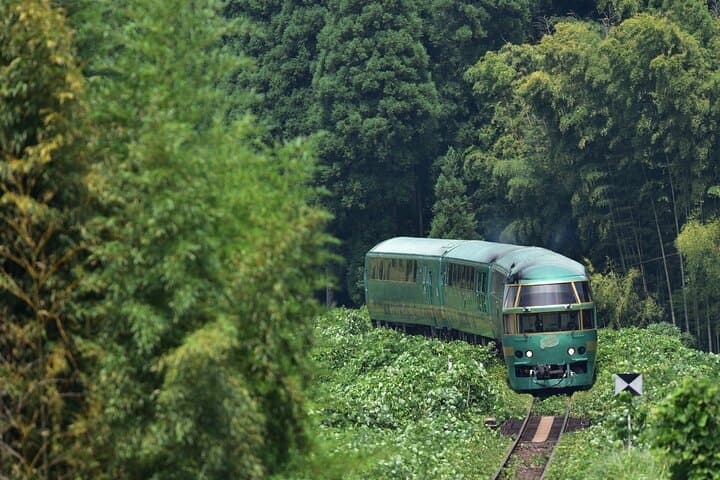
Expect deliberate, easy walking on paved streets and compact paths around Lake Kinrin and the Floral Village—an English-style pocket of gardens and faux-Cotswold façades built for photos and playful exploration. The Yufuin Stained Glass Museum introduces 19th–20th century panels; check admission separately. Optionally, the Yufuin no Mori train elevates the journey—panoramic windows and a wood-lined carriage that turns the ride into part of the experience, subject to advance reservation.
Practical guidance: bring cash for small shops and museum fees, wear supportive walking shoes for uneven cobbles, and time the lake visit for early morning mist or late afternoon light. Plan at least three to four hours to move at a relaxed pace, allow for snack stops, and confirm Yufuin no Mori availability before arrival.
easy.
3–4 hours.
Suitable for casual walkers and families; minimal elevation change but expect multiple short walks.
The guided walking tour lasts about 3–4 hours, covering Yunotsubo Street, Floral Village, Lake Kinrin and the Stained Glass Museum stops.
The train is optional and subject to availability; it requires a separate reservation and may incur additional cost.
Yes—Yufuin’s compact streets are stroller-accessible, though some areas have cobbles or narrow passages.
No—museum admissions and meals are paid on-site; bring cash or card for individual purchases.
Once a rural hot-spring village, Yufuin expanded in the early 20th century as rail access and onsen tourism grew, preserving many traditional wooden inns and artisan trades.
Yufuin manages visitor impact through limited signage and small-scale development; visitors are asked to respect onsen etiquette and avoid littering to protect water quality and local habitats.
H.I.S.Co., Ltd. operates guided outdoor trips and adventures with an emphasis on safety, stewardship, and memorable experiences.
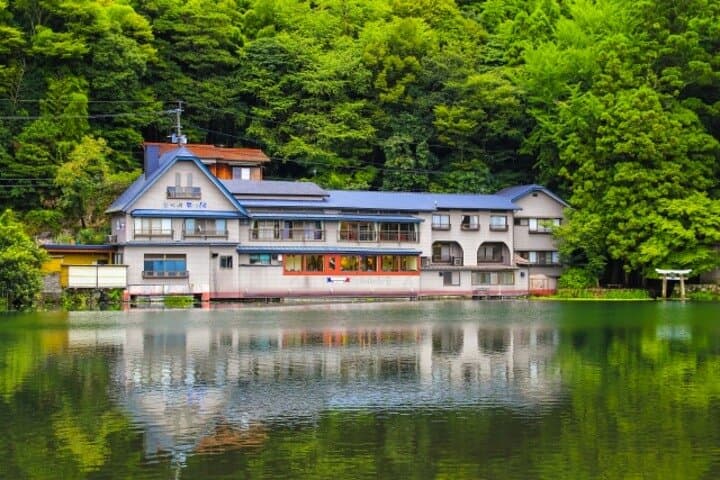
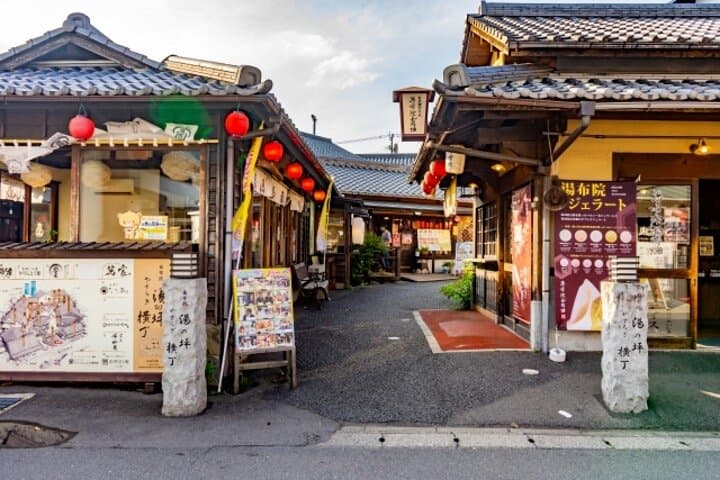
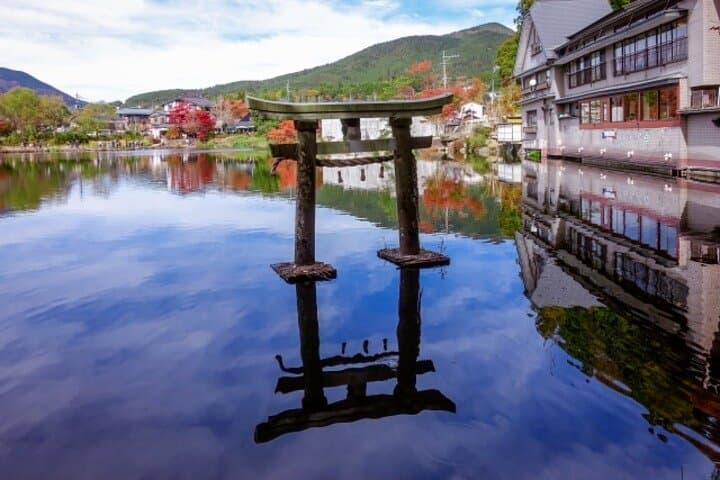
A half-day in Yufuin begins beside a glassy lake where morning mist clings to the surface and steam from nearby onsen dares you to step closer. Your English guide threads toward Yunotsubo Street, weaving between low wooden storefronts and cafés, each doorway offering a new scent—fresh-baked buns, green tea, and soy glaze.
A half-day in Yufuin begins beside a glassy lake where morning mist clings to the surface and steam from nearby onsen dares you to step closer. Your English guide threads toward Yunotsubo Street, weaving between low wooden storefronts and cafés, each doorway offering a new scent—fresh-baked buns, green tea, and soy glaze.
Yufuin grew from an agricultural village into a celebrated onsen town in the Taisho and early Showa eras; its fortunes were reshaped by visitors seeking the therapeutic hot springs fed by volcanic aquifers beneath Mount Yufu. Geology is visible here: a sweeping bowl of ash and basalt frames the valley, and mineral-rich springs still shape local architecture and cuisine. Cultural life centers on small artisan shops, stained-glass collectors and ryokan kitchens serving seasonal kaiseki.
Expect deliberate, easy walking on paved streets and compact paths around Lake Kinrin and the Floral Village—an English-style pocket of gardens and faux-Cotswold façades built for photos and playful exploration. The Yufuin Stained Glass Museum introduces 19th–20th century panels; check admission separately. Optionally, the Yufuin no Mori train elevates the journey—panoramic windows and a wood-lined carriage that turns the ride into part of the experience, subject to advance reservation.
Practical guidance: bring cash for small shops and museum fees, wear supportive walking shoes for uneven cobbles, and time the lake visit for early morning mist or late afternoon light. Plan at least three to four hours to move at a relaxed pace, allow for snack stops, and confirm Yufuin no Mori availability before arrival.