THE ADVENTURE COLLECTIVE® · Independent discovery and booking for outdoor travel

Reserve a timed e-ticket for Yu (Yuyuan) Garden to skip long lines and see one of Shanghai’s finest Ming-era classical gardens. Move deliberately through carved pavilions, rockeries and koi ponds and pair the visit with Huxinting Teahouse next door.
Reserve a timed e-ticket for Yu (Yuyuan) Garden to skip long lines and see one of Shanghai’s finest Ming-era classical gardens. Move deliberately through carved pavilions, rockeries and koi ponds and pair the visit with Huxinting Teahouse next door.
You step off the narrow lane and the city noise pulls back — carved pavilions, polished ponds and the soft clack of tourists’ shoes fill the space instead. Yu Garden's rockeries rise like deliberate miniaturized mountains, water threads through courtyards, and the koi in the ponds glide as if rehearsing patience itself.
Verified experiences and guided adventures in the surrounding area.
Operated by happychinatours · Shanghai, Shanghai
You step off the narrow lane and the city noise pulls back — carved pavilions, polished ponds and the soft clack of tourists’ shoes fill the space instead. Yu Garden's rockeries rise like deliberate miniaturized mountains, water threads through courtyards, and the koi in the ponds glide as if rehearsing patience itself.
Built in the 16th century by Pan Yunduan as a private refuge for his aging parents, Yu Garden survives as one of Shanghai's clearest links to Ming-era garden design: compact axial courtyards, zigzag bridges, and detailed brick and wood carving that reward slow inspection. The garden sits beside the City God Temple and the Huxinting Teahouse, and its adjacent bazaar reflects centuries of trade and urban life in Huangpu District.
Geologically modest but artistically complex, the garden’s use of Suzhou-style rockeries and small water features creates shifting sightlines and intimate views rather than grand panoramas. Culturally, it’s a place where calligraphy, carved couplets and miniature architecture converge — look closely at lintels and balcony railings for makers’ marks.
Practical guidance: this e-ticket guarantees timed entry and saves queuing; arrive in the morning to avoid crowds and to catch softer light for photography. The paths can be slick after rain and some corridors are narrow — comfortable, flat-soled shoes and a light jacket are useful. Access by Metro Line 10 or 14 (Yuyuan Station) or several bus routes. Follow signs, respect roped-off relics, and leave room for locals taking tea in Huxinting. With two hours you can move at a measured pace: study the carvings, watch the koi, and step into the neighboring bazaar for snacks and souvenirs.
easy.
2 hours.
Suitable for most fitness levels; involves walking on flat and uneven stone surfaces for up to a couple of hours.
Yes — this e-ticket reserves a specific entry time and is the easiest way to guarantee admission on your chosen date.
Many garden paths and main areas are wheelchair accessible, but some narrow corridors and steep steps may limit access to specific sections.
Plan about 1.5–2 hours to see the main courtyards, rockeries and ponds at a relaxed pace; add more time for the bazaar and teahouse nearby.
Yes — Metro Line 10 and Line 14 (Yuyuan Station) and numerous bus routes stop close to the garden; the area is highly walkable from nearby stops.
Originally constructed in 1559 by Pan Yunduan as a pious retirement garden for his parents, Yu Garden reflects classical Ming garden principles and has been restored multiple times since.
The garden is maintained by municipal restoration programs; visitors are asked to stay on paths, avoid touching delicate carvings, and not feed wildlife to protect ponds and plants.
happychinatours operates guided outdoor trips and adventures with an emphasis on safety, stewardship, and memorable experiences.
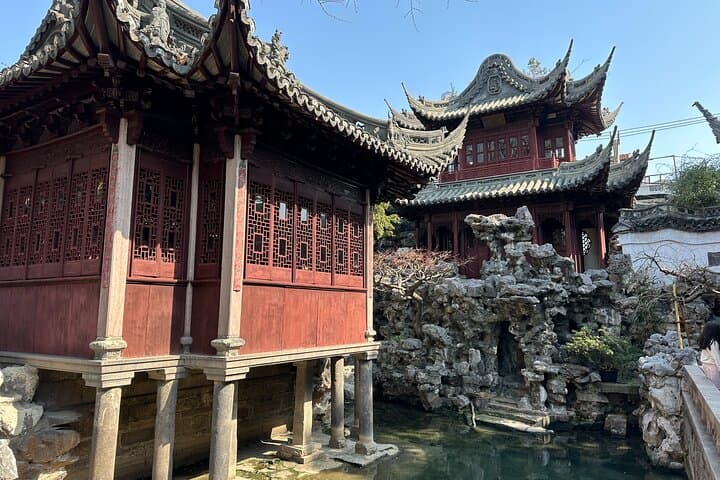
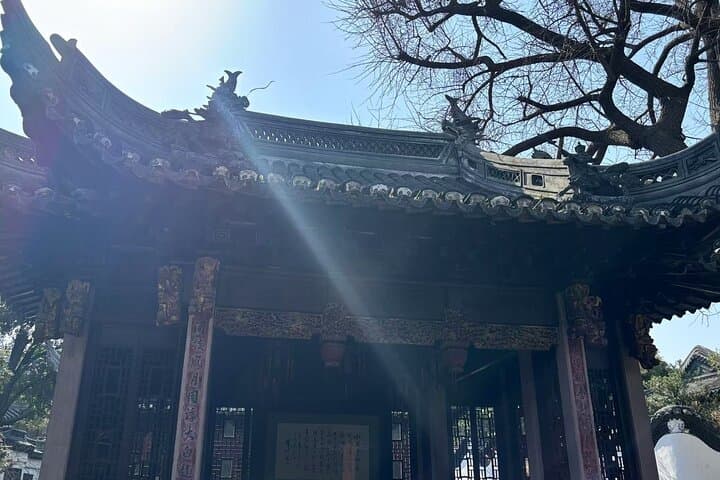
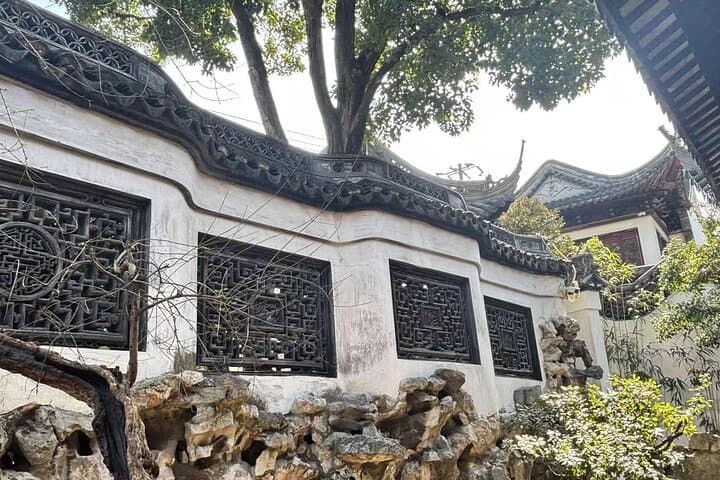
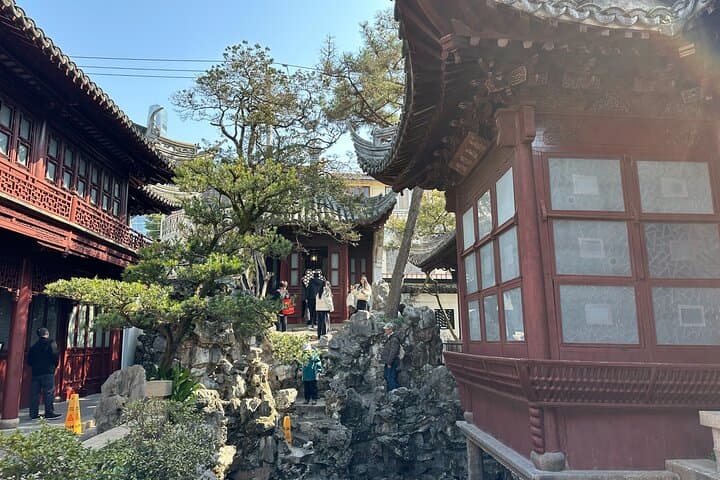
You step off the narrow lane and the city noise pulls back — carved pavilions, polished ponds and the soft clack of tourists’ shoes fill the space instead. Yu Garden's rockeries rise like deliberate miniaturized mountains, water threads through courtyards, and the koi in the ponds glide as if rehearsing patience itself.
You step off the narrow lane and the city noise pulls back — carved pavilions, polished ponds and the soft clack of tourists’ shoes fill the space instead. Yu Garden's rockeries rise like deliberate miniaturized mountains, water threads through courtyards, and the koi in the ponds glide as if rehearsing patience itself.
Built in the 16th century by Pan Yunduan as a private refuge for his aging parents, Yu Garden survives as one of Shanghai's clearest links to Ming-era garden design: compact axial courtyards, zigzag bridges, and detailed brick and wood carving that reward slow inspection. The garden sits beside the City God Temple and the Huxinting Teahouse, and its adjacent bazaar reflects centuries of trade and urban life in Huangpu District.
Geologically modest but artistically complex, the garden’s use of Suzhou-style rockeries and small water features creates shifting sightlines and intimate views rather than grand panoramas. Culturally, it’s a place where calligraphy, carved couplets and miniature architecture converge — look closely at lintels and balcony railings for makers’ marks.
Practical guidance: this e-ticket guarantees timed entry and saves queuing; arrive in the morning to avoid crowds and to catch softer light for photography. The paths can be slick after rain and some corridors are narrow — comfortable, flat-soled shoes and a light jacket are useful. Access by Metro Line 10 or 14 (Yuyuan Station) or several bus routes. Follow signs, respect roped-off relics, and leave room for locals taking tea in Huxinting. With two hours you can move at a measured pace: study the carvings, watch the koi, and step into the neighboring bazaar for snacks and souvenirs.