THE ADVENTURE COLLECTIVE® · Independent discovery and booking for outdoor travel

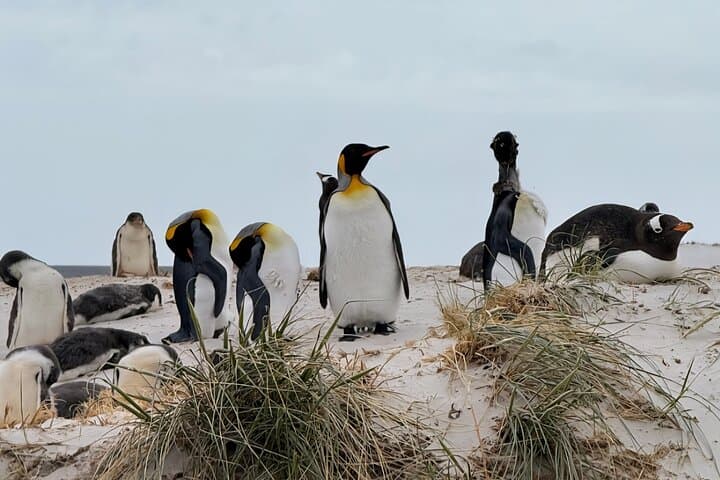
Spend a focused two-hour excursion from Stanley to Yorke Bay to observe a thriving Gentoo penguin colony, with chances to spot King Penguins and dolphins offshore. Short dune walks, a local guide, and a photo stop at the Lady Elizabeth wreck round out the experience.
Spend a focused two-hour excursion from Stanley to Yorke Bay to observe a thriving Gentoo penguin colony, with chances to spot King Penguins and dolphins offshore. Short dune walks, a local guide, and a photo stop at the Lady Elizabeth wreck round out the experience.
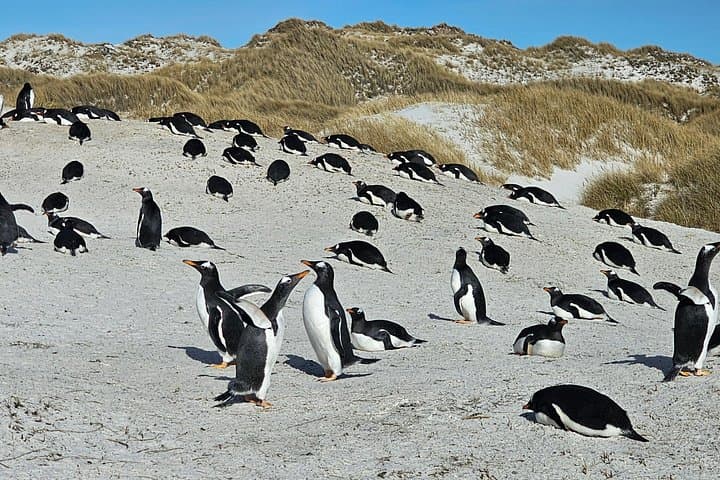
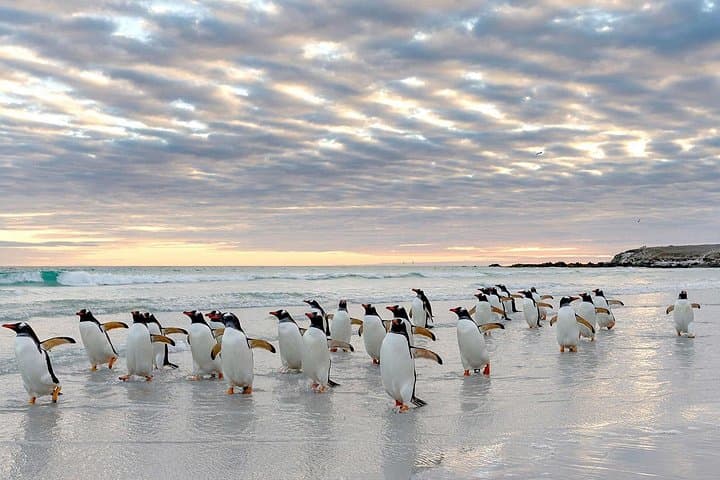
A cold breeze pushes across low sand dunes as the minibus eases out of Stanley and toward Yorke Bay, the ocean opening like a living map. Within 20 minutes the road gives way to a short, gentle walk and then the colony itself: gregarious Gentoo penguins waddling between nests, territorial calls rising above the surf, and the occasional spray of dolphins offshore.
Verified experiences and guided adventures in the surrounding area.
Operated by Rob · Stanley, Falkland Islands
A cold breeze pushes across low sand dunes as the minibus eases out of Stanley and toward Yorke Bay, the ocean opening like a living map. Within 20 minutes the road gives way to a short, gentle walk and then the colony itself: gregarious Gentoo penguins waddling between nests, territorial calls rising above the surf, and the occasional spray of dolphins offshore.
The Falkland Islands sit on cool, storm-buffed seas and a geology shaped by ancient sedimentary beds and glacial scraping; Yorke Bay’s dunes and shingle beaches are products of that slow movement. Maritime history is never far here — the rusting Lady Elizabeth wreck provides a human counterpoint to the island’s wild rhythms and is part of the area’s 20th-century seafaring stories.
Local guides blend natural history and practical stewardship: why penguins pick certain nesting spots, how King Penguins turn up on rare occasions, and what currents bring food to the shelf. Cultural life in Stanley is small-scale and maritime; visits usually begin and end at the busy cruise pier.
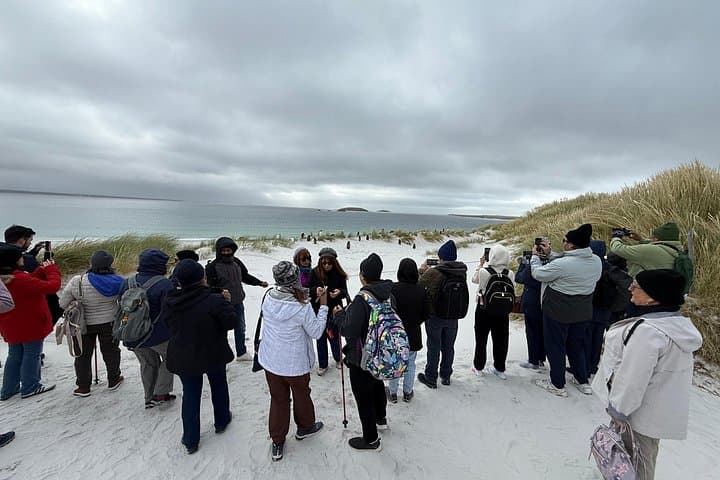
Practical notes: plan for wind and rapid weather shifts, bring a zoom lens and layered waterproofs, and expect roughly a two-hour outing with about 60 minutes at the colony. Respect roped paths and guide instructions — penguins are curious but vulnerable. This small-group tour offers close observation without disturbance, making it a focused wildlife encounter that balances access with conservation.
moderate.
2–2.5 hours.
Moderate fitness: able to stand and walk over uneven sand for 30–60 minutes and climb short dune slopes.
Guides maintain a respectful distance; you’ll usually observe from several meters away and follow roped routes to avoid disturbing nesting birds.
Yes for most families; the walk is short but uneven, so children should be supervised and older travelers should be comfortable on sand and short slopes.
Southern hemisphere spring and summer (roughly October–March) align with nesting and chick-rearing, offering the most activity, though weather is variable.
Basic facilities are generally available in Stanley and at the pier; at the beach there may be limited or no amenities—plan accordingly.
Yorke Bay and nearby coves have long been part of local maritime routes; the Lady Elizabeth wreck is a visible relic of 20th‑century seafaring around the islands.
Visitors are encouraged to stay on marked paths, never feed wildlife, and follow guide directions to minimize disturbance to nesting penguins and their habitat.
Rob operates guided outdoor trips and adventures with an emphasis on safety, stewardship, and memorable experiences.
A cold breeze pushes across low sand dunes as the minibus eases out of Stanley and toward Yorke Bay, the ocean opening like a living map. Within 20 minutes the road gives way to a short, gentle walk and then the colony itself: gregarious Gentoo penguins waddling between nests, territorial calls rising above the surf, and the occasional spray of dolphins offshore.
A cold breeze pushes across low sand dunes as the minibus eases out of Stanley and toward Yorke Bay, the ocean opening like a living map. Within 20 minutes the road gives way to a short, gentle walk and then the colony itself: gregarious Gentoo penguins waddling between nests, territorial calls rising above the surf, and the occasional spray of dolphins offshore.
The Falkland Islands sit on cool, storm-buffed seas and a geology shaped by ancient sedimentary beds and glacial scraping; Yorke Bay’s dunes and shingle beaches are products of that slow movement. Maritime history is never far here — the rusting Lady Elizabeth wreck provides a human counterpoint to the island’s wild rhythms and is part of the area’s 20th-century seafaring stories.
Local guides blend natural history and practical stewardship: why penguins pick certain nesting spots, how King Penguins turn up on rare occasions, and what currents bring food to the shelf. Cultural life in Stanley is small-scale and maritime; visits usually begin and end at the busy cruise pier.
Practical notes: plan for wind and rapid weather shifts, bring a zoom lens and layered waterproofs, and expect roughly a two-hour outing with about 60 minutes at the colony. Respect roped paths and guide instructions — penguins are curious but vulnerable. This small-group tour offers close observation without disturbance, making it a focused wildlife encounter that balances access with conservation.