THE ADVENTURE COLLECTIVE® · Independent discovery and booking for outdoor travel

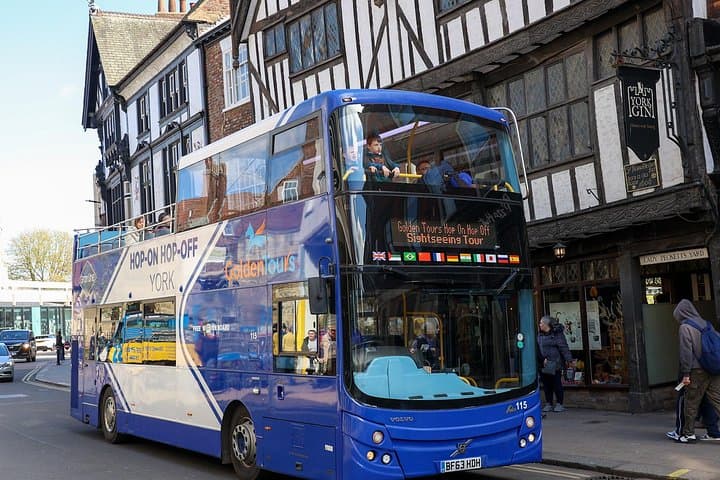
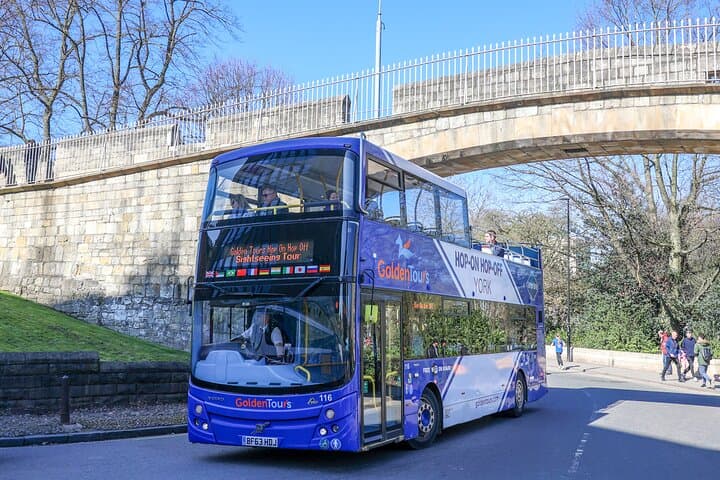
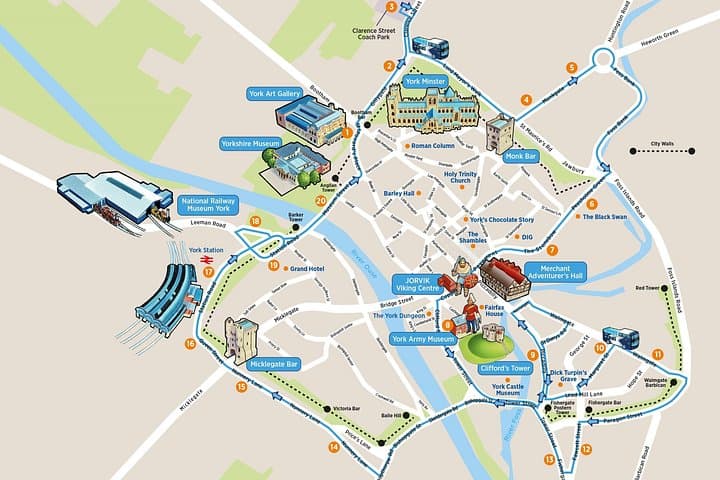
See York’s key sights without the logistics: an open-top hop-on hop-off circuit that links York Minster, Clifford’s Tower and the riverside. Ideal for first-time visitors who want flexible sightseeing and local narration.
See York’s key sights without the logistics: an open-top hop-on hop-off circuit that links York Minster, Clifford’s Tower and the riverside. Ideal for first-time visitors who want flexible sightseeing and local narration.
The bus rounds the corner by the River Ouse and the city exhales: stone and water arrange themselves into a route that guides you through Roman streets, Viking lanes and Tudor facades.
Verified experiences and guided adventures in the surrounding area.
Operated by Golden Tours Gray Line London · York, North Yorkshire
The bus rounds the corner by the River Ouse and the city exhales: stone and water arrange themselves into a route that guides you through Roman streets, Viking lanes and Tudor facades.
From the exposed height of the open top you watch spires and gatehouses rise and fall—York Minster’s masonry catching light, Micklegate Bar keeping watch over the old processional route, Clifford’s Tower standing like a Norman storybook. The route threads around the medieval city walls and crosses the river where barges slide like quiet punctuation.
York began as the Roman fortress Eboracum, later became Viking Jorvik and then a medieval trading hub; those eras are visible in the street plan, timber-framed shops and the stone of the Minster, largely worked from regional limestone quarried nearby. Geologically the city sits on low-lying floodplain beside the Ouse, which shapes both views and practical plans for visitors.
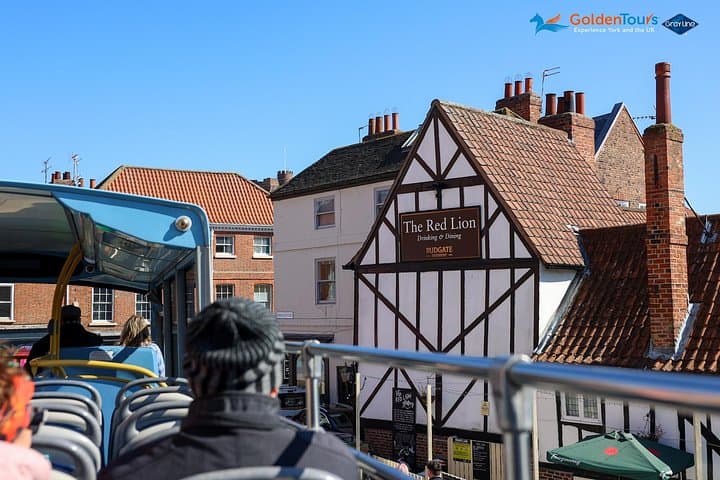
Culturally the tour is a compact primer: guides point out civic rituals, market history and the living neighborhoods between big attractions. Expect narration, short hops to museums and markets, and time to walk narrow lanes that the bus can’t cover.
Practical guidance: choose a 24- or 48-hour ticket to match your pace; a full circuit takes about an hour but hop-on stops let you craft half-day walking loops. Take a jacket for wind on the upper deck, plan your key stops (Minster, Jorvik, Shambles), and allow extra time for narrow streets and seasonal crowds. Accessibility is supported, and buses run frequently in summer—buy ahead for peak days.
easy.
1–48 hours.
Light: able to stand and walk short distances between stops; no special fitness required
A full loop takes about one hour without stops; frequency varies seasonally with buses every 15–20 minutes in summer.
Yes—tickets allow unlimited hops during the 24- or 48-hour ticket window from first boarding.
Yes—the service notes wheelchair and stroller access and provides step-free boarding options on most vehicles; contact the operator ahead for specific assistance.
First buses depart from York Railway Station with last loop buses starting at Exhibition Square; check seasonal schedules for exact times.
York began as Roman Eboracum, became Viking-era Jorvik and later a major medieval wool and trading center—those layers remain in its walls, gates and street plan.
City authorities manage flood defenses along the Ouse and conservation programs protect historic stonework; visitors are encouraged to stick to paths and support local conservation through mindful tourism.
Golden Tours Gray Line London operates guided outdoor trips and adventures with an emphasis on safety, stewardship, and memorable experiences.
The bus rounds the corner by the River Ouse and the city exhales: stone and water arrange themselves into a route that guides you through Roman streets, Viking lanes and Tudor facades.
The bus rounds the corner by the River Ouse and the city exhales: stone and water arrange themselves into a route that guides you through Roman streets, Viking lanes and Tudor facades.
From the exposed height of the open top you watch spires and gatehouses rise and fall—York Minster’s masonry catching light, Micklegate Bar keeping watch over the old processional route, Clifford’s Tower standing like a Norman storybook. The route threads around the medieval city walls and crosses the river where barges slide like quiet punctuation.
York began as the Roman fortress Eboracum, later became Viking Jorvik and then a medieval trading hub; those eras are visible in the street plan, timber-framed shops and the stone of the Minster, largely worked from regional limestone quarried nearby. Geologically the city sits on low-lying floodplain beside the Ouse, which shapes both views and practical plans for visitors.
Culturally the tour is a compact primer: guides point out civic rituals, market history and the living neighborhoods between big attractions. Expect narration, short hops to museums and markets, and time to walk narrow lanes that the bus can’t cover.
Practical guidance: choose a 24- or 48-hour ticket to match your pace; a full circuit takes about an hour but hop-on stops let you craft half-day walking loops. Take a jacket for wind on the upper deck, plan your key stops (Minster, Jorvik, Shambles), and allow extra time for narrow streets and seasonal crowds. Accessibility is supported, and buses run frequently in summer—buy ahead for peak days.