THE ADVENTURE COLLECTIVE® · Independent discovery and booking for outdoor travel

Walk the early-morning aisles of Yokohama’s fish market with a licensed guide and learn how to identify sushi-grade fish, market etiquette, and buying tips. Two hours of hands-on insight, fresh-tuna tastings, and market-side restaurant recommendations.
Walk the early-morning aisles of Yokohama’s fish market with a licensed guide and learn how to identify sushi-grade fish, market etiquette, and buying tips. Two hours of hands-on insight, fresh-tuna tastings, and market-side restaurant recommendations.
You step out of JR Yokohama Station’s north gate before dawn and the air tastes of salt and cold pavement. The guide moves with practiced economy: a nod, a quick explanation, then the group threads toward the wholesale stalls where the morning catch still glints under hanging lamps. Vendors call in clipped phrases; iced blocks and slabs of tuna sit like sleeping machines waiting to be opened.
Verified experiences and guided adventures in the surrounding area.
Operated by AMC Products & Tours · Yokohama, Kanagawa
You step out of JR Yokohama Station’s north gate before dawn and the air tastes of salt and cold pavement. The guide moves with practiced economy: a nod, a quick explanation, then the group threads toward the wholesale stalls where the morning catch still glints under hanging lamps. Vendors call in clipped phrases; iced blocks and slabs of tuna sit like sleeping machines waiting to be opened.
This market sits at the meeting point of Kanagawa’s coastal fisheries and greater Tokyo’s massive demand. Yokohama’s port expanded after the mid-19th century openings to international trade, shaping a commercial culture that prized freshness and preservation techniques long before freezing became common. On this walk you’ll learn regional names—Hokkaido's cold-water species versus southern Kyushu catches—and the old methods used to keep fish bright for sushi.
Expect close-up lessons on identifying sushi-grade cuts, tips on how fishermen landed and handled fish, and market etiquette—how to ask for a cut in Japanese and where to find the small standing sushi counters that serve morning-only plates.
Practically: wear slip-resistant shoes and layers for the cool, wet market floor; bring cash for small purchases; and be ready to see raw fish, eyes and bones. The tour is about 120 minutes with roughly 15 minutes of walking inside the market. If you want to linger, the guide can point you to in-market restaurants that plate fresh tuna. It’s a short, sensory-heavy immersion that leaves you better equipped to shop, order, and appreciate the sea’s role in Japanese cuisine.
easy.
2 hours.
Light walking and standing for about 90 minutes; suitable for most reasonably mobile travelers
No; tasting opportunities such as free tuna samples may be offered, but restaurant meals and purchases are paid separately.
Meet at the north gate of JR East Yokohama Station; the guided experience is approximately 120 minutes and returns to the station area.
Yes—vendors sell fillets and blocks, but bring a cooler or buy vacuum-packed sections; small purchases usually require cash.
The market involves wet, uneven surfaces and stairs in places; those with mobility constraints should check with the operator in advance.
Yokohama’s market culture grew alongside the port’s expansion after the 1859 opening to foreign trade, linking local fishermen across Kanagawa to urban demand.
Buy from vendors who can tell you the catch origin and prefer sustainably labeled species; avoid single-use plastics when possible and take food waste directives from local vendors seriously.
AMC Products & Tours operates guided outdoor trips and adventures with an emphasis on safety, stewardship, and memorable experiences.
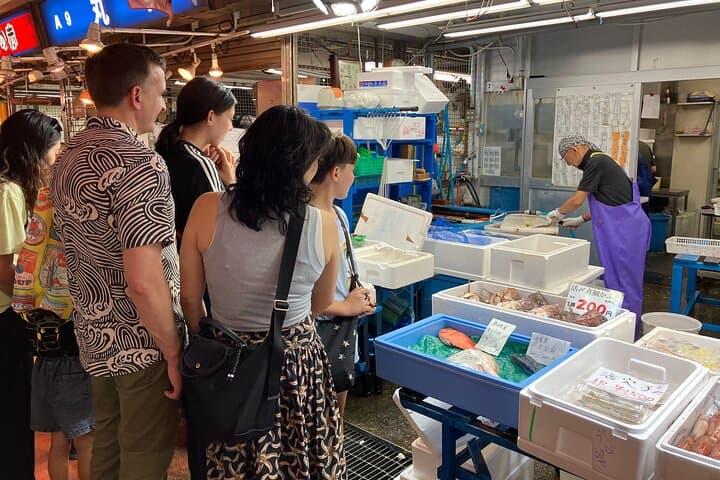


You step out of JR Yokohama Station’s north gate before dawn and the air tastes of salt and cold pavement. The guide moves with practiced economy: a nod, a quick explanation, then the group threads toward the wholesale stalls where the morning catch still glints under hanging lamps. Vendors call in clipped phrases; iced blocks and slabs of tuna sit like sleeping machines waiting to be opened.
You step out of JR Yokohama Station’s north gate before dawn and the air tastes of salt and cold pavement. The guide moves with practiced economy: a nod, a quick explanation, then the group threads toward the wholesale stalls where the morning catch still glints under hanging lamps. Vendors call in clipped phrases; iced blocks and slabs of tuna sit like sleeping machines waiting to be opened.
This market sits at the meeting point of Kanagawa’s coastal fisheries and greater Tokyo’s massive demand. Yokohama’s port expanded after the mid-19th century openings to international trade, shaping a commercial culture that prized freshness and preservation techniques long before freezing became common. On this walk you’ll learn regional names—Hokkaido's cold-water species versus southern Kyushu catches—and the old methods used to keep fish bright for sushi.
Expect close-up lessons on identifying sushi-grade cuts, tips on how fishermen landed and handled fish, and market etiquette—how to ask for a cut in Japanese and where to find the small standing sushi counters that serve morning-only plates.
Practically: wear slip-resistant shoes and layers for the cool, wet market floor; bring cash for small purchases; and be ready to see raw fish, eyes and bones. The tour is about 120 minutes with roughly 15 minutes of walking inside the market. If you want to linger, the guide can point you to in-market restaurants that plate fresh tuna. It’s a short, sensory-heavy immersion that leaves you better equipped to shop, order, and appreciate the sea’s role in Japanese cuisine.