THE ADVENTURE COLLECTIVE® · Independent discovery and booking for outdoor travel

Watch Bromo’s sunrise from Penanjakan, then hike Ijen at night to see its eerie blue fire. This three-day tour from Yogyakarta covers jeep rides, crater walks and local cultural encounters with guides and entrance fees included.
Watch Bromo’s sunrise from Penanjakan, then hike Ijen at night to see its eerie blue fire. This three-day tour from Yogyakarta covers jeep rides, crater walks and local cultural encounters with guides and entrance fees included.
Before first light a convoy of 4x4s threads along lunar sand, engines low and headlights cutting through volcanic mist. Penanjakan’s ridge opens like a curtain; the sun lifts over the Tengger caldera and Bromo’s smoking throat answers with a breath of steam. Later, after a coastal transfer and a night near Banyuwangi, you’ll hike with a guide up to Kawah Ijen — where the crater’s famous blue fire flickers at the crater floor and turquoise acid lakes glare back at the rim.
Verified experiences and guided adventures in the surrounding area.
Operated by Borobudursunrise.com · Yogyakarta, Special Region of Yogyakarta
Before first light a convoy of 4x4s threads along lunar sand, engines low and headlights cutting through volcanic mist. Penanjakan’s ridge opens like a curtain; the sun lifts over the Tengger caldera and Bromo’s smoking throat answers with a breath of steam. Later, after a coastal transfer and a night near Banyuwangi, you’ll hike with a guide up to Kawah Ijen — where the crater’s famous blue fire flickers at the crater floor and turquoise acid lakes glare back at the rim.
These two sites speak different geologies: Bromo is part of the broad Tengger caldera, shaped by collapse and long ash plains; Ijen is a steep stratovolcano with an active hydrothermal system, known for its sulfur mining. The Tenggerese people maintain Hindu temples on the caldera floor and a resilient pastoral culture; in Banyuwangi and Ketapang the mining communities and port life reflect a working landscape where nature and livelihood intersect.
Expect early mornings, dusty jeep rides across sandy seas, short crater climbs and a moderately strenuous two-hour ascent to Ijen’s rim. Guides handle permits and gas masks are provided for sulfur fumes, but bring a good headlamp and sturdy boots. Timing matters — choose dry-season windows for clearer sunrises and fewer slippery steps. Hydrate, layer for cold dawns and plan for vehicle transfers between east- and central-Java terrain. With preparation, this three-day itinerary pairs cinematic sunrise panoramas with close-up volcanic drama — a compact, hands-on way to see two of Java’s most compelling volcanic landscapes.
moderate.
3 days (approx.).
Good base fitness with ability to manage 2–3 hours of uphill hiking and short ascents on uneven terrain.
Moderate fitness is sufficient; expect short steep sections and about two hours of uphill hiking to Ijen’s rim and stairs at Bromo—regular walkers should manage with breaks.
Blue fire visibility depends on volcanic activity and weather; the phenomenon is best seen at night/early morning and can be obscured by rain or low visibility.
Yes—this tour includes gas masks for Ijen, but consider bringing your own respirator if you have respiratory sensitivities.
Yes—this private tour arranges pickup from Yogyakarta; specific pickup points are collected during booking.
The Tengger caldera is tied to the Tenggerese Hindu communities who maintain temple rituals on the caldera floor; Ijen has a long history of manual sulfur mining that still supports local economies.
Both areas are sensitive: stick to marked trails, minimize plastic and follow guides’ instructions—sulfur mining and tourist traffic stress fragile crater ecosystems.
Borobudursunrise.com operates guided outdoor trips and adventures with an emphasis on safety, stewardship, and memorable experiences.
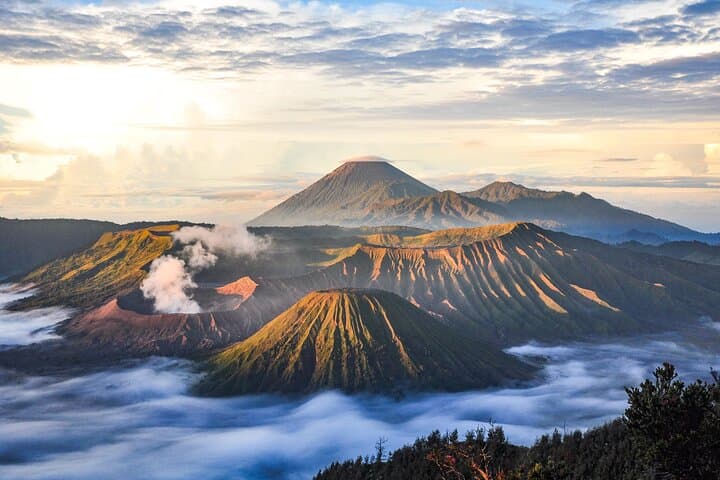
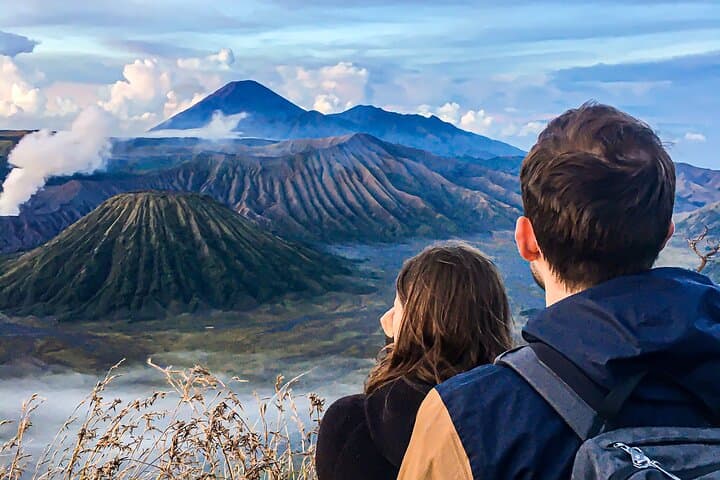
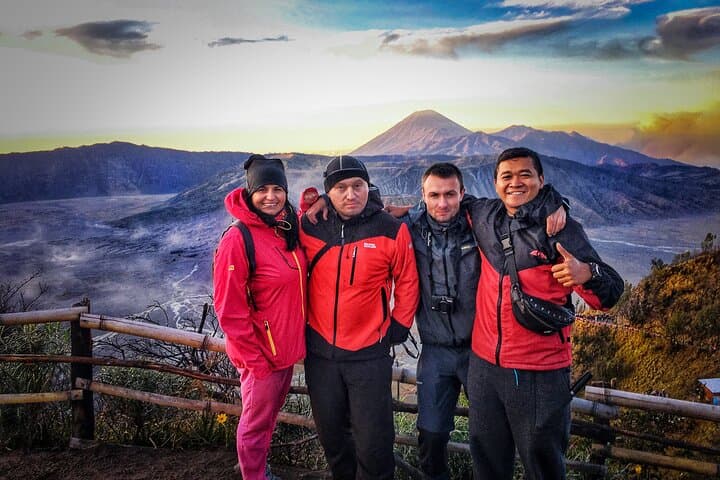
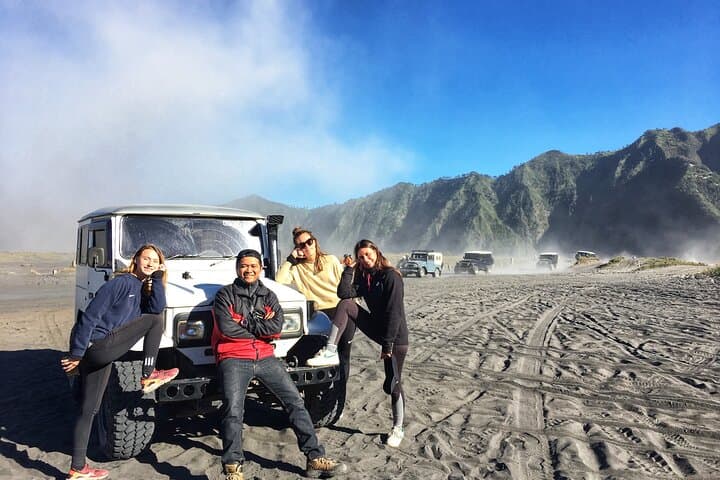
Before first light a convoy of 4x4s threads along lunar sand, engines low and headlights cutting through volcanic mist. Penanjakan’s ridge opens like a curtain; the sun lifts over the Tengger caldera and Bromo’s smoking throat answers with a breath of steam. Later, after a coastal transfer and a night near Banyuwangi, you’ll hike with a guide up to Kawah Ijen — where the crater’s famous blue fire flickers at the crater floor and turquoise acid lakes glare back at the rim.
Before first light a convoy of 4x4s threads along lunar sand, engines low and headlights cutting through volcanic mist. Penanjakan’s ridge opens like a curtain; the sun lifts over the Tengger caldera and Bromo’s smoking throat answers with a breath of steam. Later, after a coastal transfer and a night near Banyuwangi, you’ll hike with a guide up to Kawah Ijen — where the crater’s famous blue fire flickers at the crater floor and turquoise acid lakes glare back at the rim.
These two sites speak different geologies: Bromo is part of the broad Tengger caldera, shaped by collapse and long ash plains; Ijen is a steep stratovolcano with an active hydrothermal system, known for its sulfur mining. The Tenggerese people maintain Hindu temples on the caldera floor and a resilient pastoral culture; in Banyuwangi and Ketapang the mining communities and port life reflect a working landscape where nature and livelihood intersect.
Expect early mornings, dusty jeep rides across sandy seas, short crater climbs and a moderately strenuous two-hour ascent to Ijen’s rim. Guides handle permits and gas masks are provided for sulfur fumes, but bring a good headlamp and sturdy boots. Timing matters — choose dry-season windows for clearer sunrises and fewer slippery steps. Hydrate, layer for cold dawns and plan for vehicle transfers between east- and central-Java terrain. With preparation, this three-day itinerary pairs cinematic sunrise panoramas with close-up volcanic drama — a compact, hands-on way to see two of Java’s most compelling volcanic landscapes.