THE ADVENTURE COLLECTIVE® · Independent discovery and booking for outdoor travel

Three days of dramatic volcanic landscapes: Sewu Waterfall’s cliffed bowl, Mount Bromo’s lunar caldera at sunrise, and Ijen’s night-time blue fire. This multi-day trek combines steep stair climbs, pre-dawn ascents, and long transfers—ideal for fit travelers who want spectacle and real geological grit.
Three days of dramatic volcanic landscapes: Sewu Waterfall’s cliffed bowl, Mount Bromo’s lunar caldera at sunrise, and Ijen’s night-time blue fire. This multi-day trek combines steep stair climbs, pre-dawn ascents, and long transfers—ideal for fit travelers who want spectacle and real geological grit.
You step off a late-night train in Malang and feel the air change—tropical warmth below giving way to a sharp, cool wind as the road climbs toward volcanic light. On day one the route slips through coffee farms to Sewu Waterfall, where a steep amphitheater of basalt drops into a mist-filled bowl and the trail asks for careful footing and steady lungs.
Verified experiences and guided adventures in the surrounding area.
Operated by Ijenlandscape · Malang, East Java
You step off a late-night train in Malang and feel the air change—tropical warmth below giving way to a sharp, cool wind as the road climbs toward volcanic light. On day one the route slips through coffee farms to Sewu Waterfall, where a steep amphitheater of basalt drops into a mist-filled bowl and the trail asks for careful footing and steady lungs.
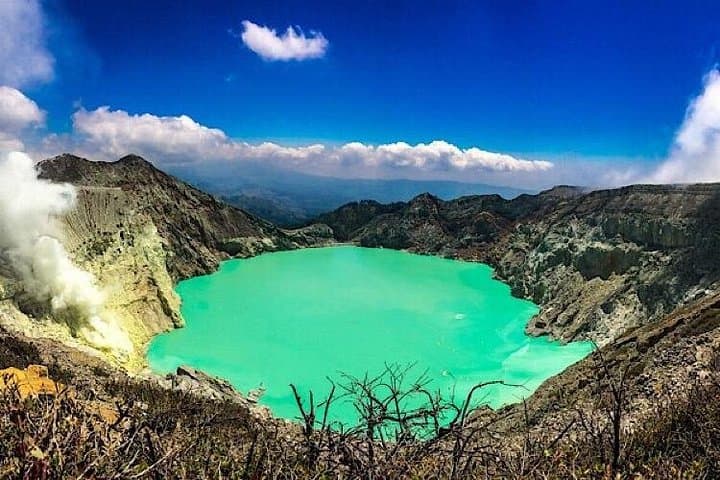
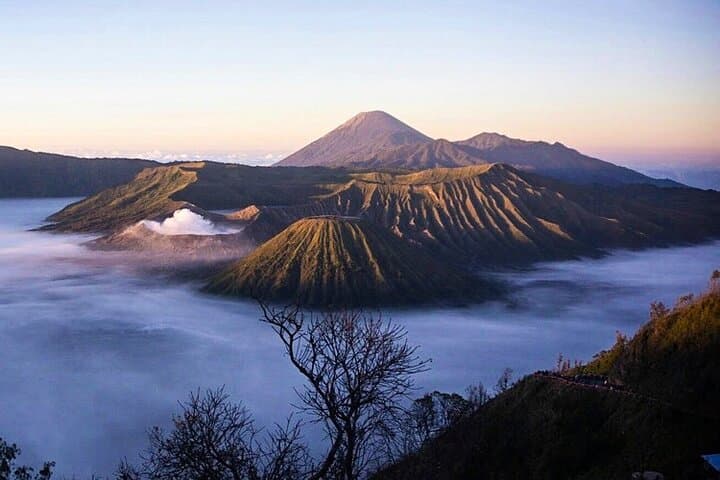
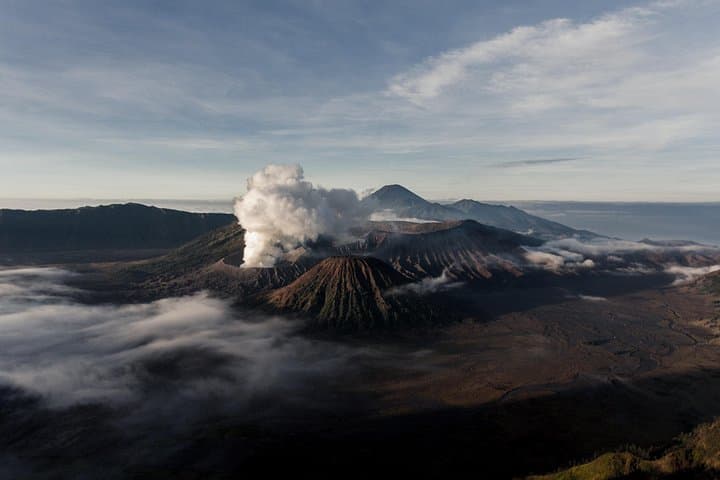
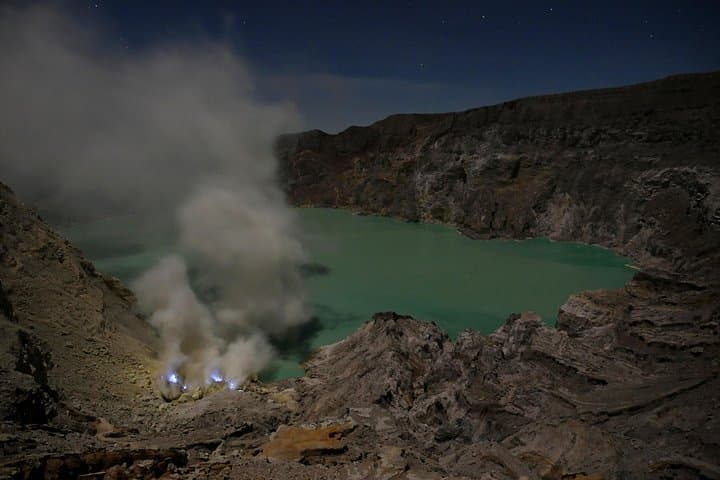
Geology and culture converge here: Mount Bromo’s 2,329 m crater sits inside a vast caldera of sand and ash, a living landscape shaped by repeated eruptions. Ijen, higher at about 2,443 m, is famous for its turquoise acid lake and the blue fire—sulfur gases that ignite under specific conditions at night. The Tenggerese people keep Hindu shrines and rituals around Bromo; miners at Ijen still extract sulfur by hand, a stark human story set against dramatic geology.
Expect narrow, rocky trails, a 250-step climb to Bromo’s rim, and a roughly 3 km uphill trek to Ijen’s crater rim in pre-dawn darkness. Temperatures swing from warm valleys to near-freezing at sunrise. Local guides supply gas masks and lights, but personal prep matters: headlamp with fresh batteries, layered clothing, and good boots change the day.
Plan for early starts—3:00 AM departures for Bromo sunrise and midnight ascents for Ijen’s blue fire—plus long transfers by private vehicle and a ferry crossing to Bali. Hydrate, budget extra time for photo stops, and follow guides closely near sulfur vents and cliff edges: the reward is rare light and landscapes that push you to keep walking.
challenging.
3 days.
You should have good cardiovascular fitness and leg strength for steep stair climbs, 3 km uphill hikes at night, and multi-hour transfers.
The trek from the car park to the Ijen rim is about 3 km uphill and typically takes 60–90 minutes depending on fitness and pace; allow extra time for the descent to the sulfur mining ledge where blue fire appears.
No—blue fire depends on sulfur gas flaring and clear conditions; it’s most visible on cold, windless nights and during dry season, so sightings are likely but not guaranteed.
Standard gas masks are usually provided by guides, but carrying an N95 or better mask offers additional protection against fine sulfur particulates and is recommended for sensitive travelers.
Travelers should have at least moderate to good fitness; steep stair climbs at Bromo and night ascents at Ijen demand endurance—those with serious cardiac or spinal issues are advised not to participate.
The Tenggerese people maintain Hindu rituals around Bromo and worship at Pura Luhur Poten in the caldera; sulfur mining at Ijen has operated for generations and reflects both local labor and geological risk.
These caldera and crater environments are fragile—stay on marked paths, pack out waste, and avoid disturbing mining operations or cultural sites to reduce impact.
Ijenlandscape operates guided outdoor trips and adventures with an emphasis on safety, stewardship, and memorable experiences.
You step off a late-night train in Malang and feel the air change—tropical warmth below giving way to a sharp, cool wind as the road climbs toward volcanic light. On day one the route slips through coffee farms to Sewu Waterfall, where a steep amphitheater of basalt drops into a mist-filled bowl and the trail asks for careful footing and steady lungs.
You step off a late-night train in Malang and feel the air change—tropical warmth below giving way to a sharp, cool wind as the road climbs toward volcanic light. On day one the route slips through coffee farms to Sewu Waterfall, where a steep amphitheater of basalt drops into a mist-filled bowl and the trail asks for careful footing and steady lungs.
Geology and culture converge here: Mount Bromo’s 2,329 m crater sits inside a vast caldera of sand and ash, a living landscape shaped by repeated eruptions. Ijen, higher at about 2,443 m, is famous for its turquoise acid lake and the blue fire—sulfur gases that ignite under specific conditions at night. The Tenggerese people keep Hindu shrines and rituals around Bromo; miners at Ijen still extract sulfur by hand, a stark human story set against dramatic geology.
Expect narrow, rocky trails, a 250-step climb to Bromo’s rim, and a roughly 3 km uphill trek to Ijen’s crater rim in pre-dawn darkness. Temperatures swing from warm valleys to near-freezing at sunrise. Local guides supply gas masks and lights, but personal prep matters: headlamp with fresh batteries, layered clothing, and good boots change the day.
Plan for early starts—3:00 AM departures for Bromo sunrise and midnight ascents for Ijen’s blue fire—plus long transfers by private vehicle and a ferry crossing to Bali. Hydrate, budget extra time for photo stops, and follow guides closely near sulfur vents and cliff edges: the reward is rare light and landscapes that push you to keep walking.