THE ADVENTURE COLLECTIVE® · Independent discovery and booking for outdoor travel

See Borobudur at sunrise, explore Prambanan's temple courts, then head to Merapi's lower slopes in a 4x4—all in one private day from Yogyakarta with lunch included. This tour compresses Java's cultural and volcanic highlights into a single, well-paced itinerary.
See Borobudur at sunrise, explore Prambanan's temple courts, then head to Merapi's lower slopes in a 4x4—all in one private day from Yogyakarta with lunch included. This tour compresses Java's cultural and volcanic highlights into a single, well-paced itinerary.
You arrive before sunrise at Borobudur, the early light sharpening stupas into silhouette while rice terraces around you breathe mist toward the volcanic ridge. By midday, the temple spires of Prambanan stand like carved hands against a wide sky, and later the slope of Merapi pushes its presence into the horizon, steam and rock reminding you the island is alive.
Verified experiences and guided adventures in the surrounding area.
Operated by Tripyourtour · Yogyakarta, Special Region of Yogyakarta
You arrive before sunrise at Borobudur, the early light sharpening stupas into silhouette while rice terraces around you breathe mist toward the volcanic ridge. By midday, the temple spires of Prambanan stand like carved hands against a wide sky, and later the slope of Merapi pushes its presence into the horizon, steam and rock reminding you the island is alive.
Borobudur and Prambanan are 9th-century masterpieces that map Java's religious shifts—Borobudur's spiraling path of reliefs is Buddhist iconography in stone; Prambanan is a cluster of towering Hindu shrines dedicated to Shiva, Vishnu and Brahma. Mount Merapi is an active stratovolcano whose periodic eruptions have shaped local settlement patterns and created fertile plains below.
Culturally, this circuit reveals Java's layered history: ancient empires, royal courts in Yogyakarta, and contemporary villages that maintain craft traditions and rice farming. Geologically, you move from river valleys and volcanic ash soils to lava-flow scars higher on Merapi's flank. Locals read wind and cloud for weather; on Merapi the land seems to watch travelers back.
Practical guidance: expect a full day (10–12 hours) with brief walks at each site—stone steps and uneven ground at temples, dusty tracks at Merapi. Wear sturdy walking shoes, sun protection, and bring a refillable water bottle. Midday crowds are largest at Borobudur; dawn or late afternoon light is best for photos. Ask your private guide about small adjacent sites like Pawon and Mendut for quieter viewpoints, and keep to marked paths—these places are fragile and managed for preservation.
easy.
10–12 hours.
Suitable for travelers in average fitness; involves multiple short walks and some stairs but no technical climbing.
Yes; this private tour includes admission to Borobudur, Prambanan and the Merapi area noted in the itinerary.
Expect 30–90 minutes of on-foot exploration at each temple with stairs, plus short walks around Merapi's lower slopes; the tour is classified as easy.
Round-trip private transport from Yogyakarta hotels is included—confirm your pickup point when booking.
The tour visits the lower slopes and accessible viewpoints; operators monitor volcano activity and will adjust or cancel if levels are unsafe.
Borobudur and Prambanan date to the 8th–9th centuries and reflect Central Java's Buddhist and Hindu kingdoms; Yogyakarta later became a major cultural and royal center.
Visitor pressure and erosion threaten carved reliefs and paths; stick to designated routes, avoid touching carvings, and support local guides and community-run conservation efforts.
Tripyourtour operates guided outdoor trips and adventures with an emphasis on safety, stewardship, and memorable experiences.
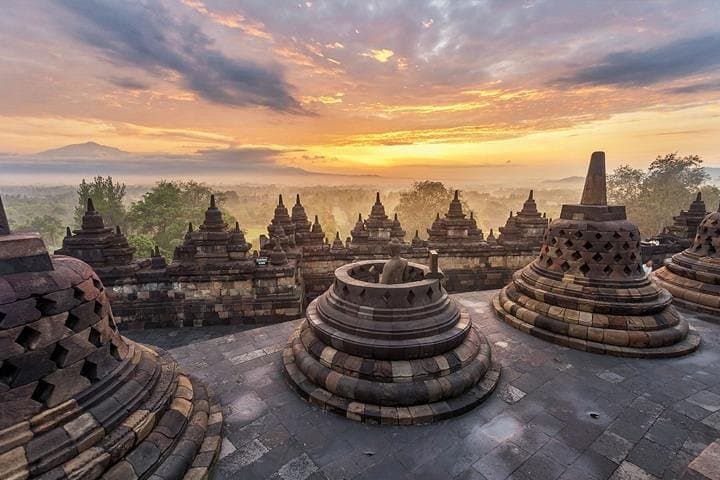
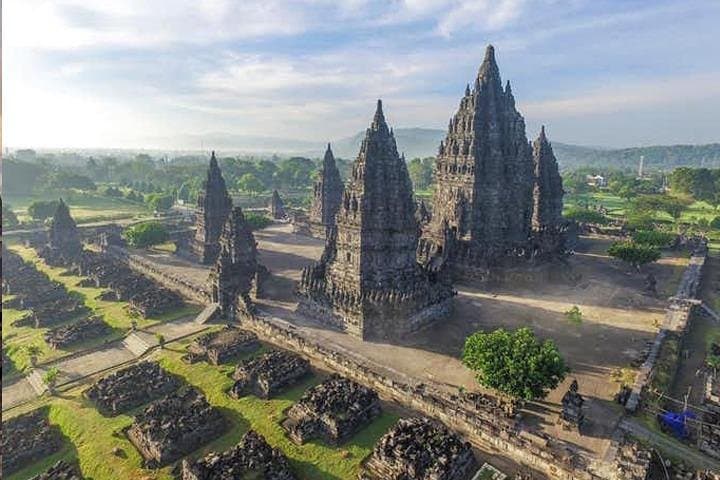
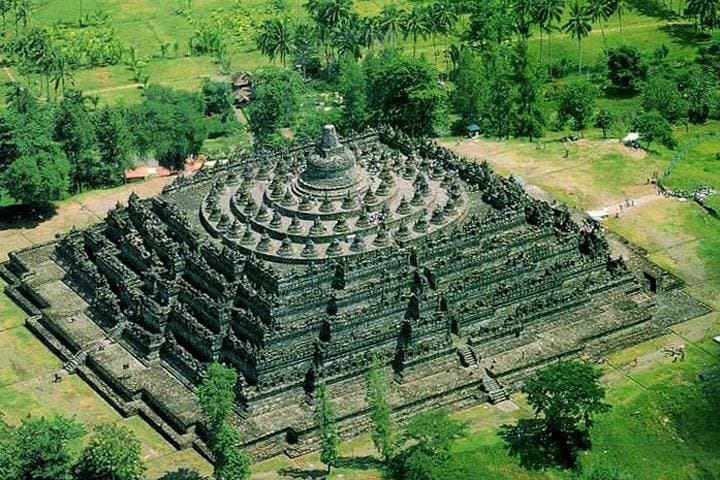
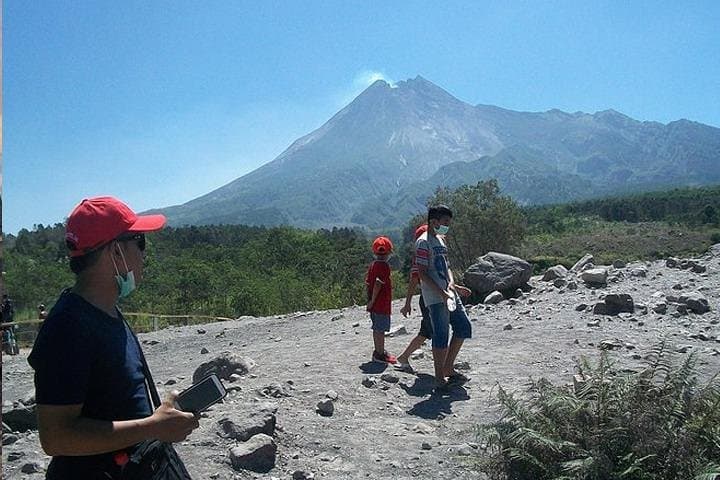
You arrive before sunrise at Borobudur, the early light sharpening stupas into silhouette while rice terraces around you breathe mist toward the volcanic ridge. By midday, the temple spires of Prambanan stand like carved hands against a wide sky, and later the slope of Merapi pushes its presence into the horizon, steam and rock reminding you the island is alive.
You arrive before sunrise at Borobudur, the early light sharpening stupas into silhouette while rice terraces around you breathe mist toward the volcanic ridge. By midday, the temple spires of Prambanan stand like carved hands against a wide sky, and later the slope of Merapi pushes its presence into the horizon, steam and rock reminding you the island is alive.
Borobudur and Prambanan are 9th-century masterpieces that map Java's religious shifts—Borobudur's spiraling path of reliefs is Buddhist iconography in stone; Prambanan is a cluster of towering Hindu shrines dedicated to Shiva, Vishnu and Brahma. Mount Merapi is an active stratovolcano whose periodic eruptions have shaped local settlement patterns and created fertile plains below.
Culturally, this circuit reveals Java's layered history: ancient empires, royal courts in Yogyakarta, and contemporary villages that maintain craft traditions and rice farming. Geologically, you move from river valleys and volcanic ash soils to lava-flow scars higher on Merapi's flank. Locals read wind and cloud for weather; on Merapi the land seems to watch travelers back.
Practical guidance: expect a full day (10–12 hours) with brief walks at each site—stone steps and uneven ground at temples, dusty tracks at Merapi. Wear sturdy walking shoes, sun protection, and bring a refillable water bottle. Midday crowds are largest at Borobudur; dawn or late afternoon light is best for photos. Ask your private guide about small adjacent sites like Pawon and Mendut for quieter viewpoints, and keep to marked paths—these places are fragile and managed for preservation.