THE ADVENTURE COLLECTIVE® · Independent discovery and booking for outdoor travel

See two of Java’s greatest temple complexes in one day. This private 8‑hour tour pairs Borobudur’s layered stupas with Prambanan’s soaring Hindu towers—ideal for travelers who want a compact, informative cultural day trip.
See two of Java’s greatest temple complexes in one day. This private 8‑hour tour pairs Borobudur’s layered stupas with Prambanan’s soaring Hindu towers—ideal for travelers who want a compact, informative cultural day trip.
Dawn light slides across the Kedu Plain as you step from an air-conditioned van onto ancient stone—sweat already daring you to quicken your pace. Borobudur rises in tiers ahead: broad platforms, carved reliefs and bell-shaped stupas that guide your eyes toward the horizon and the watchful cone of Mount Merapi.
Verified experiences and guided adventures in the surrounding area.
Operated by Javanese Vacation · Yogyakarta, Special Region of Yogyakarta
Dawn light slides across the Kedu Plain as you step from an air-conditioned van onto ancient stone—sweat already daring you to quicken your pace. Borobudur rises in tiers ahead: broad platforms, carved reliefs and bell-shaped stupas that guide your eyes toward the horizon and the watchful cone of Mount Merapi.
These two 9th‑century monuments were built under rival dynasties: Borobudur by the Syailendra kings as a Mahayana Buddhist monument, and Prambanan by the Sanjaya rulers as a towering Hindu complex. Borobudur’s layered geometry funnels pilgrimage movement; Prambanan’s central Trimurti—Shiva, Vishnu and Brahma—anchors a field of roughly 240 smaller shrines. The geology of central Java—rich volcanic soil and the slope of nearby cones—gave masons the stone and landscape that shaped both sites.
Culturally, the temples are still active places of ritual and performance: you may hear gamelan rhythm during festivals or glimpse offerings tucked into carved niches. Conservation work and UNESCO protections limit wear, so visitors share narrow walkways and stairways with long‑tailed macaques that sometimes beg for treats.
Practical guidance: this is an easy, full‑day, private tour (about 8 hours) with door‑to‑door transport, bottled water and an English‑speaking driver included. Wear modest, breathable clothes and comfortable walking shoes; expect uneven stone steps and limited shade. Start early to avoid heat and crowds, carry cash for small donations and snacks, and set aside time for photography at viewpoints and a quick stop at nearby Pawon or Mendut temples if the schedule allows.
easy.
8 hours.
Suitable for most fitness levels; requires standing, short climbs, and walking on uneven stone surfaces.
The full tour is about 8 hours; typical stops allocate roughly 2–3 hours at Borobudur and 2–3 hours at Prambanan, with transport and breaks included.
This private tour listing notes transport and bottled water are included; check the booking details or ask the operator if site entrance fees are covered.
Yes—physical demands are low, but both sites have many steps; consider mobility limitations and bring a carrier for infants who must sit on laps.
Performances are seasonal and usually in the evening; this daytime itinerary may not include the ballet, but ask your operator about extended options.
Borobudur and Prambanan date to the 8th–9th centuries and reflect Mahayana Buddhist and Hindu Sanjaya dynasties respectively, representing Java’s religious shifts in the early medieval period.
Both sites are UNESCO World Heritage properties with active restoration and visitor management programs; follow marked paths, avoid climbing on reliefs and refrain from feeding wildlife to minimize impact.
Javanese Vacation operates guided outdoor trips and adventures with an emphasis on safety, stewardship, and memorable experiences.
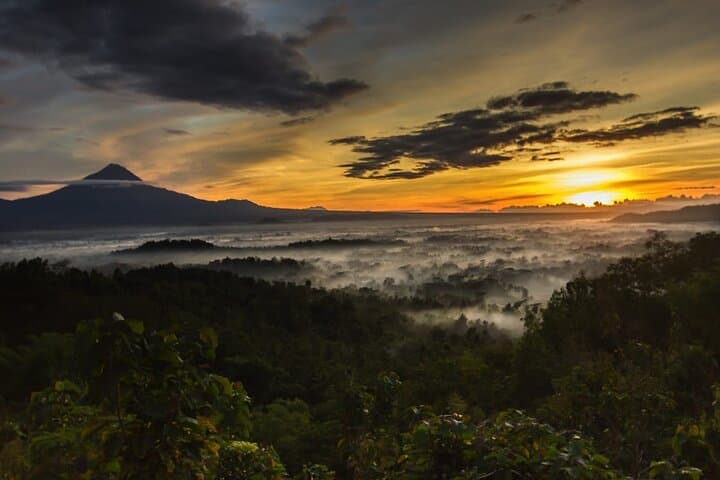
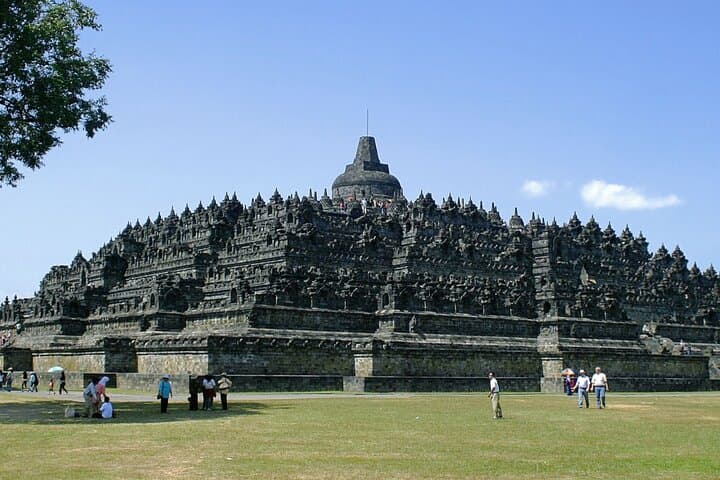
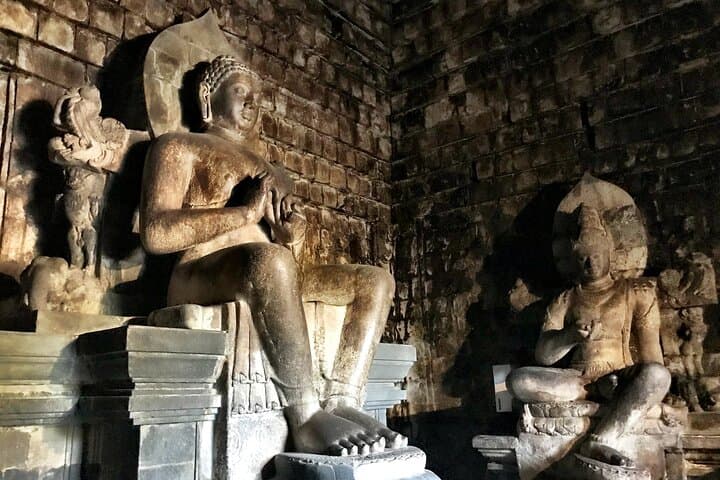
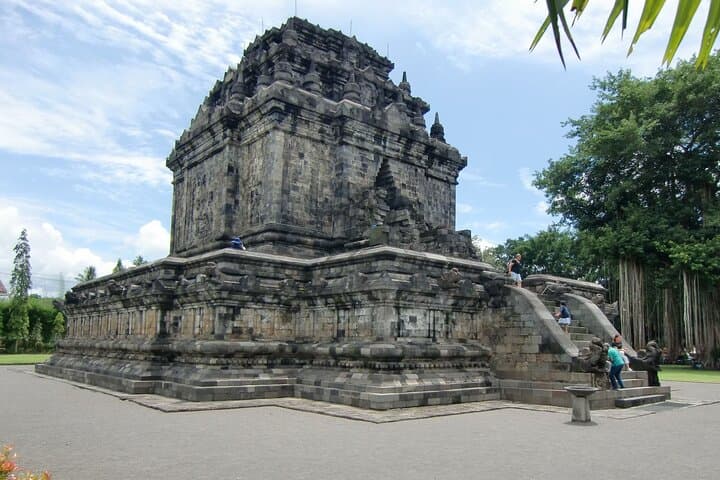
Dawn light slides across the Kedu Plain as you step from an air-conditioned van onto ancient stone—sweat already daring you to quicken your pace. Borobudur rises in tiers ahead: broad platforms, carved reliefs and bell-shaped stupas that guide your eyes toward the horizon and the watchful cone of Mount Merapi.
Dawn light slides across the Kedu Plain as you step from an air-conditioned van onto ancient stone—sweat already daring you to quicken your pace. Borobudur rises in tiers ahead: broad platforms, carved reliefs and bell-shaped stupas that guide your eyes toward the horizon and the watchful cone of Mount Merapi.
These two 9th‑century monuments were built under rival dynasties: Borobudur by the Syailendra kings as a Mahayana Buddhist monument, and Prambanan by the Sanjaya rulers as a towering Hindu complex. Borobudur’s layered geometry funnels pilgrimage movement; Prambanan’s central Trimurti—Shiva, Vishnu and Brahma—anchors a field of roughly 240 smaller shrines. The geology of central Java—rich volcanic soil and the slope of nearby cones—gave masons the stone and landscape that shaped both sites.
Culturally, the temples are still active places of ritual and performance: you may hear gamelan rhythm during festivals or glimpse offerings tucked into carved niches. Conservation work and UNESCO protections limit wear, so visitors share narrow walkways and stairways with long‑tailed macaques that sometimes beg for treats.
Practical guidance: this is an easy, full‑day, private tour (about 8 hours) with door‑to‑door transport, bottled water and an English‑speaking driver included. Wear modest, breathable clothes and comfortable walking shoes; expect uneven stone steps and limited shade. Start early to avoid heat and crowds, carry cash for small donations and snacks, and set aside time for photography at viewpoints and a quick stop at nearby Pawon or Mendut temples if the schedule allows.