THE ADVENTURE COLLECTIVE® · Independent discovery and booking for outdoor travel

Spend a single, scenic day from Yerevan visiting Garni’s Hellenistic temple, the rock-carved Geghard Monastery, and the windswept Sevanavank peninsula. This private tour pairs geology and medieval history with short, accessible walks and panoramic viewpoints.
Spend a single, scenic day from Yerevan visiting Garni’s Hellenistic temple, the rock-carved Geghard Monastery, and the windswept Sevanavank peninsula. This private tour pairs geology and medieval history with short, accessible walks and panoramic viewpoints.
A cool mountain wind meets the bus as you leave Yerevan; within an hour the city’s low-slung buildings give way to stepped cliffs and the Azat River carving a raw gorge. You step out at Garni Temple and the classical columns sit against a cliff edge, the sun striking the stone like a slow reveal. The landscape feels deliberate—rock, sky, and human hands shaped across ages.
Verified experiences and guided adventures in the surrounding area.
Operated by Happy Holidays · Yerevan, Kotayk
A cool mountain wind meets the bus as you leave Yerevan; within an hour the city’s low-slung buildings give way to stepped cliffs and the Azat River carving a raw gorge. You step out at Garni Temple and the classical columns sit against a cliff edge, the sun striking the stone like a slow reveal. The landscape feels deliberate—rock, sky, and human hands shaped across ages.
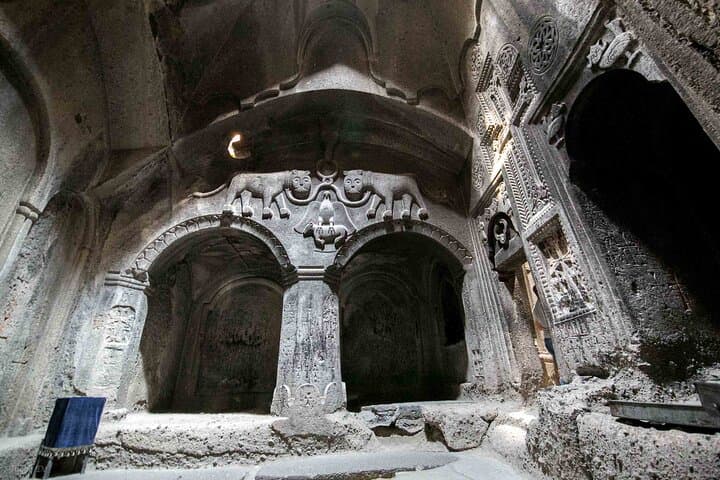
Garni is the only surviving Hellenistic temple in the region, erected in the 1st century AD for the sun god Mihr. Nearby Geghard Monastery folds into the cliff—chapels hewn from living rock that speak to Armenia’s early Christian identity and medieval craftsmanship. Lake Sevan and Sevanavank close the day on high-water plains; the lake’s clear surface and black tuff churches make the peninsula a sharp counterpoint to the sheer Azat Gorge.
Geology is visible at every turn: basalt and volcanic tuff, river-cut gorges, and the high-altitude lake that moderates summer heat. Cultural rhythms are present too—khachkars (cross-stones), fresco fragments, and local bread baked in clay ovens at roadside stops.
Practical notes: expect light walking with steps and uneven stone at Garni and Geghard; Sevanavank’s viewpoint has short climbs and exposed sun. Bring sun protection, a light jacket for winds on the peninsula, sturdy shoes, and a camera with a wide lens. Morning light is better for the gorge, late afternoon warms the temple stone. The tour is private and typically runs about six hours with air-conditioned transport and a guide—good for families and first-time visitors seeking a compact immersion in Armenia’s history and landscapes.
easy.
5–6 hours.
Suitable for average fitness; involves short walks, stairs and some uneven ground
The private tour runs about six hours and typically includes air-conditioned transport and a guide; entrance to some sites may be included—confirm at booking.
Yes—physical demands are low, but there are stairs and uneven surfaces; infant seats can be provided and the tour notes indicate it’s suitable for most fitness levels.
Morning light highlights the Azat Gorge and reduces crowds at Garni; late afternoon creates warm tones on the temple and calm wind conditions on Sevan’s peninsula.
Local cafés and roadside stops near Lake Sevan serve Armenian dishes and freshwater fish; bring snacks if you prefer continuous travel without long breaks.
Garni was a royal summer residence with Roman-style mosaics; Geghard grew around rock-hewn chapels and relics, reflecting Armenia’s early conversion to Christianity in the 4th century.
Lake Sevan faces water-level and ecological pressures—visitors are encouraged to avoid litter and support local efforts to preserve shoreline habitats.
Happy Holidays operates guided outdoor trips and adventures with an emphasis on safety, stewardship, and memorable experiences.
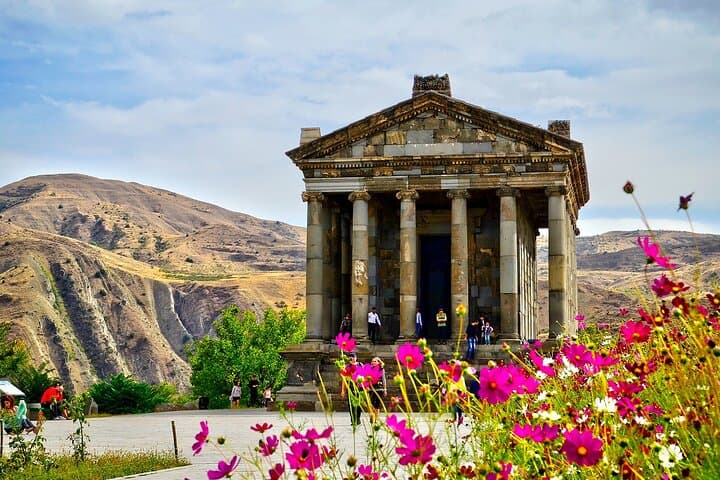
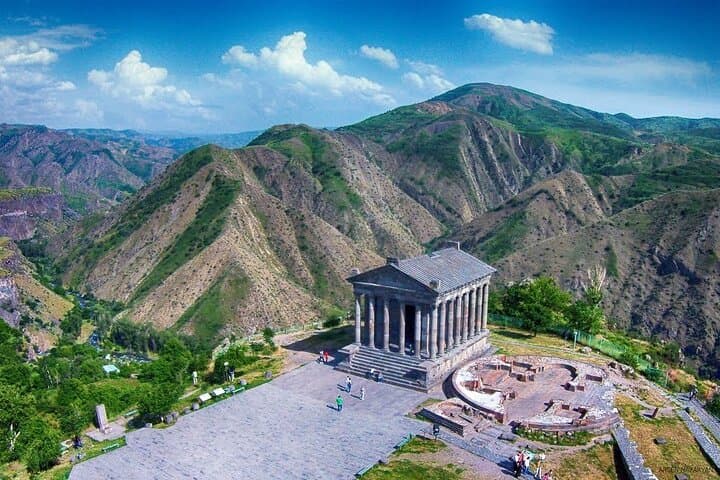
A cool mountain wind meets the bus as you leave Yerevan; within an hour the city’s low-slung buildings give way to stepped cliffs and the Azat River carving a raw gorge. You step out at Garni Temple and the classical columns sit against a cliff edge, the sun striking the stone like a slow reveal. The landscape feels deliberate—rock, sky, and human hands shaped across ages.
A cool mountain wind meets the bus as you leave Yerevan; within an hour the city’s low-slung buildings give way to stepped cliffs and the Azat River carving a raw gorge. You step out at Garni Temple and the classical columns sit against a cliff edge, the sun striking the stone like a slow reveal. The landscape feels deliberate—rock, sky, and human hands shaped across ages.
Garni is the only surviving Hellenistic temple in the region, erected in the 1st century AD for the sun god Mihr. Nearby Geghard Monastery folds into the cliff—chapels hewn from living rock that speak to Armenia’s early Christian identity and medieval craftsmanship. Lake Sevan and Sevanavank close the day on high-water plains; the lake’s clear surface and black tuff churches make the peninsula a sharp counterpoint to the sheer Azat Gorge.
Geology is visible at every turn: basalt and volcanic tuff, river-cut gorges, and the high-altitude lake that moderates summer heat. Cultural rhythms are present too—khachkars (cross-stones), fresco fragments, and local bread baked in clay ovens at roadside stops.
Practical notes: expect light walking with steps and uneven stone at Garni and Geghard; Sevanavank’s viewpoint has short climbs and exposed sun. Bring sun protection, a light jacket for winds on the peninsula, sturdy shoes, and a camera with a wide lens. Morning light is better for the gorge, late afternoon warms the temple stone. The tour is private and typically runs about six hours with air-conditioned transport and a guide—good for families and first-time visitors seeking a compact immersion in Armenia’s history and landscapes.