THE ADVENTURE COLLECTIVE® · Independent discovery and booking for outdoor travel

Trade Hanoi’s bustle for a day of cable cars, ancient pagodas and peak views at Yen Tu Mountain. This private trip mixes easy summit walks, centuries of Zen history, and panoramic vistas—ideal for culturally curious hikers.
Trade Hanoi’s bustle for a day of cable cars, ancient pagodas and peak views at Yen Tu Mountain. This private trip mixes easy summit walks, centuries of Zen history, and panoramic vistas—ideal for culturally curious hikers.
Mist clings to ridge-lines as the minivan eases out of Hanoi’s urban churn and into patchwork rice fields. By mid-morning the road narrows, pines thickening on the hillsides, and the mountain’s silhouette—steep, forested, and punctuated by pagoda roofs—grows nearer. A cable car lifts you above that green sea, the valley dropping away while bells and distant chants mark a very different tempo of life.
Verified experiences and guided adventures in the surrounding area.
Operated by Local Tours Ha Giang · Uong Bi, Quang Ninh Province
Mist clings to ridge-lines as the minivan eases out of Hanoi’s urban churn and into patchwork rice fields. By mid-morning the road narrows, pines thickening on the hillsides, and the mountain’s silhouette—steep, forested, and punctuated by pagoda roofs—grows nearer. A cable car lifts you above that green sea, the valley dropping away while bells and distant chants mark a very different tempo of life.
Yen Tu is both landscape and long memory: a cradle of Truc Lam Zen founded in the 13th century and a center of Vietnamese Buddhist practice. The mountain’s granite underlayers were carved by tectonic lift and weathering, leaving steep gullies and pockets where ancient pines take hold. Pagodas—Hoa Yen, Mot Mai, and the bronze Dong Pagoda at roughly 1,068 meters—sit along fluted ridgelines and paths once trodden by emperors and monks.
Expect a mix of short temple walks and easy cable-car ascents rather than technical mountaineering; the route emphasizes ritual and viewpoints over scrambling. Local culture is visible in small altars, incense smoke, and vendors selling sticky rice and sweet tea near temple courtyards. On clear days the summit opens toward Ha Long Bay; on misty ones the scene feels inward and quiet.
Practical guidance: wear grippy walking shoes, bring a light rain layer (weather can change fast), and carry water for the summit walk. Time your trip for morning clarity or late afternoon light; allow a full day for the round trip from Hanoi, including a local lunch and short temple visits. Travel respectfully—this is an active pilgrimage site—and leave no offerings other than incense and quiet attention.
easy.
12 hours.
Suitable for most fitness levels; able to manage short paved climbs and stairs.
Expect about 2.5–3 hours each way depending on traffic; the tour includes private transfers so travel is direct and comfortable.
Yes—the round-trip cable car ticket to Hoa Yen and the summit cable car are included in the tour package.
You can reach most major pagodas via cable cars, though short paved walks and steps lead from stations to temple complexes.
Yes—paths are generally well-maintained and the cable car reduces strenuous hiking, but mobility on steps may be required at some temples.
Yen Tu rose to prominence in the 13th century as the birthplace of the Truc Lam Zen school and became a royal pilgrimage destination during the Ly and Tran dynasties.
Visitor numbers are managed around temple areas to protect fragile forest soils and cultural sites; stick to marked paths and avoid bringing single-use plastics.
Local Tours Ha Giang operates guided outdoor trips and adventures with an emphasis on safety, stewardship, and memorable experiences.


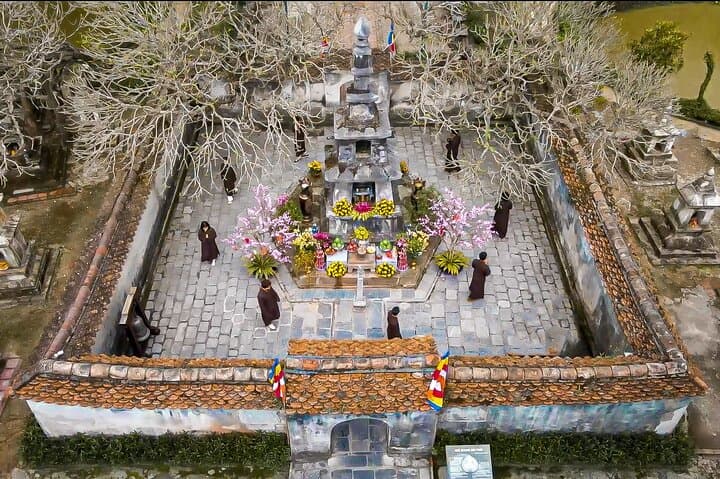
Mist clings to ridge-lines as the minivan eases out of Hanoi’s urban churn and into patchwork rice fields. By mid-morning the road narrows, pines thickening on the hillsides, and the mountain’s silhouette—steep, forested, and punctuated by pagoda roofs—grows nearer. A cable car lifts you above that green sea, the valley dropping away while bells and distant chants mark a very different tempo of life.
Mist clings to ridge-lines as the minivan eases out of Hanoi’s urban churn and into patchwork rice fields. By mid-morning the road narrows, pines thickening on the hillsides, and the mountain’s silhouette—steep, forested, and punctuated by pagoda roofs—grows nearer. A cable car lifts you above that green sea, the valley dropping away while bells and distant chants mark a very different tempo of life.
Yen Tu is both landscape and long memory: a cradle of Truc Lam Zen founded in the 13th century and a center of Vietnamese Buddhist practice. The mountain’s granite underlayers were carved by tectonic lift and weathering, leaving steep gullies and pockets where ancient pines take hold. Pagodas—Hoa Yen, Mot Mai, and the bronze Dong Pagoda at roughly 1,068 meters—sit along fluted ridgelines and paths once trodden by emperors and monks.
Expect a mix of short temple walks and easy cable-car ascents rather than technical mountaineering; the route emphasizes ritual and viewpoints over scrambling. Local culture is visible in small altars, incense smoke, and vendors selling sticky rice and sweet tea near temple courtyards. On clear days the summit opens toward Ha Long Bay; on misty ones the scene feels inward and quiet.
Practical guidance: wear grippy walking shoes, bring a light rain layer (weather can change fast), and carry water for the summit walk. Time your trip for morning clarity or late afternoon light; allow a full day for the round trip from Hanoi, including a local lunch and short temple visits. Travel respectfully—this is an active pilgrimage site—and leave no offerings other than incense and quiet attention.