THE ADVENTURE COLLECTIVE® · Independent discovery and booking for outdoor travel

See Yellowstone’s most striking Upper Loop highlights in a single full-day tour from Bozeman: Norris Geyser Basin, Mammoth Hot Springs, Lamar Valley and the Grand Canyon of the Yellowstone. Expect geothermal drama, roadside wildlife viewing, and short interpretive walks.
See Yellowstone’s most striking Upper Loop highlights in a single full-day tour from Bozeman: Norris Geyser Basin, Mammoth Hot Springs, Lamar Valley and the Grand Canyon of the Yellowstone. Expect geothermal drama, roadside wildlife viewing, and short interpretive walks.
Dust and pine resin drift past the van as it leaves Bozeman, the road opening toward steam and sudden canyons. On a full-day Upper Loop tour, the landscape shifts like chapters: an acidic hiss at Norris, rippling terraces at Mammoth, broad grassland in Lamar, and the thunder of the Yellowstone River at the Grand Canyon. The guide points out geological fingerprints—thermal features born of a restless supervolcano—and keeps an eye out where elk and bison graze at the roadside.
Verified experiences and guided adventures in the surrounding area.
Operated by Conquering Yellowstone · Mammoth Hot Springs, Montana
Dust and pine resin drift past the van as it leaves Bozeman, the road opening toward steam and sudden canyons. On a full-day Upper Loop tour, the landscape shifts like chapters: an acidic hiss at Norris, rippling terraces at Mammoth, broad grassland in Lamar, and the thunder of the Yellowstone River at the Grand Canyon. The guide points out geological fingerprints—thermal features born of a restless supervolcano—and keeps an eye out where elk and bison graze at the roadside.
Yellowstone was designated the world’s first national park in 1872; the Upper Loop still shows the park’s early role in conservation and tourism, from the Roosevelt Arch to historic Mammoth structures. Geologically, the loop threads through thermal basins, rhyolite cliffs stained by hydrothermal minerals, and a canyon carved by 1,000-foot drops and turbulent river erosions over millennia.
Culturally, this region sits on ancestral lands of multiple tribes and later drew artists and scientists whose paintings and studies helped protect it. Travelers should respect boardwalks in thermal areas, keep distance from wildlife, and follow the park’s Leave No Trace norms.
Practicalities: expect long driving stretches with short, curated walks at each stop—most stops are 15–90 minutes. Temperatures can swing wildly; layers and sun protection matter. Binoculars and a camera deliver the wildlife and canyon drama; bring snacks and refillable water since services inside the park are limited. The route is ideal for travelers who want concentrated highlights of Yellowstone in a guided, single-day format without backcountry commitment.
easy.
12 hours.
Suitable for travelers comfortable on a full-day guided outing with short, low-effort walks and standing periods.
The tour is approximately 12 hours; it includes multiple stops—Norris, Mammoth, Lamar Valley, and the Grand Canyon—with short guided walks and viewpoint times.
Yes, National Park entrance fees are listed among inclusions for this tour.
Wildlife sightings are common, especially in Lamar Valley and roadside meadows, but sightings cannot be guaranteed—bring binoculars and follow guide instructions for safety.
Yes, pickup in Big Sky and West Yellowstone can usually be arranged in advance; confirm at booking and provide pickup details.
Yellowstone became the world’s first national park in 1872; the Upper Loop contains early park infrastructure like Mammoth and historic roadhouses tied to the park’s conservation history.
Stay on boardwalks in thermal areas, follow wildlife-distance rules, pack out all trash, and avoid feeding animals to reduce human-wildlife conflicts.
Conquering Yellowstone operates guided outdoor trips and adventures with an emphasis on safety, stewardship, and memorable experiences.
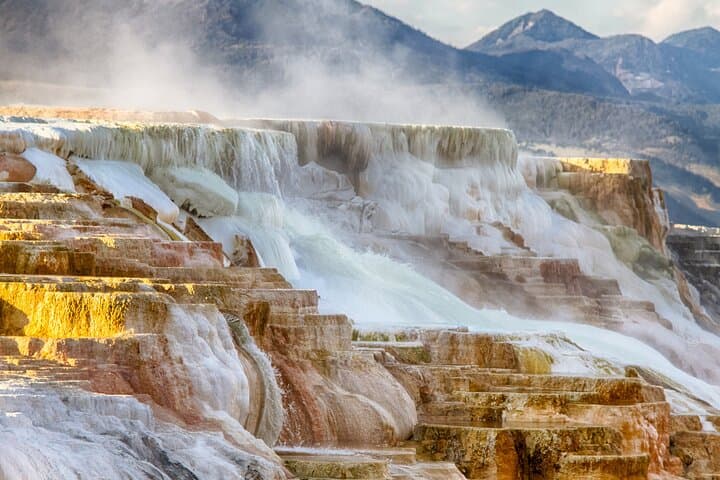
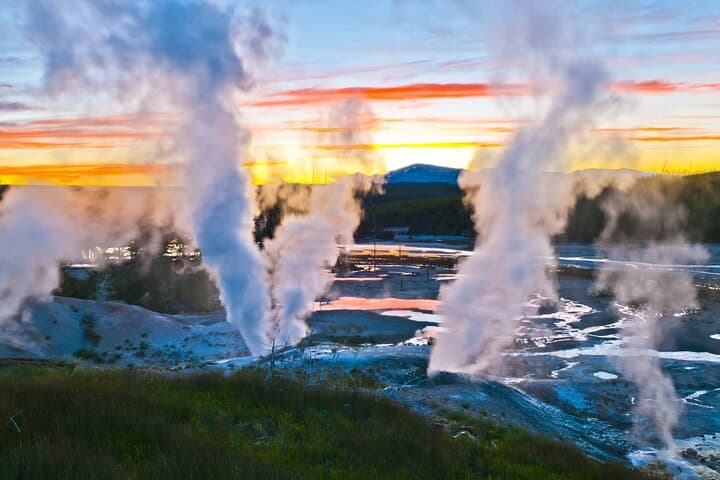
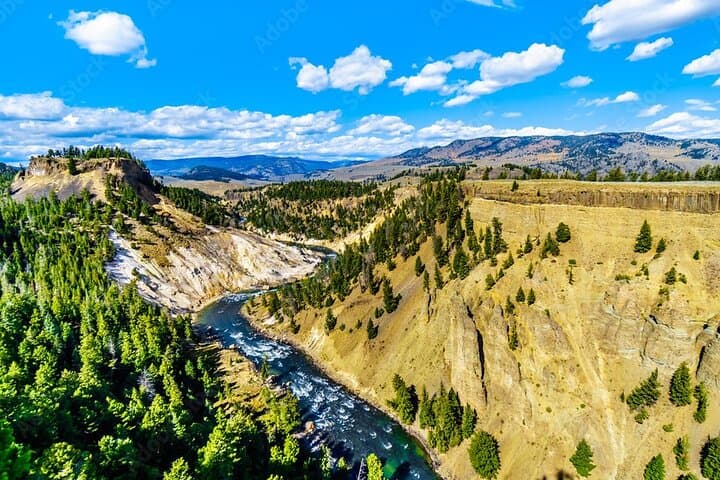
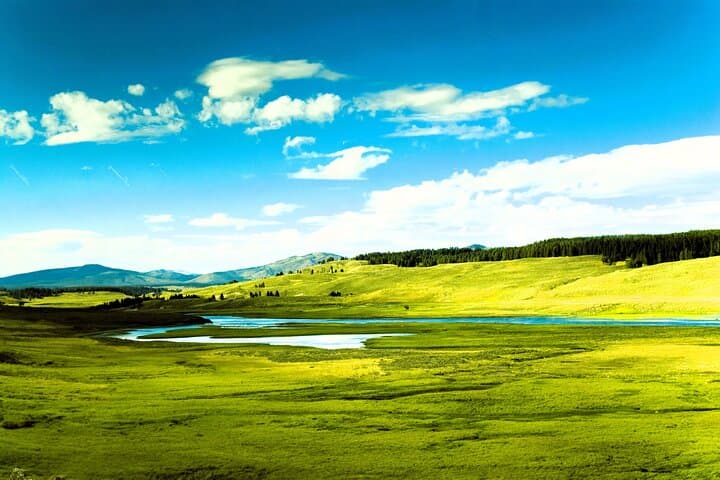
Dust and pine resin drift past the van as it leaves Bozeman, the road opening toward steam and sudden canyons. On a full-day Upper Loop tour, the landscape shifts like chapters: an acidic hiss at Norris, rippling terraces at Mammoth, broad grassland in Lamar, and the thunder of the Yellowstone River at the Grand Canyon. The guide points out geological fingerprints—thermal features born of a restless supervolcano—and keeps an eye out where elk and bison graze at the roadside.
Dust and pine resin drift past the van as it leaves Bozeman, the road opening toward steam and sudden canyons. On a full-day Upper Loop tour, the landscape shifts like chapters: an acidic hiss at Norris, rippling terraces at Mammoth, broad grassland in Lamar, and the thunder of the Yellowstone River at the Grand Canyon. The guide points out geological fingerprints—thermal features born of a restless supervolcano—and keeps an eye out where elk and bison graze at the roadside.
Yellowstone was designated the world’s first national park in 1872; the Upper Loop still shows the park’s early role in conservation and tourism, from the Roosevelt Arch to historic Mammoth structures. Geologically, the loop threads through thermal basins, rhyolite cliffs stained by hydrothermal minerals, and a canyon carved by 1,000-foot drops and turbulent river erosions over millennia.
Culturally, this region sits on ancestral lands of multiple tribes and later drew artists and scientists whose paintings and studies helped protect it. Travelers should respect boardwalks in thermal areas, keep distance from wildlife, and follow the park’s Leave No Trace norms.
Practicalities: expect long driving stretches with short, curated walks at each stop—most stops are 15–90 minutes. Temperatures can swing wildly; layers and sun protection matter. Binoculars and a camera deliver the wildlife and canyon drama; bring snacks and refillable water since services inside the park are limited. The route is ideal for travelers who want concentrated highlights of Yellowstone in a guided, single-day format without backcountry commitment.