THE ADVENTURE COLLECTIVE® · Independent discovery and booking for outdoor travel

Drive the 140-mile Grand Loop with GPS-triggered narration and stop where you please. This self-guided audio tour combines geothermal wonders, wildlife meadows and lesser-known springs into a full-day route you control.
Drive the 140-mile Grand Loop with GPS-triggered narration and stop where you please. This self-guided audio tour combines geothermal wonders, wildlife meadows and lesser-known springs into a full-day route you control.
The engine hums as the road unwinds and steam rises like a live map ahead—bubbling pools, columnar cliffs, a lone bison outlined against morning mist. You’re on the Grand Loop, a 140-mile ribbon of asphalt that stitches Yellowstone’s geothermal theater, high lake shores and wide, predator-rich valleys into a single day’s drive. The audio guide cues up automatically, a calm narrator filling the pauses between sightlines with geology, history and practical pointers so you can pull over when the park demands attention.
Verified experiences and guided adventures in the surrounding area.
Operated by Drives & Detours · Gardiner, Montana
The engine hums as the road unwinds and steam rises like a live map ahead—bubbling pools, columnar cliffs, a lone bison outlined against morning mist. You’re on the Grand Loop, a 140-mile ribbon of asphalt that stitches Yellowstone’s geothermal theater, high lake shores and wide, predator-rich valleys into a single day’s drive. The audio guide cues up automatically, a calm narrator filling the pauses between sightlines with geology, history and practical pointers so you can pull over when the park demands attention.
Yellowstone is land shaped by heat and time. Beneath your tires is a fractured caldera, the mark of a supervolcano whose eruptions and lava flows created travertine terraces, basalt columns and the hot springs that color the map. Indigenous tribes traversed this landscape for millennia before explorers and conservationists pushed to protect it; in 1872 the area became the world’s first national park. The 20th- and 21st-century story—wolf reintroduction, bison management and ongoing scientific study—keeps the park in active stewardship rather than frozen museum status.
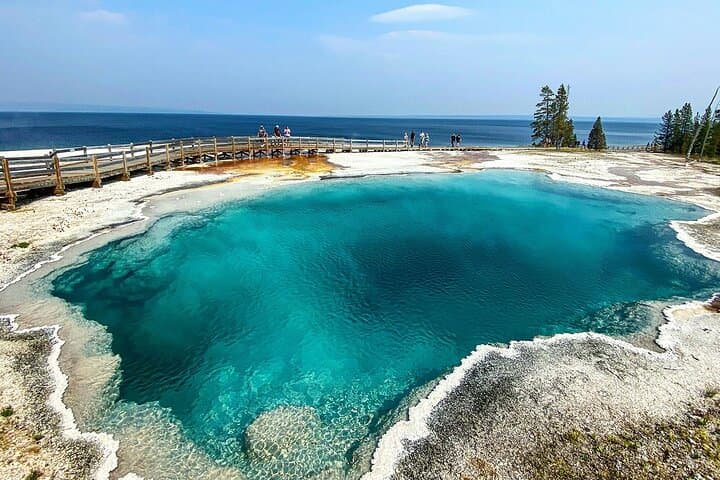
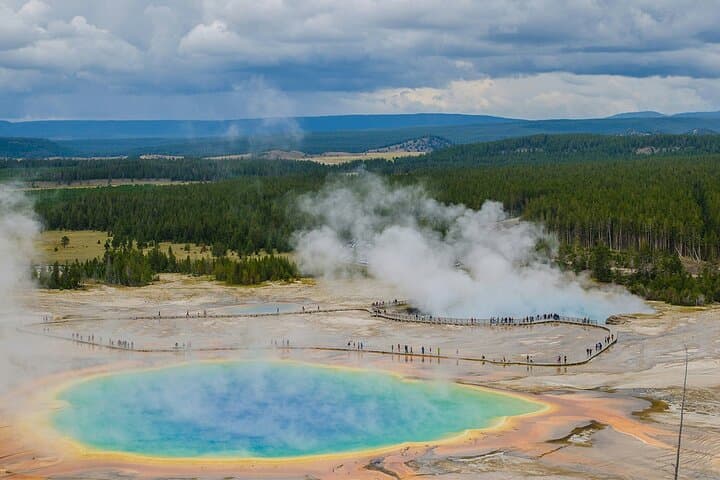
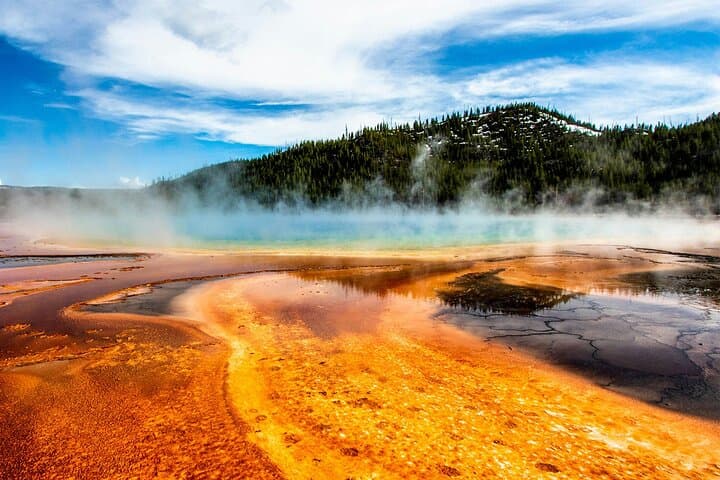
The driving tour threads recognizable icons with quieter stops: Old Faithful’s clockwork plume, the electric rings of Grand Prismatic from a modest overlook, the glassy expanse of Yellowstone Lake, and lesser-known corners like Sylvan Lake and Dragon’s Mouth Spring where the terrain shivers at the shoreline. Wildlife is an element you can’t schedule—meadows and valleys around dawn and dusk are where bison, elk and sometimes wolves reveal themselves, while thermal areas demand boardwalk respect and a slow, careful curiosity.
Practically speaking, plan an 8–10 hour day for the full loop if you stop at the highlights. Download the Drives & Detours app and the tour (access code provided with booking) before you enter; cell service is patchy. Start early to beat traffic and to catch wildlife in low light. Bring full fuel, and know restrooms and picnic spots are spaced—this is a long, remote circuit. Expect occasional “bison jams”; keep your distance and stay in your vehicle. Boardwalks and main viewpoints are generally accessible, but some scenic turns require short, uneven walks.
This self-guided format gives you the freedom to linger at a geyser or chase a canyon viewpoint without losing context—the narration points out where to park, when to expect viewpoints, and which sites the guide recommends not to miss. Leave no trace, keep a respectful buffer from wildlife, and let the slow cadence of the Grand Loop set the pace. By day’s end you’ll have seen geology at work, witnessed wildlife acting like it owns the place, and understood a little better why Yellowstone still commands both scientific attention and simple, stubborn awe.
moderate.
8–10 hours.
Low physical exertion required, but you should be prepared for a long day of getting in and out of the car and short, uneven walks at viewpoints.
Expect 8–10 hours to complete the 140-mile loop with stops at major viewpoints; allocate more time if you linger for wildlife or photography.
No—the Drives & Detours tour can be downloaded for offline use, but download it and enter your access code before you enter the park.
Most main viewpoints and boardwalks are accessible, but some overlooks require short uneven walks; the tour notes accessibility at particular stops.
Only service animals are allowed in the park; pets have restrictions and should not be left unattended in vehicles.
Yes—park entrance fees are collected at the gates; check the NPS website for current rates and annual pass options.
Stay in your vehicle, keep distance, do not approach or attempt to move the animal, and wait for it to clear the road—bison are unpredictable and can charge.
Yellowstone was designated the world’s first national park in 1872; the park’s landscape reflects both Indigenous use and massive volcanic events that formed the caldera.
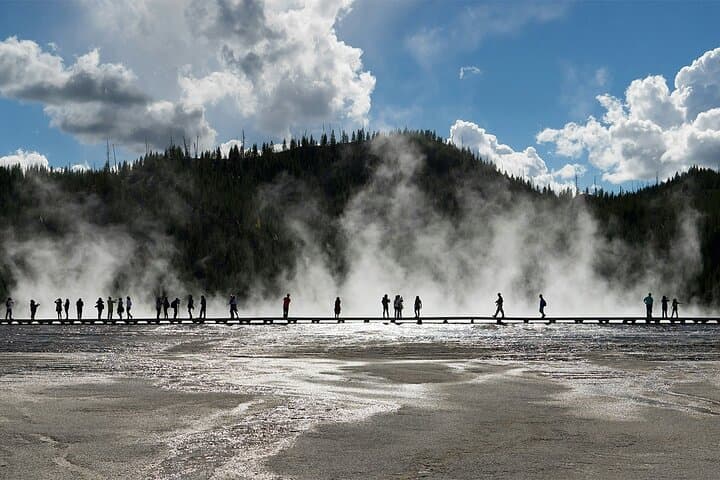
Stay on designated boardwalks to protect fragile thermal ground; practice Leave No Trace and respect wildlife buffers to reduce human-wildlife conflicts.
Drives & Detours operates guided outdoor trips and adventures with an emphasis on safety, stewardship, and memorable experiences.
The engine hums as the road unwinds and steam rises like a live map ahead—bubbling pools, columnar cliffs, a lone bison outlined against morning mist. You’re on the Grand Loop, a 140-mile ribbon of asphalt that stitches Yellowstone’s geothermal theater, high lake shores and wide, predator-rich valleys into a single day’s drive. The audio guide cues up automatically, a calm narrator filling the pauses between sightlines with geology, history and practical pointers so you can pull over when the park demands attention.
The engine hums as the road unwinds and steam rises like a live map ahead—bubbling pools, columnar cliffs, a lone bison outlined against morning mist. You’re on the Grand Loop, a 140-mile ribbon of asphalt that stitches Yellowstone’s geothermal theater, high lake shores and wide, predator-rich valleys into a single day’s drive. The audio guide cues up automatically, a calm narrator filling the pauses between sightlines with geology, history and practical pointers so you can pull over when the park demands attention.
Yellowstone is land shaped by heat and time. Beneath your tires is a fractured caldera, the mark of a supervolcano whose eruptions and lava flows created travertine terraces, basalt columns and the hot springs that color the map. Indigenous tribes traversed this landscape for millennia before explorers and conservationists pushed to protect it; in 1872 the area became the world’s first national park. The 20th- and 21st-century story—wolf reintroduction, bison management and ongoing scientific study—keeps the park in active stewardship rather than frozen museum status.
The driving tour threads recognizable icons with quieter stops: Old Faithful’s clockwork plume, the electric rings of Grand Prismatic from a modest overlook, the glassy expanse of Yellowstone Lake, and lesser-known corners like Sylvan Lake and Dragon’s Mouth Spring where the terrain shivers at the shoreline. Wildlife is an element you can’t schedule—meadows and valleys around dawn and dusk are where bison, elk and sometimes wolves reveal themselves, while thermal areas demand boardwalk respect and a slow, careful curiosity.
Practically speaking, plan an 8–10 hour day for the full loop if you stop at the highlights. Download the Drives & Detours app and the tour (access code provided with booking) before you enter; cell service is patchy. Start early to beat traffic and to catch wildlife in low light. Bring full fuel, and know restrooms and picnic spots are spaced—this is a long, remote circuit. Expect occasional “bison jams”; keep your distance and stay in your vehicle. Boardwalks and main viewpoints are generally accessible, but some scenic turns require short, uneven walks.
This self-guided format gives you the freedom to linger at a geyser or chase a canyon viewpoint without losing context—the narration points out where to park, when to expect viewpoints, and which sites the guide recommends not to miss. Leave no trace, keep a respectful buffer from wildlife, and let the slow cadence of the Grand Loop set the pace. By day’s end you’ll have seen geology at work, witnessed wildlife acting like it owns the place, and understood a little better why Yellowstone still commands both scientific attention and simple, stubborn awe.