THE ADVENTURE COLLECTIVE® · Independent discovery and booking for outdoor travel

Skip the dawn alarm and watch Yellowstone come alive at dusk on a private evening tour to Lamar Valley. Expect close-up views of wolves, bears, bison and raptors, expert naturalist commentary, and prime photographic light without the early wake-up call.
Skip the dawn alarm and watch Yellowstone come alive at dusk on a private evening tour to Lamar Valley. Expect close-up views of wolves, bears, bison and raptors, expert naturalist commentary, and prime photographic light without the early wake-up call.
The van eases out of Gardiner as the daylight thins, and the park feels like it's waking up into another rhythm. Shadows lengthen across sage and rippled grass; elk lift their heads and bison begin to move toward the river. On this private evening tour, guides slow the world down so you can watch it rearrange itself—wolves prowl ridge lines, raptors quarter the sky, and the valley exhales into dusk.
Verified experiences and guided adventures in the surrounding area.
Operated by Yellowstone’s Casanova Guided Tours · Gardiner, Montana
The van eases out of Gardiner as the daylight thins, and the park feels like it's waking up into another rhythm. Shadows lengthen across sage and rippled grass; elk lift their heads and bison begin to move toward the river. On this private evening tour, guides slow the world down so you can watch it rearrange itself—wolves prowl ridge lines, raptors quarter the sky, and the valley exhales into dusk.
Lamar Valley sits on the northeastern reaches of Yellowstone National Park, a broad glacial plain cut by the Lamar River and shaped by the deep heat of the Yellowstone supervolcano. That geologic restlessness—geyser basins, thermal features upstream—brought people centuries before the park’s creation: the area lies within the traditional territories of tribes including the Crow (Apsáalooke), Northern Cheyenne, Shoshone and others, all connected to these lands through hunting routes and stories.
Today the valley’s open grasslands and braided river corridors make it one of North America’s premier wildlife-viewing arenas. Guides point out more than species; they read behavior—elk rutting patterns, bison migrations, the distant howl of a wolf pack—as clues about season and survival. Binoculars and spotting scopes brought by the tour amplify these moments: a wolf’s profile on a ridge, a grizzly moving through willow tangles, a bald eagle dropping toward the river to lift a trout.
Practically speaking, this is a vehicle-based safari rather than a hike. The half-day tour runs about four hours, departing late afternoon from Mammoth Hot Springs or Gardiner. Because animal activity spikes around dawn and dusk, the timing is deliberate: you skip the pre-dawn alarm and still catch prime behavior. Guides carry bottled water, snacks, and scopes; they’ll set up at vantage points and discuss etiquette—no approaching wildlife, quiet observation, and staying inside the vehicle when animals are nearby.
For photographers and first-time visitors, prepare for rapidly changing light and temperatures. Dress in layers, bring a lens in the 200–600mm range if you can, and stabilize your shot—tripods or beanbags make a big difference in the low light. Expect minimal walking but bring sturdy shoes for short exits. Roads into Lamar can be rough and, in shoulder seasons, muddy or snowy; tour operators monitor conditions and may adjust the route.
This evening tour is as much about context as sightings: the guide’s narration ties animal behavior to the valley’s geology and human history, leaving you with a clearer sense of why Yellowstone behaves the way it does. When night finally slips over the valley, you’ll understand how the landscape pushes and pulls its inhabitants—and how quietly thrilling it is to witness that balance.
easy.
4 hours.
Suitable for most fitness levels; primarily vehicle-based with short, flat walks if stops are made
Departures are around 4:00 PM from Gardiner or Mammoth; expect a roughly four-hour outing with return after sunset—exact pickup will be confirmed by the operator.
No wildlife sighting is guaranteed, but Lamar Valley has high probabilities for wolves, bears, bison, elk and raptors; guides increase your chances by choosing strategic vantage points at dusk.
Yes—this low-impact, vehicle-based tour is suitable for all ages; the operator provides infant seats and accommodates different mobility levels.
Yes—binoculars and spotting scopes are supplied, though many guests bring their own optics for familiarity and faster use.
Winter access is limited by road and weather conditions; operators may run modified itineraries or cancel if conditions are unsafe—check seasonal availability before booking.
Remain calm, keep windows partially closed, and follow your guide’s instructions; do not feed or attempt to interact with the animals.
Lamar Valley sits within Yellowstone’s larger landscape shaped by volcanic activity and was used seasonally by Indigenous peoples—including Crow and Northern Cheyenne—for hunting and travel.
Park rules and guided-vehicle protocols limit human-wildlife interactions to protect both visitors and animals; stay on designated roads and follow Leave No Trace principles.
Yellowstone’s Casanova Guided Tours operates guided outdoor trips and adventures with an emphasis on safety, stewardship, and memorable experiences.
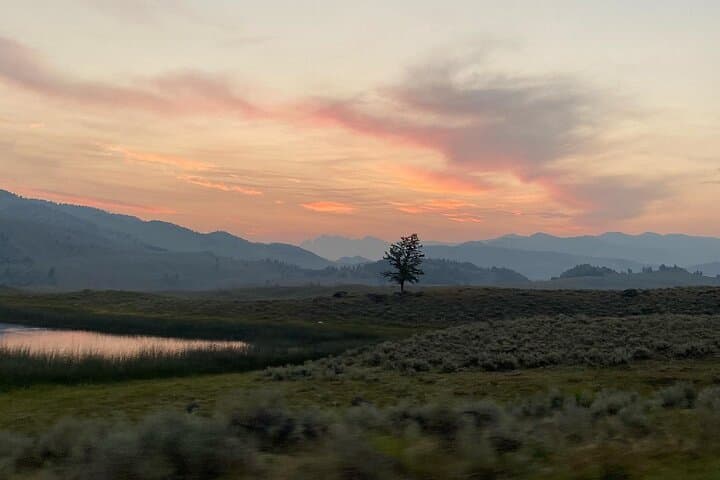
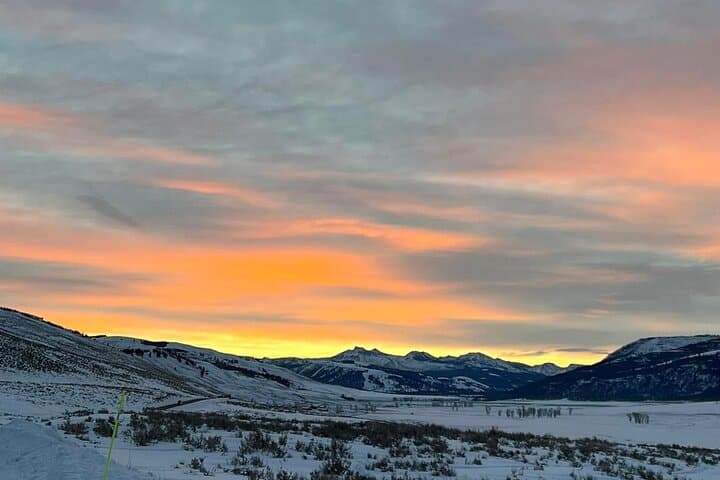
The van eases out of Gardiner as the daylight thins, and the park feels like it's waking up into another rhythm. Shadows lengthen across sage and rippled grass; elk lift their heads and bison begin to move toward the river. On this private evening tour, guides slow the world down so you can watch it rearrange itself—wolves prowl ridge lines, raptors quarter the sky, and the valley exhales into dusk.
The van eases out of Gardiner as the daylight thins, and the park feels like it's waking up into another rhythm. Shadows lengthen across sage and rippled grass; elk lift their heads and bison begin to move toward the river. On this private evening tour, guides slow the world down so you can watch it rearrange itself—wolves prowl ridge lines, raptors quarter the sky, and the valley exhales into dusk.
Lamar Valley sits on the northeastern reaches of Yellowstone National Park, a broad glacial plain cut by the Lamar River and shaped by the deep heat of the Yellowstone supervolcano. That geologic restlessness—geyser basins, thermal features upstream—brought people centuries before the park’s creation: the area lies within the traditional territories of tribes including the Crow (Apsáalooke), Northern Cheyenne, Shoshone and others, all connected to these lands through hunting routes and stories.
Today the valley’s open grasslands and braided river corridors make it one of North America’s premier wildlife-viewing arenas. Guides point out more than species; they read behavior—elk rutting patterns, bison migrations, the distant howl of a wolf pack—as clues about season and survival. Binoculars and spotting scopes brought by the tour amplify these moments: a wolf’s profile on a ridge, a grizzly moving through willow tangles, a bald eagle dropping toward the river to lift a trout.
Practically speaking, this is a vehicle-based safari rather than a hike. The half-day tour runs about four hours, departing late afternoon from Mammoth Hot Springs or Gardiner. Because animal activity spikes around dawn and dusk, the timing is deliberate: you skip the pre-dawn alarm and still catch prime behavior. Guides carry bottled water, snacks, and scopes; they’ll set up at vantage points and discuss etiquette—no approaching wildlife, quiet observation, and staying inside the vehicle when animals are nearby.
For photographers and first-time visitors, prepare for rapidly changing light and temperatures. Dress in layers, bring a lens in the 200–600mm range if you can, and stabilize your shot—tripods or beanbags make a big difference in the low light. Expect minimal walking but bring sturdy shoes for short exits. Roads into Lamar can be rough and, in shoulder seasons, muddy or snowy; tour operators monitor conditions and may adjust the route.
This evening tour is as much about context as sightings: the guide’s narration ties animal behavior to the valley’s geology and human history, leaving you with a clearer sense of why Yellowstone behaves the way it does. When night finally slips over the valley, you’ll understand how the landscape pushes and pulls its inhabitants—and how quietly thrilling it is to witness that balance.