THE ADVENTURE COLLECTIVE® · Independent discovery and booking for outdoor travel

Small-group aurora tours from Yellowknife take you to dark lakeshores—Prosperous, Madeline, Pontoon, Prelude—to photograph and watch the northern lights. Expect expert guidance on camera settings, cold-weather logistics, and mobility between vantage points to maximize viewing chances.
Small-group aurora tours from Yellowknife take you to dark lakeshores—Prosperous, Madeline, Pontoon, Prelude—to photograph and watch the northern lights. Expect expert guidance on camera settings, cold-weather logistics, and mobility between vantage points to maximize viewing chances.
The night opens like a page of black velvet above the boreal edge, and you step out where the lights can reach you first. In Yellowknife the aurora feels close enough to touch — curtains of green and purple that roll, pause, and suddenly tear across the sky, daring you to steady your lens.
Verified experiences and guided adventures in the surrounding area.
Operated by Zenderfull - Astronomie, Stargazing, Montreal & Mégantic · Yellowknife, Northwest Territories
The night opens like a page of black velvet above the boreal edge, and you step out where the lights can reach you first. In Yellowknife the aurora feels close enough to touch — curtains of green and purple that roll, pause, and suddenly tear across the sky, daring you to steady your lens.
This small-group outing follows a practical rhythm: drive to dark lakeshores — Prosperous, Madeline, Pontoon, Prelude — then wait for the sky to shift. The region sits on the Canadian Shield; exposed granite and shallow lakes create broad horizons and low light pollution. Yellowknife's Dene and Métis history weaves through the landscape: this has been a place of human winters, fishing, and sky stories long before tourism began.
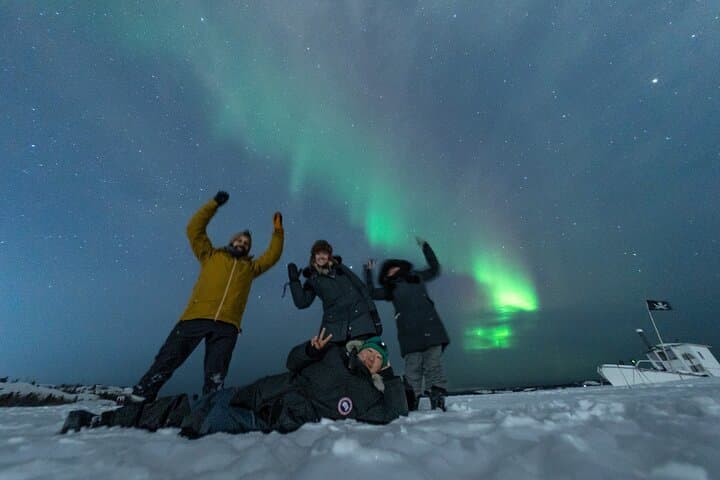
Expect cold-starred nights, a guide fluent in camera settings and local weather, and an emphasis on composition — reflections on lake ice, tree-lined silhouettes, and the way the aurora frames human figures. Culturally, the city balances mining roots with vibrant northern arts; locals value practical gear and quiet respect for the land.
Practical guidance: dress in insulated layers, bring a sturdy tripod and spare batteries (cold kills power), and arrive ready to stand still for long exposures. Tours run 3–8 hours depending on conditions; flexibility is built in: the guide will move between vantage points to chase clear skies. If clouds win, patience usually rewards you another night — the aurora can reappear with little warning. For photographers, learn manual mode: wide aperture, ISO 800–3200 depending on gear, and start with 5–10 second exposures for visible movement. Above all, plan for the cold, and let the sky lead the shoot.
easy.
3–8 hours.
Suitable for most fitness levels; participants should be able to stand and walk short distances on icy or uneven ground for several hours.
Peak season runs late August through April, with long dark nights and clearer skies in mid-winter; however, strong displays can occur anytime during geomagnetic activity.
You can use a phone with manual or pro mode, but a camera with manual exposure and a tripod yields the best results; guides will help with both phone and camera setups.
Yes — private transportation between lakeshores is included so the group can move quickly to darker skies and better vantage points.
The guide monitors conditions and may relocate between stops; if weather prevents viewing, cancellation/refund policies apply or rebooking may be offered.
Yellowknife grew from gold-mining roots and has long been a hub for Dene and Métis communities; the aurora has cultural significance in local Indigenous storytelling.
Minimize light pollution by avoiding headlights during shooting and pack out all waste; guides work to leave lakeshores in natural condition to protect fragile winter ecosystems.
Zenderfull - Astronomie, Stargazing, Montreal & Mégantic operates guided outdoor trips and adventures with an emphasis on safety, stewardship, and memorable experiences.
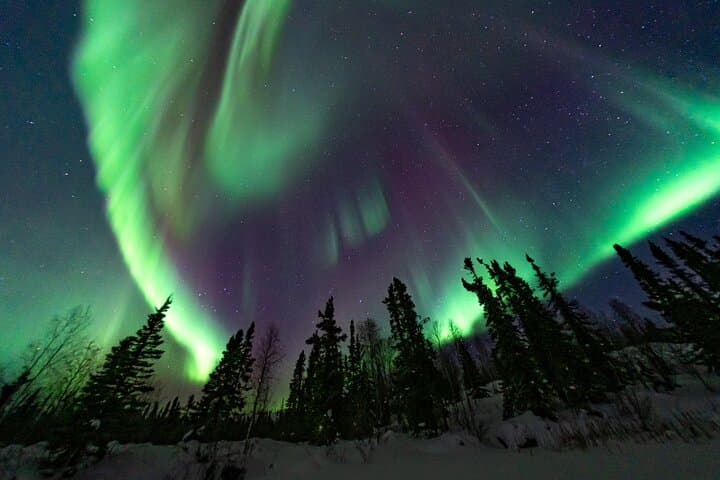


The night opens like a page of black velvet above the boreal edge, and you step out where the lights can reach you first. In Yellowknife the aurora feels close enough to touch — curtains of green and purple that roll, pause, and suddenly tear across the sky, daring you to steady your lens.
The night opens like a page of black velvet above the boreal edge, and you step out where the lights can reach you first. In Yellowknife the aurora feels close enough to touch — curtains of green and purple that roll, pause, and suddenly tear across the sky, daring you to steady your lens.
This small-group outing follows a practical rhythm: drive to dark lakeshores — Prosperous, Madeline, Pontoon, Prelude — then wait for the sky to shift. The region sits on the Canadian Shield; exposed granite and shallow lakes create broad horizons and low light pollution. Yellowknife's Dene and Métis history weaves through the landscape: this has been a place of human winters, fishing, and sky stories long before tourism began.
Expect cold-starred nights, a guide fluent in camera settings and local weather, and an emphasis on composition — reflections on lake ice, tree-lined silhouettes, and the way the aurora frames human figures. Culturally, the city balances mining roots with vibrant northern arts; locals value practical gear and quiet respect for the land.
Practical guidance: dress in insulated layers, bring a sturdy tripod and spare batteries (cold kills power), and arrive ready to stand still for long exposures. Tours run 3–8 hours depending on conditions; flexibility is built in: the guide will move between vantage points to chase clear skies. If clouds win, patience usually rewards you another night — the aurora can reappear with little warning. For photographers, learn manual mode: wide aperture, ISO 800–3200 depending on gear, and start with 5–10 second exposures for visible movement. Above all, plan for the cold, and let the sky lead the shoot.