THE ADVENTURE COLLECTIVE® · Independent discovery and booking for outdoor travel

Glide 4.5 miles through cypress-lined channels on a guided kayak tour of the Yellow River Marsh. Expect quiet wildlife encounters, an easy-paced paddle, and a focused introduction to Florida’s wetland ecology.
Glide 4.5 miles through cypress-lined channels on a guided kayak tour of the Yellow River Marsh. Expect quiet wildlife encounters, an easy-paced paddle, and a focused introduction to Florida’s wetland ecology.
A low, cool morning on the Yellow River feels like a private invitation: fog lifts off still channels, cypress knees poke through glassy water, and paddles whisper as the group slips forward. Guides run a calm briefing, help riders into stable sit-in kayaks and point the bow into a braided maze—today’s route is 4.5 miles of slow water, back channels and marsh that demand attention rather than speed.
Verified experiences and guided adventures in the surrounding area.
Operated by Black Manta Kayak Club · Milton, Florida
A low, cool morning on the Yellow River feels like a private invitation: fog lifts off still channels, cypress knees poke through glassy water, and paddles whisper as the group slips forward. Guides run a calm briefing, help riders into stable sit-in kayaks and point the bow into a braided maze—today’s route is 4.5 miles of slow water, back channels and marsh that demand attention rather than speed.
The river runs on ancient geology—marine sands and riverine deposits that carved gentle channels over millennia—and the shoreline holds cultural marks from early settlers to modern conservation efforts. Spanish moss drapes like a quiet curtain; the area once supported small fishing camps and timber work along its banks, and today those uses have given way to protected wetland tracts managed for habitat and water quality.
Wildlife shapes the rhythm here: turtles sun on logs, herons stalk the shallows, and the rare, cautious alligator slides under a reed bed if you’re fortunate (or careful) enough to see it. Guides explain local ecology as you paddle: why cypress matter, how tides and rains rearrange channels, and how small choices upstream affect this calm stretch.
Practical notes: expect 2–3 hours on the water, mostly flat paddling with occasional short eddies where current nudges you. The company supplies kayaks, paddles and PFDs; bring a dry bag, layered sun protection, insect repellent and water. Start early to avoid heat and boat traffic, keep voices low to maximize wildlife sightings, and follow Leave No Trace—this is fragile swamp country, and quiet respect keeps it that way.
easy.
2–3 hours.
Suitable for beginners and most fitness levels; basic paddling stamina and arm endurance for several miles is helpful.
No — guides provide a short, hands-on introduction and the route is flat and sheltered, suitable for first-time paddlers.
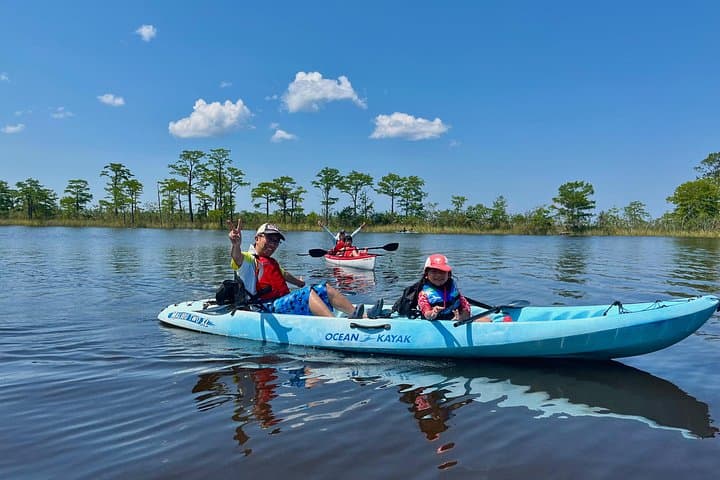
The tour welcomes most ages with infants required to sit on an adult’s lap; operators will advise on weight limits during booking to ensure safe kayak fits.
Alligator sightings are possible but uncommon; guides know safe viewing distances and will keep the group at a respectful separation.
Trips are canceled for hazardous weather; refunds or rescheduling follow the operator’s 24-hour cancellation policy if storms are expected.
The Yellow River corridor supported small fishing and timber camps historically; recent conservation efforts have shifted the focus to habitat protection and low-impact recreation.
This marsh is sensitive to pollution and shoreline disturbance—stick to marked launch points, pack out trash, and avoid approaching nesting birds or basking turtles.
Black Manta Kayak Club operates guided outdoor trips and adventures with an emphasis on safety, stewardship, and memorable experiences.
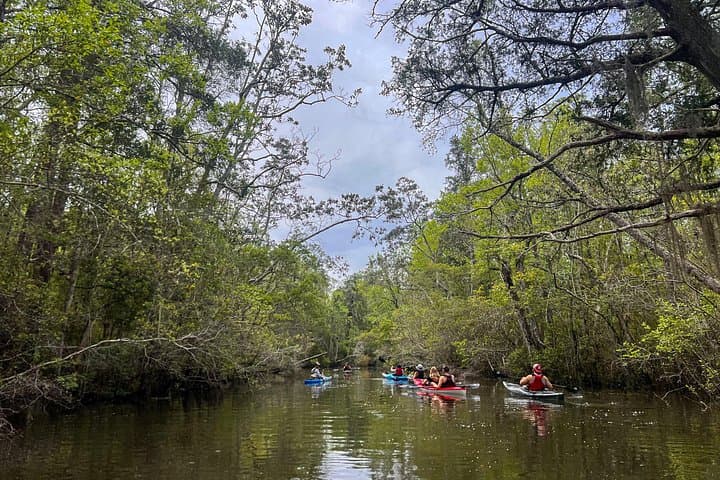
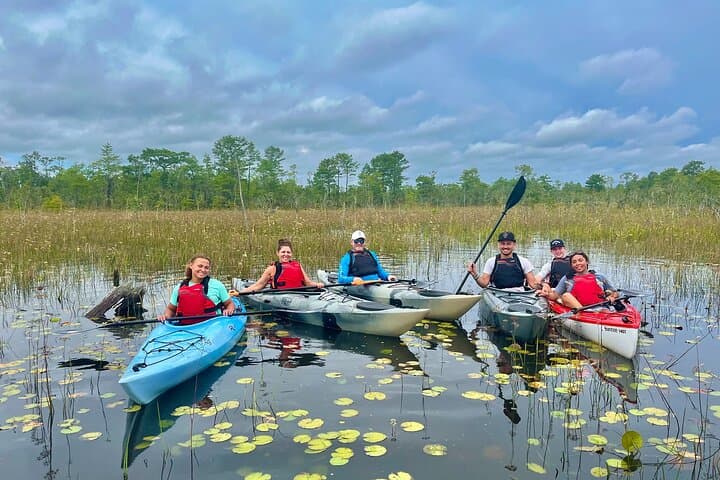
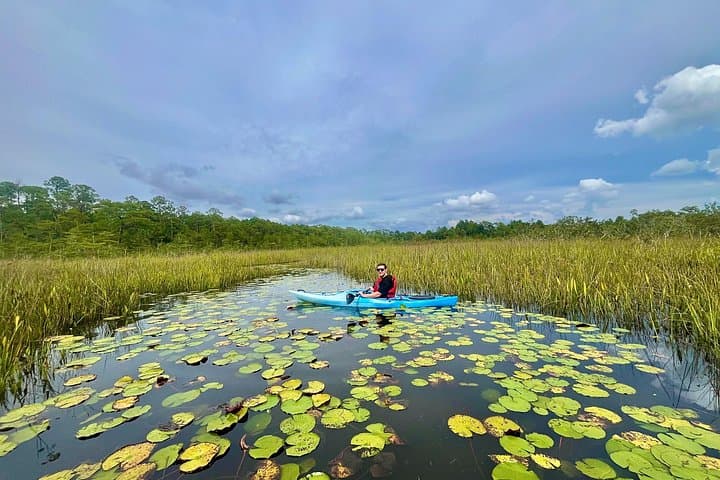
A low, cool morning on the Yellow River feels like a private invitation: fog lifts off still channels, cypress knees poke through glassy water, and paddles whisper as the group slips forward. Guides run a calm briefing, help riders into stable sit-in kayaks and point the bow into a braided maze—today’s route is 4.5 miles of slow water, back channels and marsh that demand attention rather than speed.
A low, cool morning on the Yellow River feels like a private invitation: fog lifts off still channels, cypress knees poke through glassy water, and paddles whisper as the group slips forward. Guides run a calm briefing, help riders into stable sit-in kayaks and point the bow into a braided maze—today’s route is 4.5 miles of slow water, back channels and marsh that demand attention rather than speed.
The river runs on ancient geology—marine sands and riverine deposits that carved gentle channels over millennia—and the shoreline holds cultural marks from early settlers to modern conservation efforts. Spanish moss drapes like a quiet curtain; the area once supported small fishing camps and timber work along its banks, and today those uses have given way to protected wetland tracts managed for habitat and water quality.
Wildlife shapes the rhythm here: turtles sun on logs, herons stalk the shallows, and the rare, cautious alligator slides under a reed bed if you’re fortunate (or careful) enough to see it. Guides explain local ecology as you paddle: why cypress matter, how tides and rains rearrange channels, and how small choices upstream affect this calm stretch.
Practical notes: expect 2–3 hours on the water, mostly flat paddling with occasional short eddies where current nudges you. The company supplies kayaks, paddles and PFDs; bring a dry bag, layered sun protection, insect repellent and water. Start early to avoid heat and boat traffic, keep voices low to maximize wildlife sightings, and follow Leave No Trace—this is fragile swamp country, and quiet respect keeps it that way.