THE ADVENTURE COLLECTIVE® · Independent discovery and booking for outdoor travel

Spend three hours on Yangshuo’s iconic limestone towers with an English-speaking coach, hands and feet learning the textures of karst rock. This private, small-group session is built for beginners and confident climbers who want a focused vertical experience.
Spend three hours on Yangshuo’s iconic limestone towers with an English-speaking coach, hands and feet learning the textures of karst rock. This private, small-group session is built for beginners and confident climbers who want a focused vertical experience.
The limestone cliffs rise up like broken teeth from the rice fields, their sheer faces sliced with pockets and seams. A coach clips a harness, checks knots with a practiced calm, and invites you to look up: lines disappear into a band of cloud and green. For three hours in Yangshuo you trade the flat rhythm of the town’s riverside promenades for vertical motion—foot and hand finding purchase on rock that has been sculpted by water over tens of millions of years.
Verified experiences and guided adventures in the surrounding area.
Operated by Yangshuo Blue Sky Climbing Club · Yangshuo, Guangxi
The limestone cliffs rise up like broken teeth from the rice fields, their sheer faces sliced with pockets and seams. A coach clips a harness, checks knots with a practiced calm, and invites you to look up: lines disappear into a band of cloud and green. For three hours in Yangshuo you trade the flat rhythm of the town’s riverside promenades for vertical motion—foot and hand finding purchase on rock that has been sculpted by water over tens of millions of years.
This is karst country. The peaks are the weathered remains of an ancient carbonate plateau, dissolved and eroded until towers and arches remained. The Li River nearby still pushes fluvial silt through the valley, its current nudging the lowland life along while the cliffs keep their vertical silence. Climbing here arrived in international consciousness in the 1980s and ’90s, and Yangshuo has since become one of the world’s most accessible limestone climbing destinations: routes range from short, beginner-friendly slabs to overhanging test pieces for elite climbers.
Culturally, Yangshuo mixes rural Guangxi life with an adventurous tourist lane—bamboo rafts drift past farm terraces and cyclists weave between street-side cafes. Local guides blend rock skills with hospitality; on this private, small-group session the coach-to-client ratio is no more than 1:3, and English instruction is provided.
The three-hour session starts with a safety briefing and basic technique: tying in, footwork, and body position. Transportation to the crags is about 20 minutes from central Yangshuo; morning and afternoon slots (9:00–12:00 or 14:00–17:00) fit neatly into a day of exploration. Equipment—harness, ropes, helmet, and climbing shoes—is included, and the coach can tailor climbs to beginners or push more experienced climbers to longer pitches.
Practical notes: the rock is gritty and often warm to the touch; sticky-soled shoes and chalk help. Bring water, a lightweight lunch if you plan to extend your day, sunscreen, and insect repellent. Wear flexible pants and a breathable top; the coach will advise on line choice after assessing your ability. People with spinal, heart, or pregnancy-related conditions are advised not to climb.
For photographers and story-seekers, plan your climb early or late to avoid the strongest sun and to catch the cliffs in relief. After the session, wandering the countryside yields quiet lanes, karst silhouettes, and rivers that feel like they’re daring you to stay a little longer.
Yangshuo’s rock invites movement and attention; it rewards patience and clear technique. Whether this is your first time clipping into a harness or a short sharpening session between multi-pitch trips, the three-hour climb is a concentrated slice of what makes this region a magnet for climbers worldwide.
moderate.
3 hours.
Suitable for most fitness levels—basic strength and mobility help for sustained routes; not aerobic-intensive.
No—this program is designed for beginners and intermediate climbers; coaches teach knots, belaying, and technique on-site.
Yes—harness, helmet, ropes, and climbing shoes are included; bring personal shoes if you prefer your own fit.
Pick-up from central Yangshuo is available; transportation to the crags is about 20 minutes each way.
An English-speaking rock climbing coach is provided for this activity.
Children can participate if able to follow instructions and fit available equipment; confirm age and size requirements with the operator.
For a full refund cancel at least 24 hours before the scheduled departure time; cancelations within 24 hours are non‑refundable.
Yangshuo’s karst scenery has long been part of local agriculture and river trade routes; international climbing grew here from the late 20th century onward.
Climbing routes concentrate foot traffic—stick to established trails, avoid chalking soft holds excessively, and carry out any trash to reduce impact.
Yangshuo Blue Sky Climbing Club operates guided outdoor trips and adventures with an emphasis on safety, stewardship, and memorable experiences.
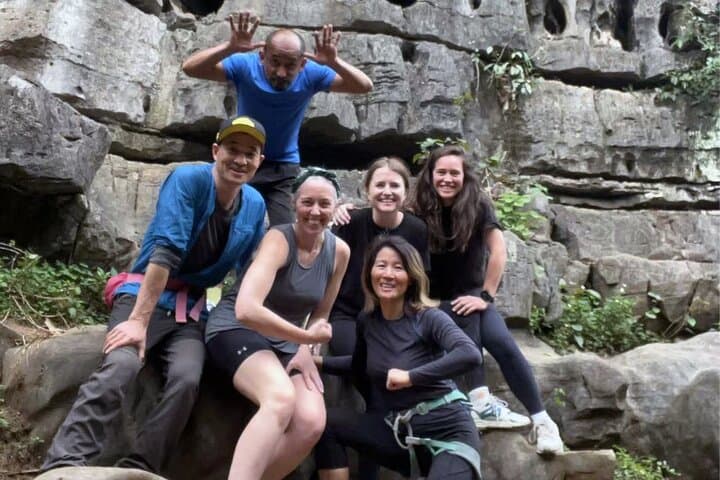
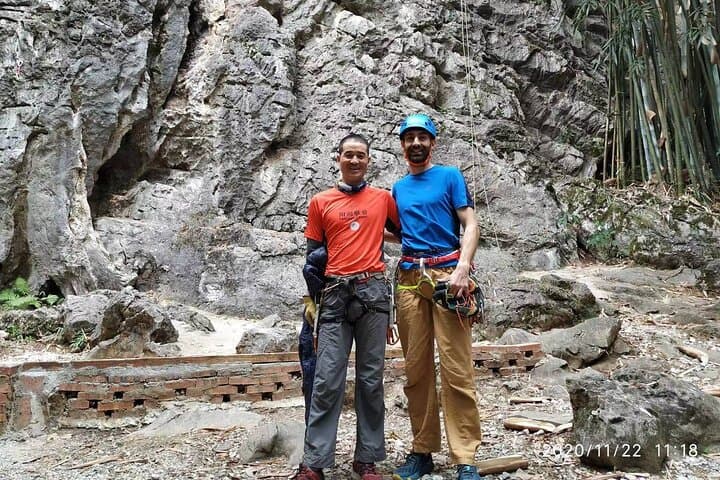
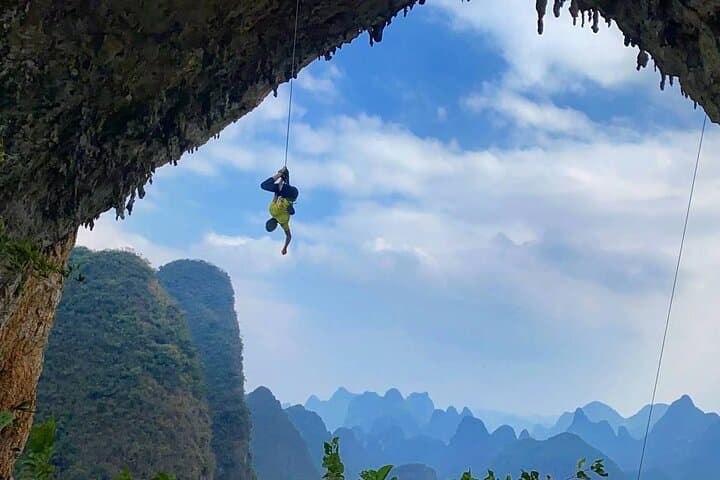
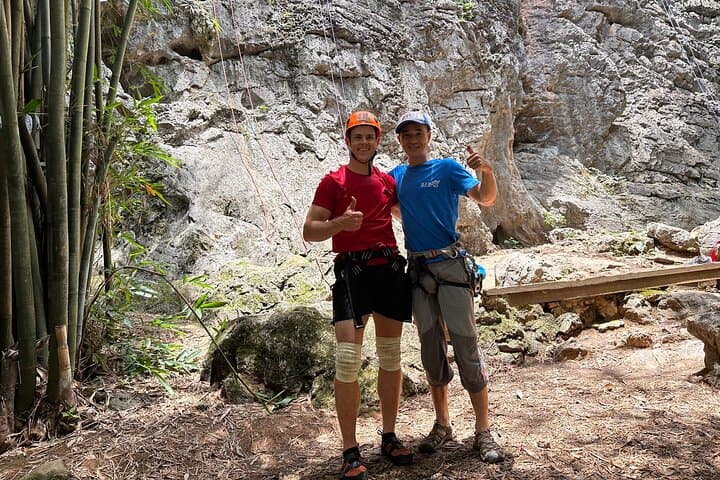
The limestone cliffs rise up like broken teeth from the rice fields, their sheer faces sliced with pockets and seams. A coach clips a harness, checks knots with a practiced calm, and invites you to look up: lines disappear into a band of cloud and green. For three hours in Yangshuo you trade the flat rhythm of the town’s riverside promenades for vertical motion—foot and hand finding purchase on rock that has been sculpted by water over tens of millions of years.
The limestone cliffs rise up like broken teeth from the rice fields, their sheer faces sliced with pockets and seams. A coach clips a harness, checks knots with a practiced calm, and invites you to look up: lines disappear into a band of cloud and green. For three hours in Yangshuo you trade the flat rhythm of the town’s riverside promenades for vertical motion—foot and hand finding purchase on rock that has been sculpted by water over tens of millions of years.
This is karst country. The peaks are the weathered remains of an ancient carbonate plateau, dissolved and eroded until towers and arches remained. The Li River nearby still pushes fluvial silt through the valley, its current nudging the lowland life along while the cliffs keep their vertical silence. Climbing here arrived in international consciousness in the 1980s and ’90s, and Yangshuo has since become one of the world’s most accessible limestone climbing destinations: routes range from short, beginner-friendly slabs to overhanging test pieces for elite climbers.
Culturally, Yangshuo mixes rural Guangxi life with an adventurous tourist lane—bamboo rafts drift past farm terraces and cyclists weave between street-side cafes. Local guides blend rock skills with hospitality; on this private, small-group session the coach-to-client ratio is no more than 1:3, and English instruction is provided.
The three-hour session starts with a safety briefing and basic technique: tying in, footwork, and body position. Transportation to the crags is about 20 minutes from central Yangshuo; morning and afternoon slots (9:00–12:00 or 14:00–17:00) fit neatly into a day of exploration. Equipment—harness, ropes, helmet, and climbing shoes—is included, and the coach can tailor climbs to beginners or push more experienced climbers to longer pitches.
Practical notes: the rock is gritty and often warm to the touch; sticky-soled shoes and chalk help. Bring water, a lightweight lunch if you plan to extend your day, sunscreen, and insect repellent. Wear flexible pants and a breathable top; the coach will advise on line choice after assessing your ability. People with spinal, heart, or pregnancy-related conditions are advised not to climb.
For photographers and story-seekers, plan your climb early or late to avoid the strongest sun and to catch the cliffs in relief. After the session, wandering the countryside yields quiet lanes, karst silhouettes, and rivers that feel like they’re daring you to stay a little longer.
Yangshuo’s rock invites movement and attention; it rewards patience and clear technique. Whether this is your first time clipping into a harness or a short sharpening session between multi-pitch trips, the three-hour climb is a concentrated slice of what makes this region a magnet for climbers worldwide.