THE ADVENTURE COLLECTIVE® · Independent discovery and booking for outdoor travel

Spend a day by private car through Yangshuo’s karst valleys, crossing the Li and Yulong rivers and visiting historic Fuli and Jiuxian villages. This easy, flexible itinerary mixes short walks, a river ferry, and chances to experience local markets and riverside culture.
Spend a day by private car through Yangshuo’s karst valleys, crossing the Li and Yulong rivers and visiting historic Fuli and Jiuxian villages. This easy, flexible itinerary mixes short walks, a river ferry, and chances to experience local markets and riverside culture.
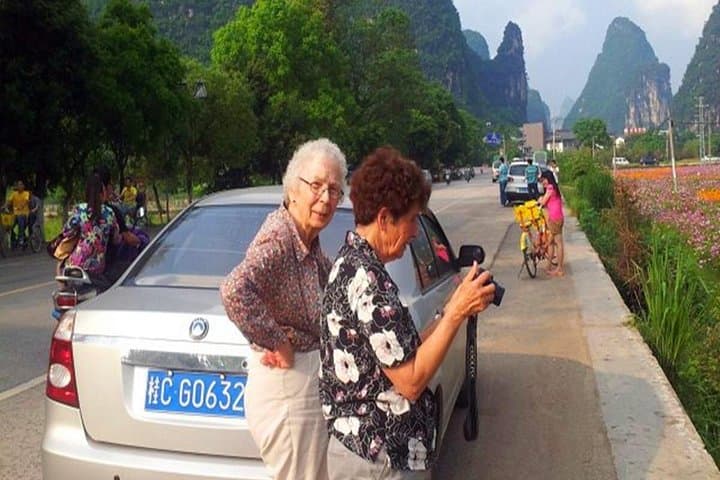
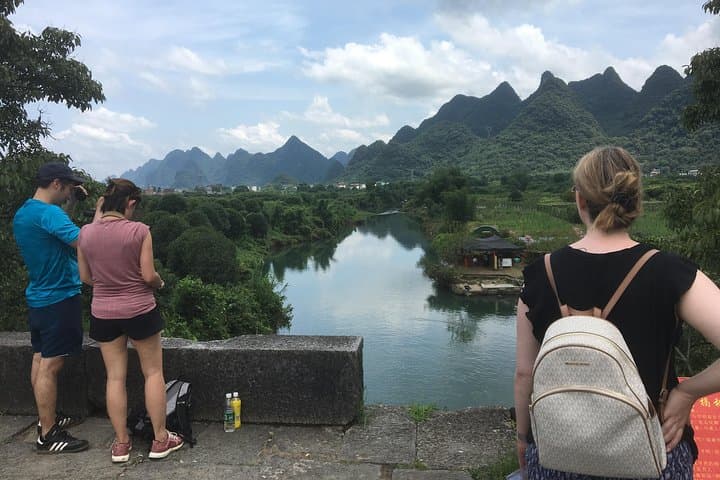
The morning light over Yangshuo slices across limestone peaks as a private car slides out of town and onto narrow village roads. Passengers peer through an open window at rice paddies reflecting the karst silhouettes; the driver points toward a red-tiled bridge and a market stall steaming with breakfast noodles. The day moves at the pace of the landscape — slow river crossings, short walks through villages, and stops that feel like frames from a classical Chinese painting.
Verified experiences and guided adventures in the surrounding area.
Operated by Yangshuo custom and culture tour (阳朔县昌盛文化艺术交流中心) · Yangshuo, Guangxi
The morning light over Yangshuo slices across limestone peaks as a private car slides out of town and onto narrow village roads. Passengers peer through an open window at rice paddies reflecting the karst silhouettes; the driver points toward a red-tiled bridge and a market stall steaming with breakfast noodles. The day moves at the pace of the landscape — slow river crossings, short walks through villages, and stops that feel like frames from a classical Chinese painting.
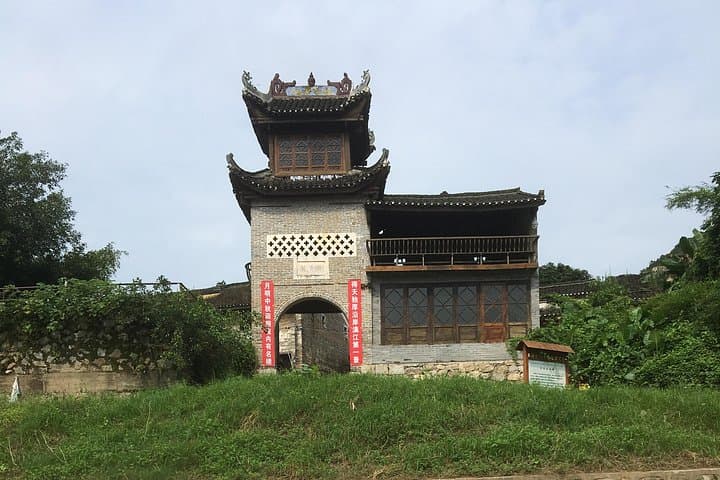
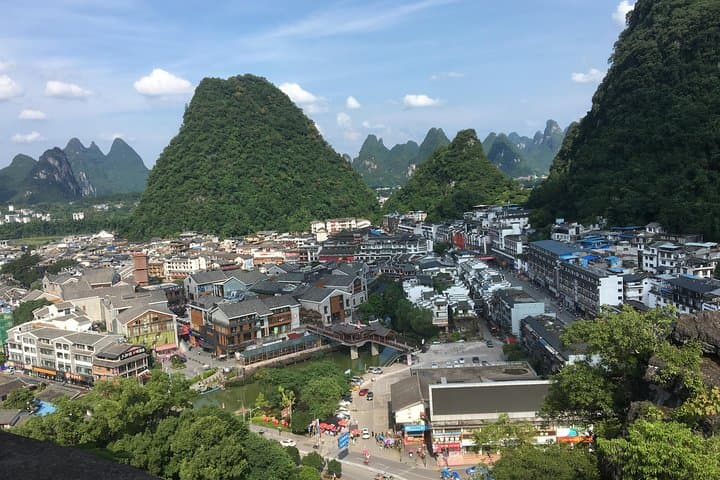
This route threads together Ming- and Qing-era villages, the Li and Yulong rivers, and roadside banyans that have shaded generations of farmers. The karst towers are not just scenic: they are ancient carbonate ridges sculpted by runoff and subterranean erosion, giving the valley its steep-sided hills and caves. Fuli and Jiuxian remain working settlements where river transport and local markets shaped daily life for centuries; today they welcome visitors while keeping traditions like woven bamboo goods and market trading alive.
Practical guidance: Expect a full day (4–9 hours) with frequent short stops rather than long hikes. Lunch is typically at a local restaurant and is not included; bring cash for market purchases. Walks at bridges and village lanes are on uneven stone and packed earth — comfortable, sturdy shoes are recommended. Mornings are best for soft light and lighter crowds; afternoons can be warm and humid in summer. The driver provides local orientation and door-to-door transfer, making it a low-effort way to see dispersed sights without public-transport logistics. Respect private property when wandering village lanes, keep water and wrappers with you, and plan for changing weather with a light shell.
easy.
4–9 hours.
Suitable for most fitness levels; involves multiple short walks (5–30 minutes) on uneven ground
Yes — private round-trip pickup and drop-off from Yangshuo hotels is included in the booking.
Some elements like the Li River ferry on the Fuli crossing may be included per itinerary; other site admissions and cave visits are often at your own expense—confirm with the operator.
Walking is limited to short village strolls, bridge crossings, and viewpoints—generally under 30 minutes per stop but on uneven surfaces.
It’s a private car tour and typically flexible on timing and stops; discuss preferences with the operator when booking to adjust the day’s focus.
Fuli and surrounding villages grew as Li River trade and ferry points; many bridges and market traditions date to Ming–Qing era local commerce.
The karst valley is sensitive to water pollution and overdevelopment—avoid single-use plastics, follow marked paths in villages, and support local businesses responsibly.
Yangshuo custom and culture tour (阳朔县昌盛文化艺术交流中心) operates guided outdoor trips and adventures with an emphasis on safety, stewardship, and memorable experiences.
The morning light over Yangshuo slices across limestone peaks as a private car slides out of town and onto narrow village roads. Passengers peer through an open window at rice paddies reflecting the karst silhouettes; the driver points toward a red-tiled bridge and a market stall steaming with breakfast noodles. The day moves at the pace of the landscape — slow river crossings, short walks through villages, and stops that feel like frames from a classical Chinese painting.
The morning light over Yangshuo slices across limestone peaks as a private car slides out of town and onto narrow village roads. Passengers peer through an open window at rice paddies reflecting the karst silhouettes; the driver points toward a red-tiled bridge and a market stall steaming with breakfast noodles. The day moves at the pace of the landscape — slow river crossings, short walks through villages, and stops that feel like frames from a classical Chinese painting.
This route threads together Ming- and Qing-era villages, the Li and Yulong rivers, and roadside banyans that have shaded generations of farmers. The karst towers are not just scenic: they are ancient carbonate ridges sculpted by runoff and subterranean erosion, giving the valley its steep-sided hills and caves. Fuli and Jiuxian remain working settlements where river transport and local markets shaped daily life for centuries; today they welcome visitors while keeping traditions like woven bamboo goods and market trading alive.
Practical guidance: Expect a full day (4–9 hours) with frequent short stops rather than long hikes. Lunch is typically at a local restaurant and is not included; bring cash for market purchases. Walks at bridges and village lanes are on uneven stone and packed earth — comfortable, sturdy shoes are recommended. Mornings are best for soft light and lighter crowds; afternoons can be warm and humid in summer. The driver provides local orientation and door-to-door transfer, making it a low-effort way to see dispersed sights without public-transport logistics. Respect private property when wandering village lanes, keep water and wrappers with you, and plan for changing weather with a light shell.