THE ADVENTURE COLLECTIVE® · Independent discovery and booking for outdoor travel

Cross the Yangon River by ferry and slide into rural Dalah by trishaw: meet children at a monastic school, see community recycling at Chu Chu Workshop, and experience local river life away from the city.
Cross the Yangon River by ferry and slide into rural Dalah by trishaw: meet children at a monastic school, see community recycling at Chu Chu Workshop, and experience local river life away from the city.
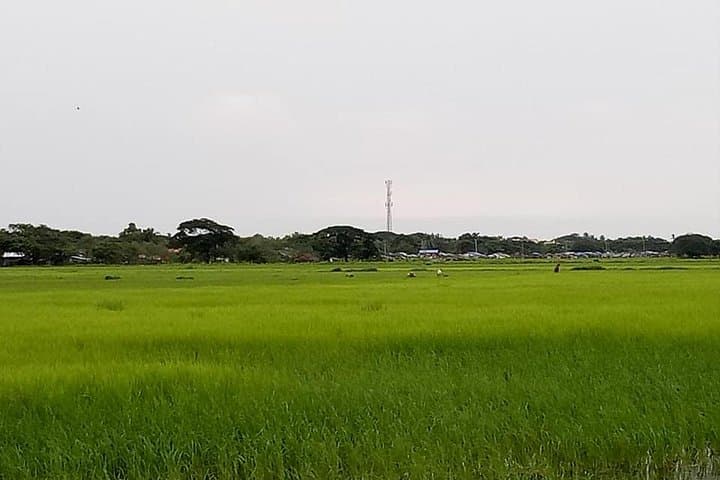
A short ferry cut the city from the countryside, the Yangon River parting downtown’s concrete edges from rice paddies and dusty village lanes. Step off at Dalah and the air changes: river-salt and frying oil, the whine of trishaw wheels, and a community that moves at a slower, human pace. The tour threads ferry crossings, trishaw rides down country roads, a visit to a monastic school where children laugh in uniform, and a stop at Chu Chu Workshop to see plastic bags reborn as marketable goods.
Verified experiences and guided adventures in the surrounding area.
Operated by Adventure Myanmar Tours & Incentives · Dala, Yangon Region
A short ferry cut the city from the countryside, the Yangon River parting downtown’s concrete edges from rice paddies and dusty village lanes. Step off at Dalah and the air changes: river-salt and frying oil, the whine of trishaw wheels, and a community that moves at a slower, human pace. The tour threads ferry crossings, trishaw rides down country roads, a visit to a monastic school where children laugh in uniform, and a stop at Chu Chu Workshop to see plastic bags reborn as marketable goods.
Dalah sits on the southern bank of the Yangon River and has remained largely rural because no bridge connects it to Yangon; ferries are the daily lifeline. Geologically it’s a low-lying river plain shaped by tidal flows and seasonal silt; culturally it’s defined by monasteries and small-scale agriculture. The workshop visit highlights a local circular-economy effort: community collection, manual processing, and design for local and export markets.
Practically, this is a low-effort, high-engagement day: expect three short ferry rides, flat walking on village paths, and frequent stops for conversation and observation. Morning departures avoid midday heat and match commuter rhythms on the river. Bring small kyat notes for trishaw fares and school donations, wear closed-toe shoes for uneven lanes, and carry sun and rain protection—the river can surprise you with gusts or a sudden shower. The tour is ideal for travelers who want a compact cultural immersion with clear logistics, minimal exertion, and tangible local impact.
easy.
5 hours.
Suitable for most fitness levels; minimal walking on flat village roads with occasional uneven surfaces
Each crossing across the Yangon River takes about 10–15 minutes depending on the boat and tides; expect several short rides during the tour.
Yes—guides describe acceptable donations like school supplies, rice, or clothing; cash offerings in small kyat notes are customary and practical.
Yes; the tour is described as physically easy. Infants must sit on an adult’s lap during any vehicle transport as noted by the operator.
Photography is usually allowed but ask staff first; be respectful when documenting people's work and living spaces.
Dalah has long served as Yangon’s rural opposite: a ferry-accessible township shaped by monastic communities and small-scale agriculture, historically serving as a food and labor hinterland for the city.
Chu Chu Workshop’s recycling model shows local conservation in practice; visitors should minimize single-use plastics and support artisans with fair purchases.
Adventure Myanmar Tours & Incentives operates guided outdoor trips and adventures with an emphasis on safety, stewardship, and memorable experiences.


A short ferry cut the city from the countryside, the Yangon River parting downtown’s concrete edges from rice paddies and dusty village lanes. Step off at Dalah and the air changes: river-salt and frying oil, the whine of trishaw wheels, and a community that moves at a slower, human pace. The tour threads ferry crossings, trishaw rides down country roads, a visit to a monastic school where children laugh in uniform, and a stop at Chu Chu Workshop to see plastic bags reborn as marketable goods.
A short ferry cut the city from the countryside, the Yangon River parting downtown’s concrete edges from rice paddies and dusty village lanes. Step off at Dalah and the air changes: river-salt and frying oil, the whine of trishaw wheels, and a community that moves at a slower, human pace. The tour threads ferry crossings, trishaw rides down country roads, a visit to a monastic school where children laugh in uniform, and a stop at Chu Chu Workshop to see plastic bags reborn as marketable goods.
Dalah sits on the southern bank of the Yangon River and has remained largely rural because no bridge connects it to Yangon; ferries are the daily lifeline. Geologically it’s a low-lying river plain shaped by tidal flows and seasonal silt; culturally it’s defined by monasteries and small-scale agriculture. The workshop visit highlights a local circular-economy effort: community collection, manual processing, and design for local and export markets.
Practically, this is a low-effort, high-engagement day: expect three short ferry rides, flat walking on village paths, and frequent stops for conversation and observation. Morning departures avoid midday heat and match commuter rhythms on the river. Bring small kyat notes for trishaw fares and school donations, wear closed-toe shoes for uneven lanes, and carry sun and rain protection—the river can surprise you with gusts or a sudden shower. The tour is ideal for travelers who want a compact cultural immersion with clear logistics, minimal exertion, and tangible local impact.