THE ADVENTURE COLLECTIVE® · Independent discovery and booking for outdoor travel

Experience Yanacocha’s high-altitude cloud forest on a private five-hour birdwatching trip to seek the Critically Endangered Black-breasted Puffleg. This guided excursion pairs quiet forest walks with local natural-history insights and transport from Quito.
Experience Yanacocha’s high-altitude cloud forest on a private five-hour birdwatching trip to seek the Critically Endangered Black-breasted Puffleg. This guided excursion pairs quiet forest walks with local natural-history insights and transport from Quito.
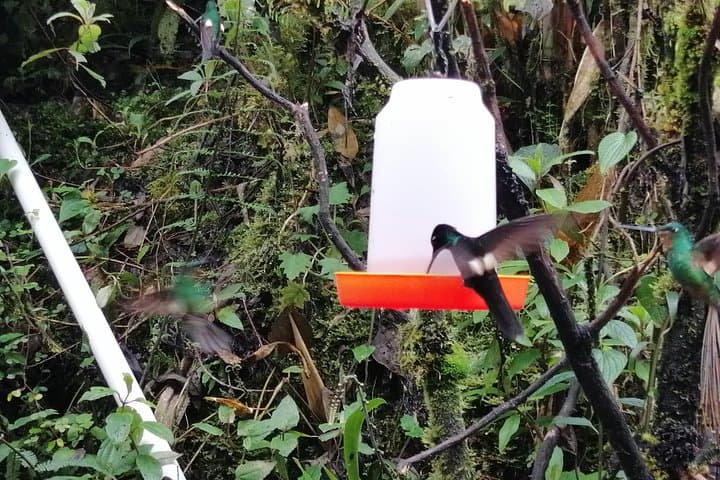
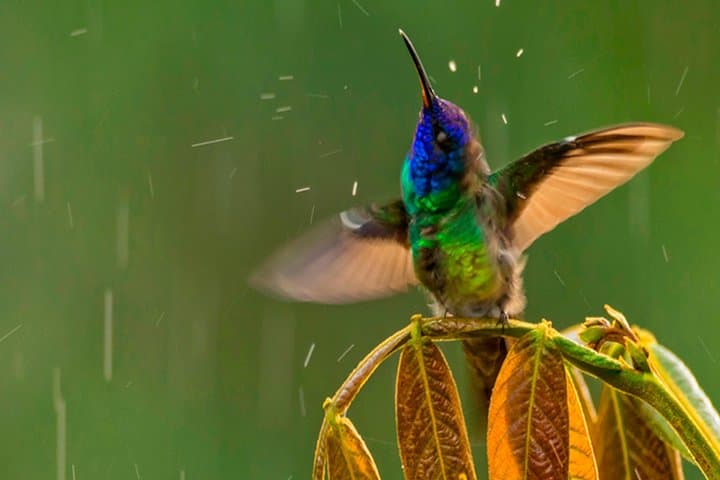
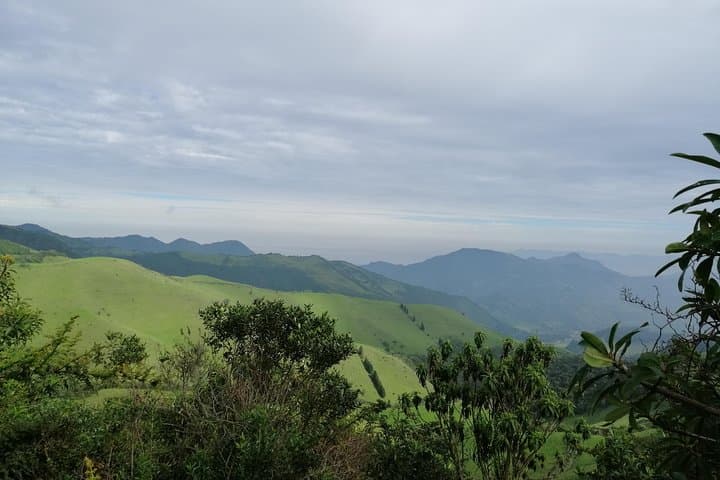
Fog lifts off the ridge as you step from the van and the forest exhales — moss drips from gnarled branches, and high-pitched hums thread the air. At 3,200–3,400 m on the northwest flank of Volcán Pichincha, Yanacocha’s cloud forest feels strict and intimate: trails narrow, orchids cling to trunks, and tiny wings flash like punctuation marks.
Verified experiences and guided adventures in the surrounding area.
Operated by CUSCUNGA TOURS · Quito, Pichincha
Fog lifts off the ridge as you step from the van and the forest exhales — moss drips from gnarled branches, and high-pitched hums thread the air. At 3,200–3,400 m on the northwest flank of Volcán Pichincha, Yanacocha’s cloud forest feels strict and intimate: trails narrow, orchids cling to trunks, and tiny wings flash like punctuation marks.
The reserve has long been a refuge for species with tiny ranges; in 2005 the Black-breasted Puffleg was named Quito’s emblematic bird and the area declared a natural patrimony. Geologically, the slopes are volcanic and steep, with soils that hold water for streams feeding northern Quito and Nono — a reason the forest has been protected since pre-Columbian times. Local guides combine ornithological knowledge with cultural notes about the valley communities that historically managed these waters.
On a private five-hour excursion you’ll move deliberately: slow steps, eyes up. Expect mixed understory, soft mud on rainy days, and short uphill sections—nothing technical, but the altitude makes effort feel harder. Highlights include searching for the Black-breasted Puffleg among dense foliage, scanning for tanagers and other high-elevation specialists, and pausing at springs that still feed Quito.
Practical guidance: book morning hours when activity peaks, bring warm, waterproof layers and close-focusing binoculars, and allow extra time for gentle acclimatization. The reserve charges entrance and most private tours include transport and an experienced guide; follow low-impact practices—stay on trails, silence phones, and keep observation distances. This trip rewards patience: the forest doesn’t perform on demand, but it does reveal rare, intimate encounters when you match its pace.
easy.
5 hours.
Suitable for most fitness levels; short, untechnical walking but allow for reduced exertion at high elevation
The private tour lasts about five hours, typically including transport from Quito, entrance to the reserve, and guided walking time.
Yes—trails are non-technical and the tour is listed as suitable for a range of fitness levels, though altitude can affect stamina.
Early morning is usually most active for hummingbirds and other forest birds; guides often schedule arrival at first light when possible.
Most private excursions include entrance to the reserve and a private guide, as well as transport—confirm details with your operator before booking.
Yanacocha’s cloud forest has supplied water to Quito since pre-Columbian times; in 2005 the Black-breasted Puffleg was designated Quito’s emblematic bird and the reserve recognized as a natural patrimony.
The reserve protects critical high-elevation habitat and water sources; low-impact visitation and staying on trails help minimize disturbance to endemic species and fragile soils.
CUSCUNGA TOURS operates guided outdoor trips and adventures with an emphasis on safety, stewardship, and memorable experiences.
Fog lifts off the ridge as you step from the van and the forest exhales — moss drips from gnarled branches, and high-pitched hums thread the air. At 3,200–3,400 m on the northwest flank of Volcán Pichincha, Yanacocha’s cloud forest feels strict and intimate: trails narrow, orchids cling to trunks, and tiny wings flash like punctuation marks.
Fog lifts off the ridge as you step from the van and the forest exhales — moss drips from gnarled branches, and high-pitched hums thread the air. At 3,200–3,400 m on the northwest flank of Volcán Pichincha, Yanacocha’s cloud forest feels strict and intimate: trails narrow, orchids cling to trunks, and tiny wings flash like punctuation marks.
The reserve has long been a refuge for species with tiny ranges; in 2005 the Black-breasted Puffleg was named Quito’s emblematic bird and the area declared a natural patrimony. Geologically, the slopes are volcanic and steep, with soils that hold water for streams feeding northern Quito and Nono — a reason the forest has been protected since pre-Columbian times. Local guides combine ornithological knowledge with cultural notes about the valley communities that historically managed these waters.
On a private five-hour excursion you’ll move deliberately: slow steps, eyes up. Expect mixed understory, soft mud on rainy days, and short uphill sections—nothing technical, but the altitude makes effort feel harder. Highlights include searching for the Black-breasted Puffleg among dense foliage, scanning for tanagers and other high-elevation specialists, and pausing at springs that still feed Quito.
Practical guidance: book morning hours when activity peaks, bring warm, waterproof layers and close-focusing binoculars, and allow extra time for gentle acclimatization. The reserve charges entrance and most private tours include transport and an experienced guide; follow low-impact practices—stay on trails, silence phones, and keep observation distances. This trip rewards patience: the forest doesn’t perform on demand, but it does reveal rare, intimate encounters when you match its pace.