THE ADVENTURE COLLECTIVE® · Independent discovery and booking for outdoor travel

Float in a crystal-mixed cenote where fresh groundwater and the sea meet and schools of tropical fish thread around you. This 90-minute guided snorkel at Yal-Ku Lagoon in Akumal pairs up-close marine life encounters with unlimited GoPro photos and local stewardship.
Float in a crystal-mixed cenote where fresh groundwater and the sea meet and schools of tropical fish thread around you. This 90-minute guided snorkel at Yal-Ku Lagoon in Akumal pairs up-close marine life encounters with unlimited GoPro photos and local stewardship.
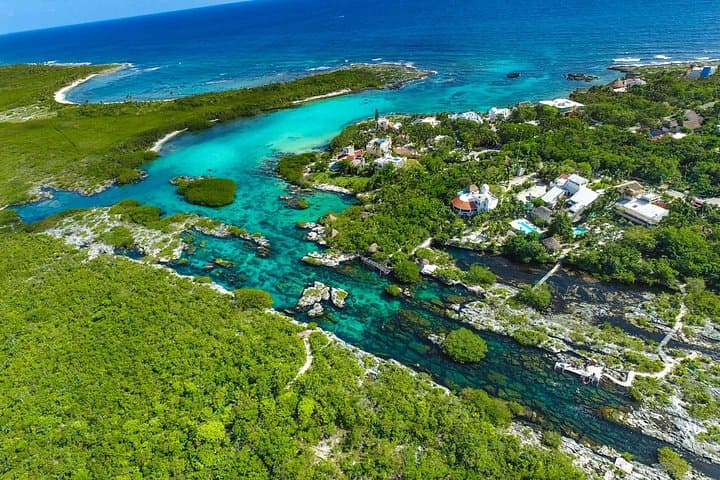
A pale-blue cut in the mangrove opens like a doorway and the water seems to inhale you—the sun slashes through a thin canopy, painting the lagoon floor in bands of light. That first breath of Yal-Ku is disarming: salt and fresh water meet in a calm, shallow bowl where brightly patterned fish hover without hurry. Local guides Martín or Melqui shoulder a bag of masks and smiles, and the group slips into what feels at once like a protected aquarium and a living classroom.
Verified experiences and guided adventures in the surrounding area.
Operated by We Love Akumal - Experiencias Locales · Akumal, Quintana Roo
A pale-blue cut in the mangrove opens like a doorway and the water seems to inhale you—the sun slashes through a thin canopy, painting the lagoon floor in bands of light. That first breath of Yal-Ku is disarming: salt and fresh water meet in a calm, shallow bowl where brightly patterned fish hover without hurry. Local guides Martín or Melqui shoulder a bag of masks and smiles, and the group slips into what feels at once like a protected aquarium and a living classroom.
The lagoon’s name comes from Mayan—Yal-Ku, “nest of fish”—and the geology tells the rest. A collapsed limestone ceiling fed by cenotes mixes groundwater with incoming sea water, creating a stable, clear layer that amplifies color and hides haloclines in gentle bands. Akumal itself—“place of turtles” in Yucatec Maya—has been a coastal community for centuries; fishing and reef stewardship shape the local culture. Today small ecoparks and family guides run visits in rotation to limit impact and teach respect for the reef’s occupants.
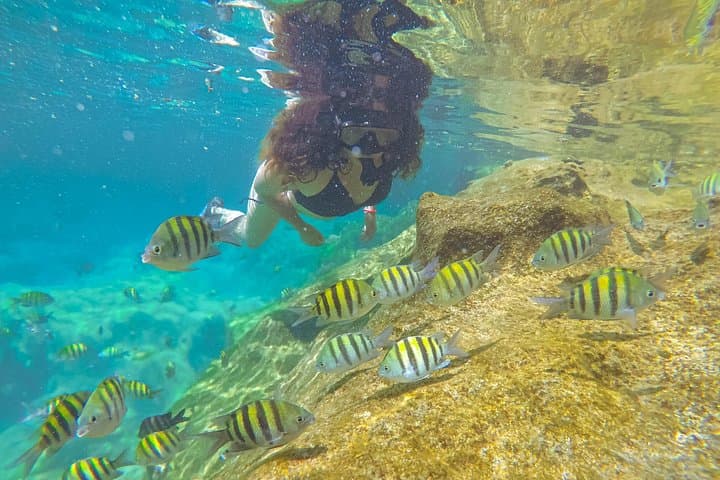
Expect to see roughly 35 species: parrotfish scraping algae from rock, darting sergeant majors, curious angelfish, and if you’re lucky a green turtle gliding through the deeper channels. The guides point out dietary habits and ID traits as you snorkel, and they steer the group toward pockets of seagrass where life concentrates. The experience is short but dense—about 90 minutes total—and designed to be accessible: no advanced skills required, and shore-entry makes the shallow nerves manageable.
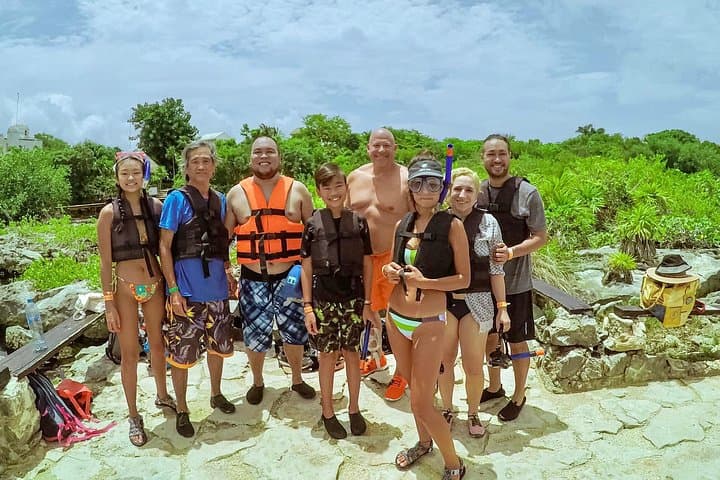
Practicalities matter here. Meeting point is the small commercial strip near the local 7-Eleven in Akumal; tours include snorkel gear, life vests, unlimited GoPro photos, wristband entry, and changing rooms with showers. You’ll want reef-safe sunscreen, a snug mask, and water shoes for the rocky approach. Mornings are best for light and calm water; afternoons can still be lovely but see more visitors.
For conservation-minded travelers, this is a low-impact way to get close to coastal ecosystems—the local operation emphasizes not touching animals and limiting sunscreen to reef-safe formulas. Bring a towel, a waterproof case for your phone, and a small tip for the guide who’s doing both interpretation and safety work. Whether you come for the photography or the quiet schooling of fish, Yal-Ku rewards attention: the lagoon doesn’t rush you, it simply holds the colors until you learn to see them.
easy.
1–2 hours.
Suitable for most fitness levels; participants should be comfortable in shallow water and able to tread or float with a life vest.
The total activity runs about 90 minutes—roughly one hour in the water with time for briefing, entry, and exit.
No advanced experience required; basic comfort in the water and the ability to swim short distances is sufficient. Life vests are available.
Yes—unlimited GoPro photos taken by the guides are included in the tour price.
The park notes stroller access for infants; terrain around the lagoon has soft paths but some uneven limestone—wheelchair users should check on-site accessibility details in advance.
Yes—this activity is family-friendly, though children should be accompanied by adults and must be comfortable in the water.
Full refund if canceled at least 24 hours before the scheduled start; tours may be canceled for bad weather.
Yal-Ku’s mixture of cenote-fed fresh water and marine inflow has supported local fishing and seasonal harvests for generations; the name means “nest of fish” in Mayan.
Local guides run small groups to minimize disturbance and promote reef-safe practices; visitors are asked not to touch wildlife and to use reef-friendly sunscreen.
We Love Akumal - Experiencias Locales operates guided outdoor trips and adventures with an emphasis on safety, stewardship, and memorable experiences.
A pale-blue cut in the mangrove opens like a doorway and the water seems to inhale you—the sun slashes through a thin canopy, painting the lagoon floor in bands of light. That first breath of Yal-Ku is disarming: salt and fresh water meet in a calm, shallow bowl where brightly patterned fish hover without hurry. Local guides Martín or Melqui shoulder a bag of masks and smiles, and the group slips into what feels at once like a protected aquarium and a living classroom.
A pale-blue cut in the mangrove opens like a doorway and the water seems to inhale you—the sun slashes through a thin canopy, painting the lagoon floor in bands of light. That first breath of Yal-Ku is disarming: salt and fresh water meet in a calm, shallow bowl where brightly patterned fish hover without hurry. Local guides Martín or Melqui shoulder a bag of masks and smiles, and the group slips into what feels at once like a protected aquarium and a living classroom.
The lagoon’s name comes from Mayan—Yal-Ku, “nest of fish”—and the geology tells the rest. A collapsed limestone ceiling fed by cenotes mixes groundwater with incoming sea water, creating a stable, clear layer that amplifies color and hides haloclines in gentle bands. Akumal itself—“place of turtles” in Yucatec Maya—has been a coastal community for centuries; fishing and reef stewardship shape the local culture. Today small ecoparks and family guides run visits in rotation to limit impact and teach respect for the reef’s occupants.
Expect to see roughly 35 species: parrotfish scraping algae from rock, darting sergeant majors, curious angelfish, and if you’re lucky a green turtle gliding through the deeper channels. The guides point out dietary habits and ID traits as you snorkel, and they steer the group toward pockets of seagrass where life concentrates. The experience is short but dense—about 90 minutes total—and designed to be accessible: no advanced skills required, and shore-entry makes the shallow nerves manageable.
Practicalities matter here. Meeting point is the small commercial strip near the local 7-Eleven in Akumal; tours include snorkel gear, life vests, unlimited GoPro photos, wristband entry, and changing rooms with showers. You’ll want reef-safe sunscreen, a snug mask, and water shoes for the rocky approach. Mornings are best for light and calm water; afternoons can still be lovely but see more visitors.
For conservation-minded travelers, this is a low-impact way to get close to coastal ecosystems—the local operation emphasizes not touching animals and limiting sunscreen to reef-safe formulas. Bring a towel, a waterproof case for your phone, and a small tip for the guide who’s doing both interpretation and safety work. Whether you come for the photography or the quiet schooling of fish, Yal-Ku rewards attention: the lagoon doesn’t rush you, it simply holds the colors until you learn to see them.