THE ADVENTURE COLLECTIVE® · Independent discovery and booking for outdoor travel

Pair an early climb up El Castillo at Xunantunich with a canoe glide through Barton Creek Cave on a private seven-hour tour from San Ignacio. Ancient stone, cool subterranean passages, and local stories combine into a compact Belizean adventure.
Pair an early climb up El Castillo at Xunantunich with a canoe glide through Barton Creek Cave on a private seven-hour tour from San Ignacio. Ancient stone, cool subterranean passages, and local stories combine into a compact Belizean adventure.
The morning begins at the San Ignacio welcome center with the soft rumble of an air-conditioned van and the promise of two very different worlds: one above ground where stone meets sky, the other beneath the surface where water carves silence.
Verified experiences and guided adventures in the surrounding area.
Operated by Classic Maya Adventure Tours (CmaTours) · San Ignacio, Cayo District
The morning begins at the San Ignacio welcome center with the soft rumble of an air-conditioned van and the promise of two very different worlds: one above ground where stone meets sky, the other beneath the surface where water carves silence.
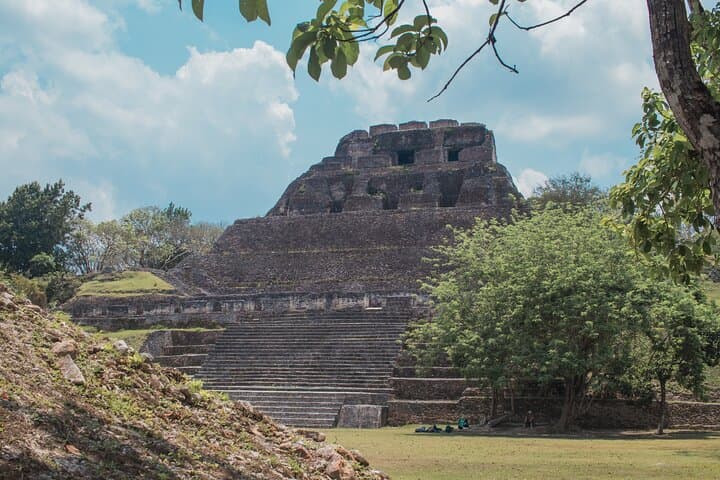
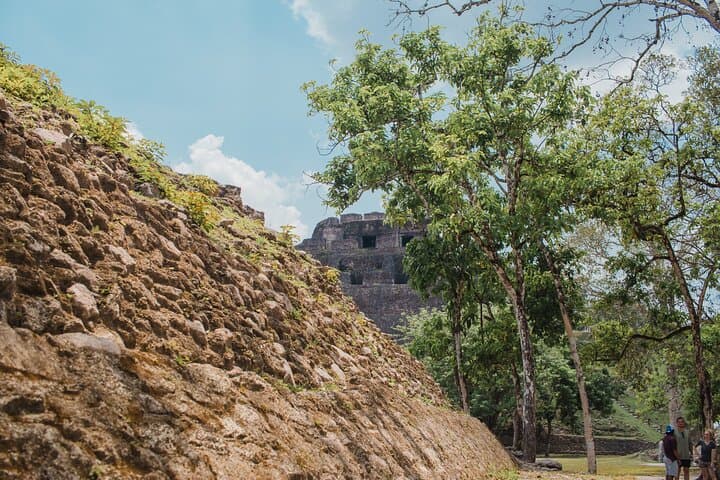
A short, hand-cranked ferry crossing delivers visitors across the Mopan River to Xunantunich, an archaeological complex that still carries the rhythm of an ancient city. Guides lead groups across compacted plaza stones and narrow causeways, narrating a history of kings, astronomy, and ritual. The centerpiece, El Castillo, thrusts roughly 130 feet above the jungle floor—climb its weathered stairway for a view that flattens modern borders into a rolling, green horizon.
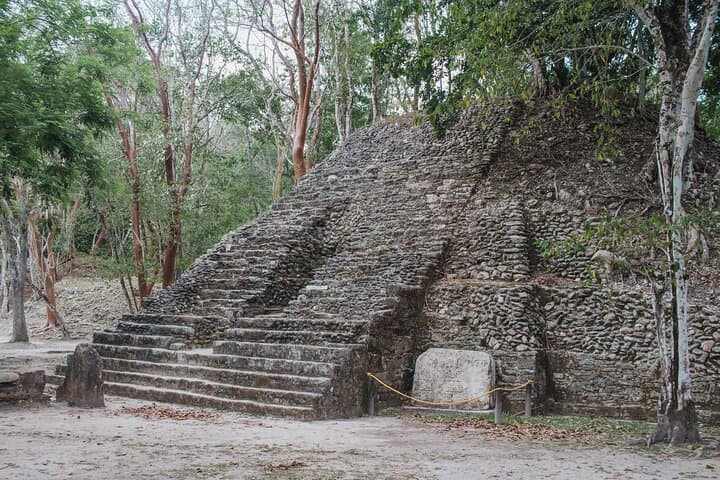
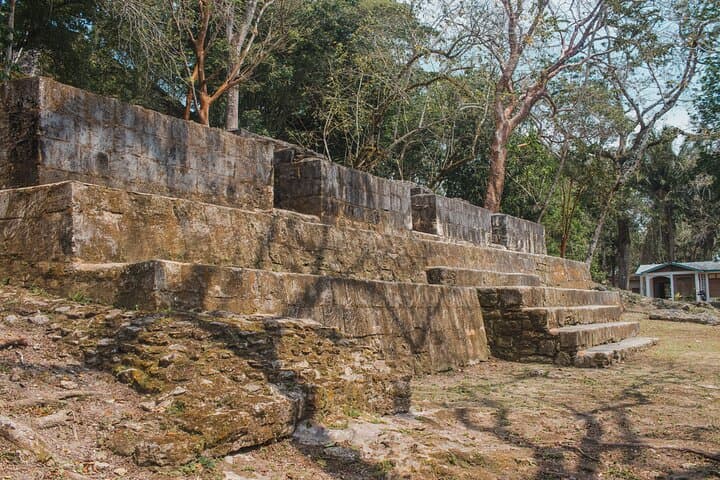
Geology and time are visible here: limestone foundations, quarried facades, and stucco faces that survive as ghosts of pigment. The Cayo District’s karst landscape drains into underground networks; it’s this same limestone that carved Barton Creek Cave over millennia. At Barton Creek, the air cools and the light thins. Canoes glide on a black mirror of water while stalactites hang like old chandeliers and flowstone curtains drip in slow motion. The cave system stretches for kilometers; the guided canoe follows calm passages punctuated by galleries where ancient Maya left artifacts and ceremonial alcoves.
Culturally, the day stitches colonial-era farming communities, modern Maya descendants, and tour guides whose local knowledge turns stone and water into stories. Expect conversational history—trade routes, ritual use of caves, and the ongoing work to protect both sites.
Practical guidance: the full private excursion is about seven hours (two hours at Xunantunich, two hours canoeing Barton Creek, plus drives and transfers). There’s a 45-minute drive each way between San Ignacio and Barton Creek. Terrain is mixed: packed earth and uneven stone at the ruins, packed river access and shallow creek entry points for canoeing. El Castillo’s stairs are steep; the cave canoe ride requires sitting low and steady—no technical paddling skills, but basic balance helps.
Bring sturdy shoes you can climb in, water shoes for wet approaches, sun protection, and a small dry bag for electronics. Hydrate before you board the canoe—the cave is cool, but humidity can build on the return walk. Note medical restrictions: travelers with spinal or serious heart issues should avoid climbs and canoeing. The operator provides caving equipment, bottled water, towels, and private transfers. For photographers, golden light on the pyramid and low-light cave shots reward patience; a headlamp and a fast lens are handy.
This private pairing feels like two halves of Belize: skyward ruins that challenge your perspective and a subterranean river that dares you to move quietly through history.
moderate.
7 hours (approx).
Comfortable with short climbs and sitting in a low-profile canoe; basic balance and stamina for stairs and short walks.
The private tour runs about seven hours total—approximately two hours at Xunantunich, two hours for the Barton Creek canoe experience, plus driving and transfers.
No advanced paddling skills are required; the guide does the steering while guests sit; basic balance and the ability to enter/exit a low canoe are needed.
Basic restrooms are available at both the San Ignacio meeting area and at Xunantunich; facilities near the cave are rustic—plan accordingly.
Yes—children can participate, but parents should assess comfort with stairs, dark cave environments, and sitting in a canoe for extended periods.
Quick-dry clothing and layers for warm days and a lightweight long-sleeve for the cave; sturdy shoes and a change of clothes if you plan to swim or get wet.
Yes—admission, caving equipment, bottled water, towels after the cave, and private transfers are included in the tour price.
Xunantunich was a major late-classic Maya center; many of the plazas and stuccoed facades date to around AD 600–900. Caves like Barton Creek were sacred to the Maya and used for ritual offerings.
Both sites are managed with visitor limits and ongoing archaeological and environmental studies; stick to paths and avoid touching formations in the cave to protect fragile deposits.
Classic Maya Adventure Tours (CmaTours) operates guided outdoor trips and adventures with an emphasis on safety, stewardship, and memorable experiences.
The morning begins at the San Ignacio welcome center with the soft rumble of an air-conditioned van and the promise of two very different worlds: one above ground where stone meets sky, the other beneath the surface where water carves silence.
The morning begins at the San Ignacio welcome center with the soft rumble of an air-conditioned van and the promise of two very different worlds: one above ground where stone meets sky, the other beneath the surface where water carves silence.
A short, hand-cranked ferry crossing delivers visitors across the Mopan River to Xunantunich, an archaeological complex that still carries the rhythm of an ancient city. Guides lead groups across compacted plaza stones and narrow causeways, narrating a history of kings, astronomy, and ritual. The centerpiece, El Castillo, thrusts roughly 130 feet above the jungle floor—climb its weathered stairway for a view that flattens modern borders into a rolling, green horizon.
Geology and time are visible here: limestone foundations, quarried facades, and stucco faces that survive as ghosts of pigment. The Cayo District’s karst landscape drains into underground networks; it’s this same limestone that carved Barton Creek Cave over millennia. At Barton Creek, the air cools and the light thins. Canoes glide on a black mirror of water while stalactites hang like old chandeliers and flowstone curtains drip in slow motion. The cave system stretches for kilometers; the guided canoe follows calm passages punctuated by galleries where ancient Maya left artifacts and ceremonial alcoves.
Culturally, the day stitches colonial-era farming communities, modern Maya descendants, and tour guides whose local knowledge turns stone and water into stories. Expect conversational history—trade routes, ritual use of caves, and the ongoing work to protect both sites.
Practical guidance: the full private excursion is about seven hours (two hours at Xunantunich, two hours canoeing Barton Creek, plus drives and transfers). There’s a 45-minute drive each way between San Ignacio and Barton Creek. Terrain is mixed: packed earth and uneven stone at the ruins, packed river access and shallow creek entry points for canoeing. El Castillo’s stairs are steep; the cave canoe ride requires sitting low and steady—no technical paddling skills, but basic balance helps.
Bring sturdy shoes you can climb in, water shoes for wet approaches, sun protection, and a small dry bag for electronics. Hydrate before you board the canoe—the cave is cool, but humidity can build on the return walk. Note medical restrictions: travelers with spinal or serious heart issues should avoid climbs and canoeing. The operator provides caving equipment, bottled water, towels, and private transfers. For photographers, golden light on the pyramid and low-light cave shots reward patience; a headlamp and a fast lens are handy.
This private pairing feels like two halves of Belize: skyward ruins that challenge your perspective and a subterranean river that dares you to move quietly through history.