THE ADVENTURE COLLECTIVE® · Independent discovery and booking for outdoor travel

Chase sunrise and sunset across Xiapu’s famous mudflats on a focused two-day photography tour. Visit Xiaohao, Dongbi, Beiqi and Dong'an Island to capture tide patterns, seaweed poles and working fishing communities.
Chase sunrise and sunset across Xiapu’s famous mudflats on a focused two-day photography tour. Visit Xiaohao, Dongbi, Beiqi and Dong'an Island to capture tide patterns, seaweed poles and working fishing communities.
The morning light in Xiapu arrives slow and deliberate, sliding across broad mudflats and drawing tiger-skin stripes where the sea has retreated. Photographers stand on bamboo tracks or low walls as channels of silver water split the beach; fishing poles and kelp racks punctuate the horizon like punctuation marks.
Verified experiences and guided adventures in the surrounding area.
Operated by Elephant Tour · Xiapu, Fujian
The morning light in Xiapu arrives slow and deliberate, sliding across broad mudflats and drawing tiger-skin stripes where the sea has retreated. Photographers stand on bamboo tracks or low walls as channels of silver water split the beach; fishing poles and kelp racks punctuate the horizon like punctuation marks.
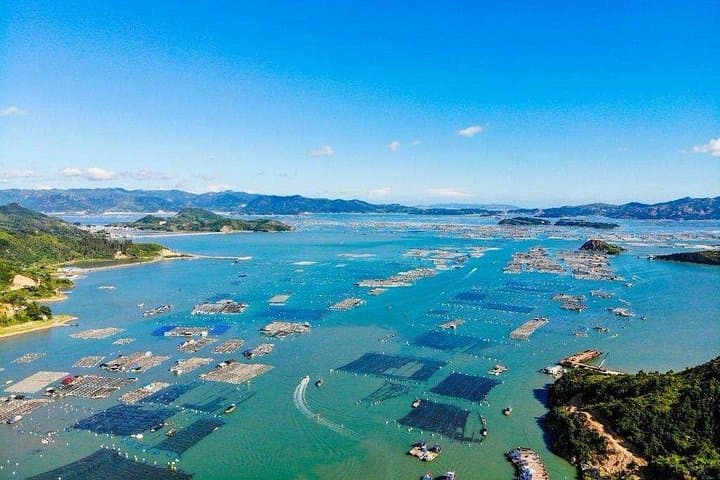
This two-day route follows coastal villages that shaped Fujian's salt-and-sea economy for centuries. The mudflats are the product of long, gentle tidal deposition against eroding headlands — fine silt and organic sediment that create flats dozens of kilometers wide at low tide. Local communities have adapted with raised houses, bamboo poles for seaweed farming, and narrow channels that direct the tide. Century-old fishing methods and modern aquaculture sit side by side: fish pens, oyster racks, and the bamboo poles used for kelp harvest are as much cultural artifacts as subjects.
On day one, light-driven shots at Xiaohao and Dongbi capture sunset backlight and fishermen at work; day two’s sunrise at Beiqi and the sandbar to Weijiang reveal the famed tiger-stripe patterns and the “Venice on the Sea” feel of Dong'an Island.
Practical guide: tides dictate access — plan shoots around low tide and sunrise/sunset windows. Expect muddy terrain and salt spray; waterproof boots and a sturdy tripod are essential. Private transfers and hotel pickup simplify timing, so shooters can focus on composition rather than logistics. Respect working fish farms, ask before entering village properties, and leave no trace: the flats are both a living landscape and a fragile one.
easy.
2 days.
Suitable for all fitness levels; requires short walks on uneven, muddy ground and early-morning wakeups
Aim for low tide combined with golden hour: the hour before and after sunrise and sunset reveal exposed flats and the strongest contrasts.
Yes, but surfaces are slippery and soft; wear waterproof boots, move slowly near channels, and follow your guide’s directions.
Drone rules vary in China and near villages; check local regulations and ask permission — some areas restrict drones for privacy and safety.
This private two-day tour includes hotel pickup/drop-off, private vehicle transfers and local guide support to coordinate tide timing.
Xiapu’s communities have long combined fishing and aquaculture; bamboo-pole seaweed farming evolved as a coastal adaptation to tidal flats over generations.
The flats are ecologically productive but sensitive to disturbance and water quality changes; stick to paths, avoid trampling kelp racks, and dispose of waste properly.
Elephant Tour operates guided outdoor trips and adventures with an emphasis on safety, stewardship, and memorable experiences.
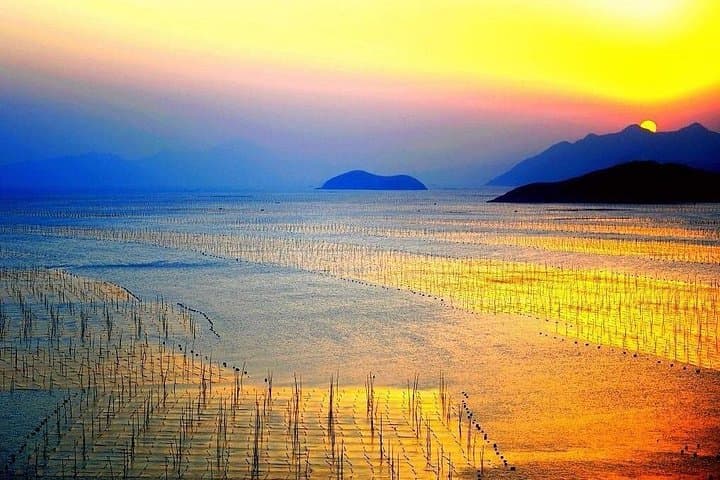
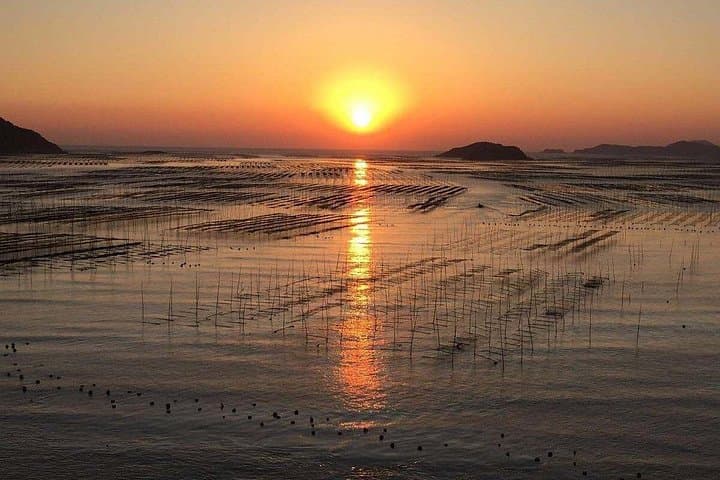
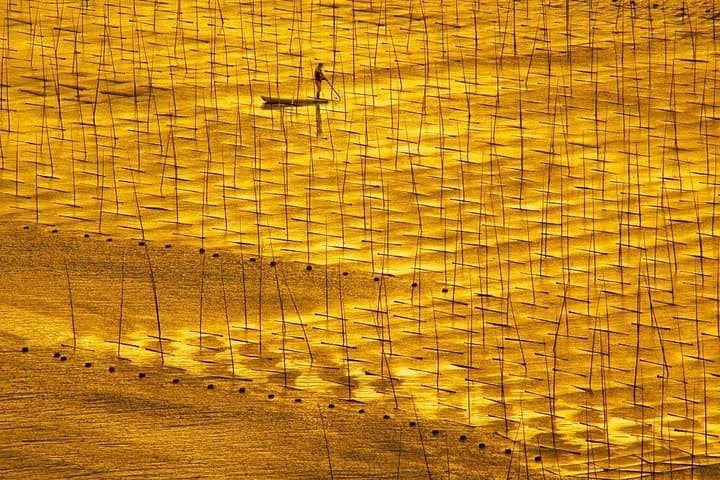
The morning light in Xiapu arrives slow and deliberate, sliding across broad mudflats and drawing tiger-skin stripes where the sea has retreated. Photographers stand on bamboo tracks or low walls as channels of silver water split the beach; fishing poles and kelp racks punctuate the horizon like punctuation marks.
The morning light in Xiapu arrives slow and deliberate, sliding across broad mudflats and drawing tiger-skin stripes where the sea has retreated. Photographers stand on bamboo tracks or low walls as channels of silver water split the beach; fishing poles and kelp racks punctuate the horizon like punctuation marks.
This two-day route follows coastal villages that shaped Fujian's salt-and-sea economy for centuries. The mudflats are the product of long, gentle tidal deposition against eroding headlands — fine silt and organic sediment that create flats dozens of kilometers wide at low tide. Local communities have adapted with raised houses, bamboo poles for seaweed farming, and narrow channels that direct the tide. Century-old fishing methods and modern aquaculture sit side by side: fish pens, oyster racks, and the bamboo poles used for kelp harvest are as much cultural artifacts as subjects.
On day one, light-driven shots at Xiaohao and Dongbi capture sunset backlight and fishermen at work; day two’s sunrise at Beiqi and the sandbar to Weijiang reveal the famed tiger-stripe patterns and the “Venice on the Sea” feel of Dong'an Island.
Practical guide: tides dictate access — plan shoots around low tide and sunrise/sunset windows. Expect muddy terrain and salt spray; waterproof boots and a sturdy tripod are essential. Private transfers and hotel pickup simplify timing, so shooters can focus on composition rather than logistics. Respect working fish farms, ask before entering village properties, and leave no trace: the flats are both a living landscape and a fragile one.