THE ADVENTURE COLLECTIVE® · Independent discovery and booking for outdoor travel

Walk among 2,000-year-old clay warriors, then roll up your sleeves at a government-certified figurine factory. This full-day English-group tour combines archaeological context with a hands-on pottery experience and a local lunch.
Walk among 2,000-year-old clay warriors, then roll up your sleeves at a government-certified figurine factory. This full-day English-group tour combines archaeological context with a hands-on pottery experience and a local lunch.
Morning light slices across the pits as you step off the coach and into the slow, deliberate world of Qin Shi Huang’s army. Rows of headless forms become individuals as your guide points out differences in armor, rank, and expression; in the factory that follows, clay and fingertip make the same transformation in reverse as you shape a figurine to take home.
Verified experiences and guided adventures in the surrounding area.
Operated by Damoo Tours · Xi'an, Shaanxi
Morning light slices across the pits as you step off the coach and into the slow, deliberate world of Qin Shi Huang’s army. Rows of headless forms become individuals as your guide points out differences in armor, rank, and expression; in the factory that follows, clay and fingertip make the same transformation in reverse as you shape a figurine to take home.
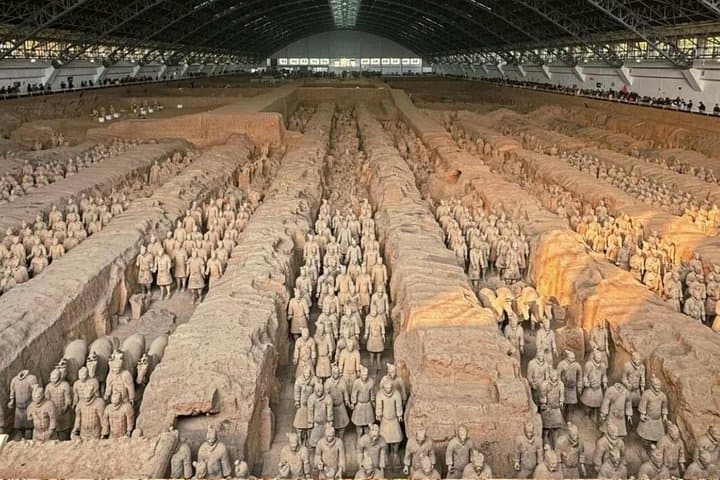
The Terracotta Army dates to the late 3rd century BCE, created to accompany China’s first emperor into the afterlife. The site sits on the loess plains east of Xi’an, where sedimentary soils preserved thousands of life-sized figures under millennia of earth. The museum complex mixes excavation pits, conservation labs, and a modern display hall that tells both archaeological and political histories of Qin-era statecraft.
Culturally, the experience bridges ancient craft and contemporary practice: the factory you visit is government-certified and demonstrates traditional molding and firing methods adapted for tourism. Local food in Xi’an reflects centuries of Silk Road exchange—expect noodles, cumin-laced lamb nearby, and the tour’s included vegetarian lunch.
Practically, this is a full-day, low-impact outing: plan for 8 hours door-to-door, comfortable shoes for walking and standing, and a passport or ID for admission. The figurine workshop is hands-on but accessible; staff guide every step. Photography is allowed in most areas but restricted in conservation zones. If you want softer crowds, aim for weekday mornings when the pits feel quieter and the clay seems to hold its stories a little more patiently.
easy.
8 hours.
Suitable for most fitness levels; participants should be able to stand and walk for extended periods and manage short flights of stairs.
The total experience is about 8 hours and includes round-trip hotel pickup (Xi’an city), entrance to the Terracotta Warriors Museum, an authentic Chinese lunch, and the figurine-making session at the certified factory.
Yes—children can participate under supervision; the workshop is hands-on but staff provide guidance and simpler tasks for younger participants.
The museum and many parts of the site offer wheelchair access and paved routes, but some excavation areas have uneven ground—notify the operator in advance to arrange assistance if needed.
This listing is for an English-group tour: guides provide commentary in English and coordinate logistics including pickup times.
The Terracotta Army was commissioned by Qin Shi Huang in the late 3rd century BCE as part of a vast funerary complex; each figure was individually modeled to represent ranks, faces, and attire of his army.
Ongoing conservation limits physical contact and photography in sensitive zones; supporting certified workshops and following site rules helps preserve pigments and fragile remains.
Damoo Tours operates guided outdoor trips and adventures with an emphasis on safety, stewardship, and memorable experiences.
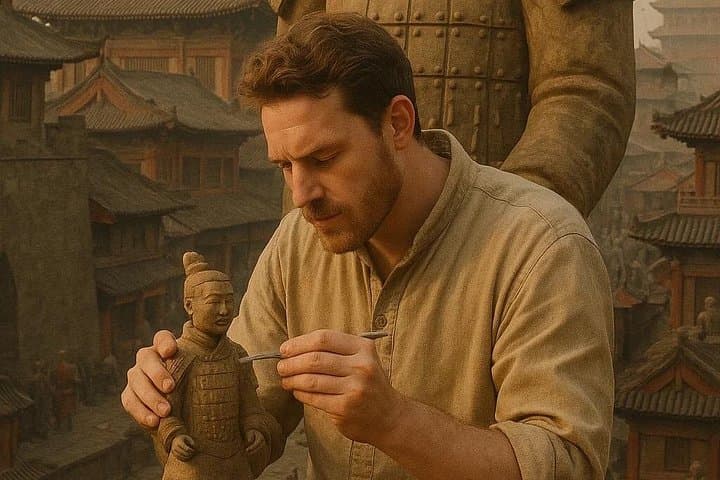
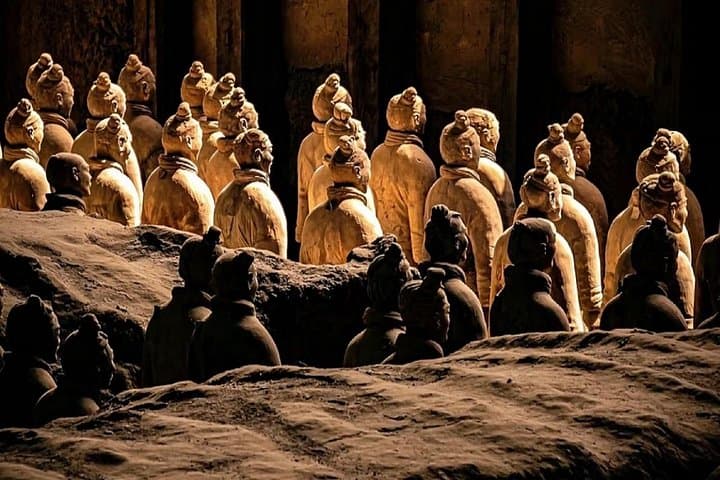
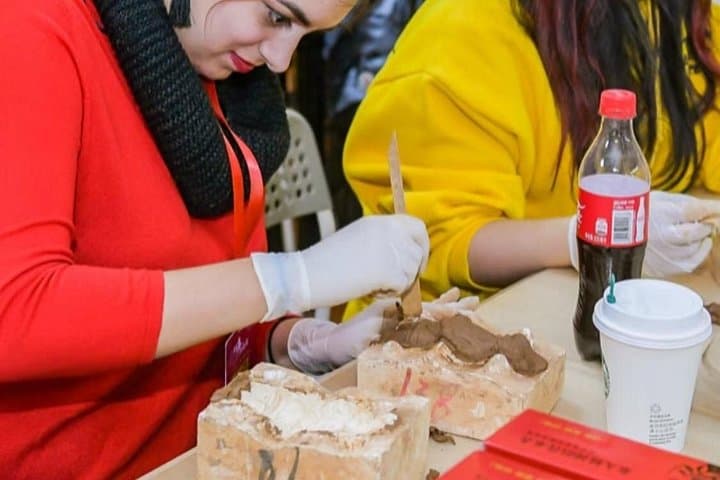
Morning light slices across the pits as you step off the coach and into the slow, deliberate world of Qin Shi Huang’s army. Rows of headless forms become individuals as your guide points out differences in armor, rank, and expression; in the factory that follows, clay and fingertip make the same transformation in reverse as you shape a figurine to take home.
Morning light slices across the pits as you step off the coach and into the slow, deliberate world of Qin Shi Huang’s army. Rows of headless forms become individuals as your guide points out differences in armor, rank, and expression; in the factory that follows, clay and fingertip make the same transformation in reverse as you shape a figurine to take home.
The Terracotta Army dates to the late 3rd century BCE, created to accompany China’s first emperor into the afterlife. The site sits on the loess plains east of Xi’an, where sedimentary soils preserved thousands of life-sized figures under millennia of earth. The museum complex mixes excavation pits, conservation labs, and a modern display hall that tells both archaeological and political histories of Qin-era statecraft.
Culturally, the experience bridges ancient craft and contemporary practice: the factory you visit is government-certified and demonstrates traditional molding and firing methods adapted for tourism. Local food in Xi’an reflects centuries of Silk Road exchange—expect noodles, cumin-laced lamb nearby, and the tour’s included vegetarian lunch.
Practically, this is a full-day, low-impact outing: plan for 8 hours door-to-door, comfortable shoes for walking and standing, and a passport or ID for admission. The figurine workshop is hands-on but accessible; staff guide every step. Photography is allowed in most areas but restricted in conservation zones. If you want softer crowds, aim for weekday mornings when the pits feel quieter and the clay seems to hold its stories a little more patiently.