THE ADVENTURE COLLECTIVE® · Independent discovery and booking for outdoor travel

Spend two days in Xi'an moving from the atmospheric Terracotta Army to the Ming city wall and the vibrant Muslim Quarter. This guided itinerary balances archaeological wonder with walkable city highlights and practical tips for timing, gear, and accessibility.
Spend two days in Xi'an moving from the atmospheric Terracotta Army to the Ming city wall and the vibrant Muslim Quarter. This guided itinerary balances archaeological wonder with walkable city highlights and practical tips for timing, gear, and accessibility.
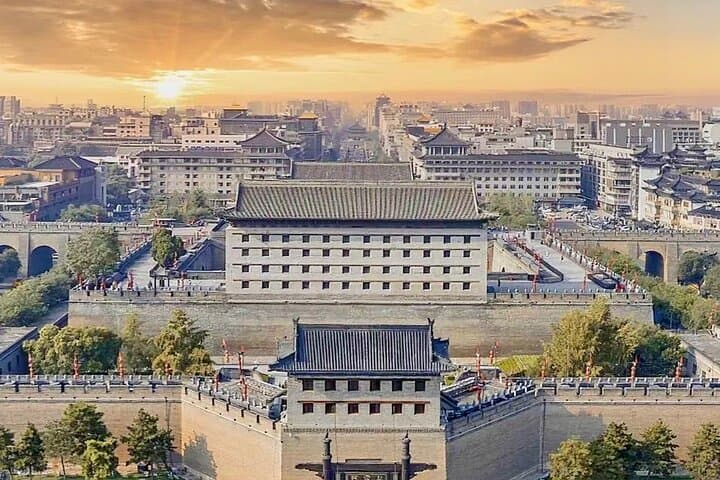
Morning dust lifts off the arid plain as the first rows of clay soldiers meet the light — rigid faces frozen in formation, each one slightly different as if caught mid-breath. On this compact two-day route, travelers move from the open excavation pits of Emperor Qin’s mausoleum to the broad, paved ramparts of the Ming-era city wall, tracing Xi’an’s arc of power from burial mound to bustling market.
Verified experiences and guided adventures in the surrounding area.
Operated by Epic China Tours · Xi'an, Shaanxi
Morning dust lifts off the arid plain as the first rows of clay soldiers meet the light — rigid faces frozen in formation, each one slightly different as if caught mid-breath. On this compact two-day route, travelers move from the open excavation pits of Emperor Qin’s mausoleum to the broad, paved ramparts of the Ming-era city wall, tracing Xi’an’s arc of power from burial mound to bustling market.
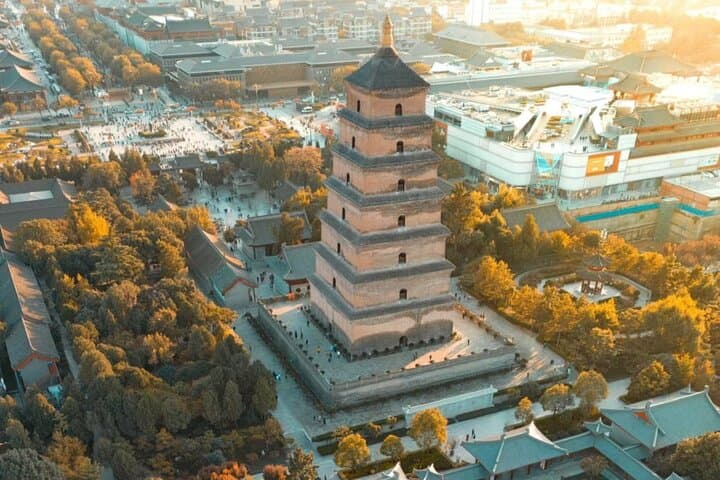
The Terracotta Army dates to the late 3rd century BCE and remains one of the world’s most significant archaeological finds, revealing Qin dynasty military organization and funerary practice. The city wall, rebuilt in the Ming period atop older foundations, gives a clear read on Chinese defensive architecture and urban planning. Between them, the Big Wild Goose Pagoda and Bell and Drum Towers map Xi’an’s religious and civic life across Tang and later dynasties, while the Muslim Quarter hums with a living blend of Hui culture and street food.
Practically speaking, expect a mix of outdoor walking on uneven stone, museum-style galleries, and busy urban alleys. Schedule the Terracotta visit early to avoid coach traffic, and allow at least three hours at the site to move between pits and the on-site museum. Bring a daypack with water, good walking shoes, and a photocopy of your passport for entry where required. Guides commonly cover logistics and skip-the-line tickets, but stay mindful of weather — summers are hot, winters cold — and of preservation rules: don’t touch artifacts and follow barrier lines.
This itinerary delivers a dense, approachable immersion in imperial China: architectural spans, hands-on archaeology, and street-level culture that together make Xi’an feel immediate and lived-in.
easy.
2 days (approx. 8–10 hours total per day including transit).
Suitable for most fitness levels; participants should be able to stand and walk for several hours and navigate stairs or cobbled streets.
The tour lists entrance tickets as included in the package for the specified sites, but confirm at booking for any optional stops.
Accessibility is listed as available; however, some historic areas have uneven surfaces—confirm specific needs with the operator before booking.
Meals are not specified in inclusions; bottled water and private transport are included—plan on budgeting for lunches and snacks.
Private guides are offered in English, French, and Mandarin according to the tour listing; request your preferred language at booking.
The Terracotta Army was created for Qin Shi Huang in the late 3rd century BCE; the current city wall largely dates from Ming-era reconstruction atop earlier fortifications.
Both the mausoleum complex and city-wall areas are managed to limit touch and humidity exposure; visitors are asked to stay behind barriers and avoid flash photography to protect pigments and fragile surfaces.
Epic China Tours operates guided outdoor trips and adventures with an emphasis on safety, stewardship, and memorable experiences.
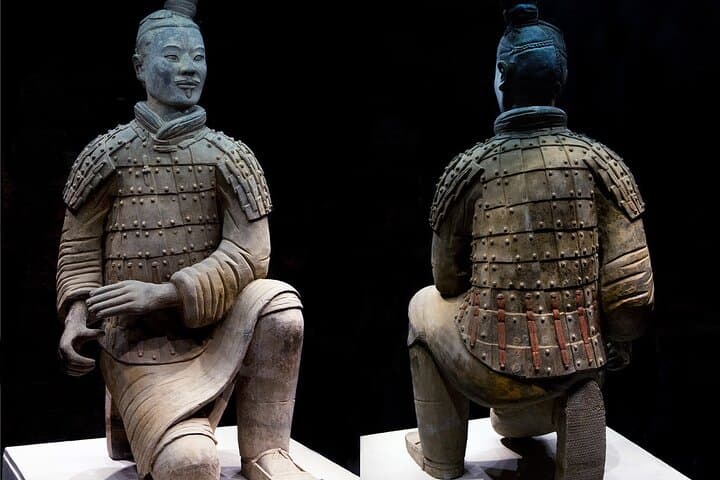
Morning dust lifts off the arid plain as the first rows of clay soldiers meet the light — rigid faces frozen in formation, each one slightly different as if caught mid-breath. On this compact two-day route, travelers move from the open excavation pits of Emperor Qin’s mausoleum to the broad, paved ramparts of the Ming-era city wall, tracing Xi’an’s arc of power from burial mound to bustling market.
Morning dust lifts off the arid plain as the first rows of clay soldiers meet the light — rigid faces frozen in formation, each one slightly different as if caught mid-breath. On this compact two-day route, travelers move from the open excavation pits of Emperor Qin’s mausoleum to the broad, paved ramparts of the Ming-era city wall, tracing Xi’an’s arc of power from burial mound to bustling market.
The Terracotta Army dates to the late 3rd century BCE and remains one of the world’s most significant archaeological finds, revealing Qin dynasty military organization and funerary practice. The city wall, rebuilt in the Ming period atop older foundations, gives a clear read on Chinese defensive architecture and urban planning. Between them, the Big Wild Goose Pagoda and Bell and Drum Towers map Xi’an’s religious and civic life across Tang and later dynasties, while the Muslim Quarter hums with a living blend of Hui culture and street food.
Practically speaking, expect a mix of outdoor walking on uneven stone, museum-style galleries, and busy urban alleys. Schedule the Terracotta visit early to avoid coach traffic, and allow at least three hours at the site to move between pits and the on-site museum. Bring a daypack with water, good walking shoes, and a photocopy of your passport for entry where required. Guides commonly cover logistics and skip-the-line tickets, but stay mindful of weather — summers are hot, winters cold — and of preservation rules: don’t touch artifacts and follow barrier lines.
This itinerary delivers a dense, approachable immersion in imperial China: architectural spans, hands-on archaeology, and street-level culture that together make Xi’an feel immediate and lived-in.