THE ADVENTURE COLLECTIVE® · Independent discovery and booking for outdoor travel

Spend a full day exploring Xi'an's defining sites: the Terracotta Army's ancient pits and the thermal-historic Huaqing Pool. This private tour uses public transit and includes a knowledgeable English-speaking guide and entrance fees.
Spend a full day exploring Xi'an's defining sites: the Terracotta Army's ancient pits and the thermal-historic Huaqing Pool. This private tour uses public transit and includes a knowledgeable English-speaking guide and entrance fees.
The day opens with the rattle of the subway and the first glimpse of Mount Li rising like a patient guard beyond Xi'an’s eastern edge. Visitors step off into a landscape where earth and empire meet: clay warriors frozen in motion, steam rising from ancient hot springs, and a guide who threads history between stops as naturally as the Wei River cuts the plain.
Verified experiences and guided adventures in the surrounding area.
Operated by Travel China Guide · Xi'an, Shaanxi
The day opens with the rattle of the subway and the first glimpse of Mount Li rising like a patient guard beyond Xi'an’s eastern edge. Visitors step off into a landscape where earth and empire meet: clay warriors frozen in motion, steam rising from ancient hot springs, and a guide who threads history between stops as naturally as the Wei River cuts the plain.
The Terracotta Army dates to the late third century BCE, created for China’s first emperor, Qin Shi Huang; the pits, workshops and recent exhibition reveal construction techniques and the scale of imperial ambition. Huaqing Pool, backed by Mount Li, spans dynastic layers from the Western Zhou through the Tang, when emperors and poets favored its thermal pools and red-walled halls.
Geology gives form to both sites: compact loess soil preserved the terracotta figures, while geothermal springs at Huaqing owe their warmth to subsurface heat channels—the pools still shimmer with the same mineral-fed steam that once drew emperors.
Practical guidance: this private full-day tour runs about 8–9 hours and uses public transit (subway plus tourist bus 613). Expect 2–3 hours at the Terracotta Museum and another 2–3 hours at Huaqing Pool; lunch is self-paid. Wear comfortable walking shoes, bring sun protection in summer and a warm layer in cooler months. Tickets and entrance fees are included; the guide handles transfers and navigation via subway lines 9 and 1.
For photographers, early or late light softens the pits; for history buffs, the guide’s commentary and the smaller exhibition rooms reward curiosity. Respect site rules—no touching the figures—and allow time to move between exhibits without rushing.
Yes—entrance fees for the Terracotta Army Museum and Huaqing Pool are included in the tour price.
The tour lasts about 8–9 hours with 2–3 hours at each major site; expect moderate walking and some stairs or ramps.
Lunch is self-paid; guides can recommend nearby clean, fast-food or Western-style options outside the museum.
Yes—the guide accompanies you on public transit back to the city and can escort you to your hotel or a nearby subway station.
Travel China Guide operates guided outdoor trips and adventures with an emphasis on safety, stewardship, and memorable experiences.
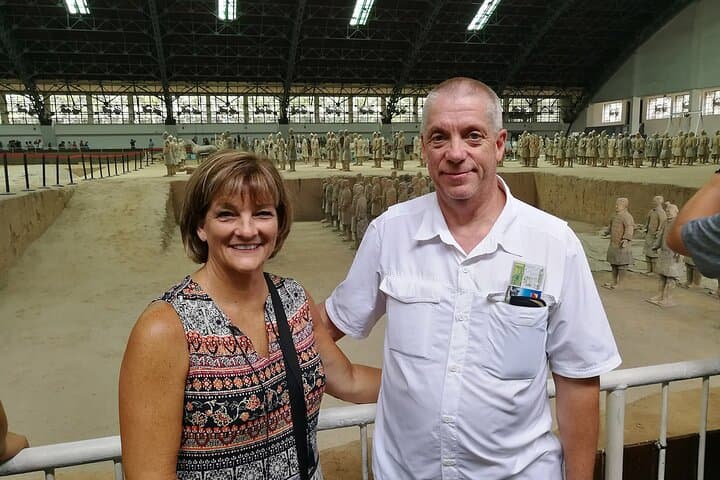
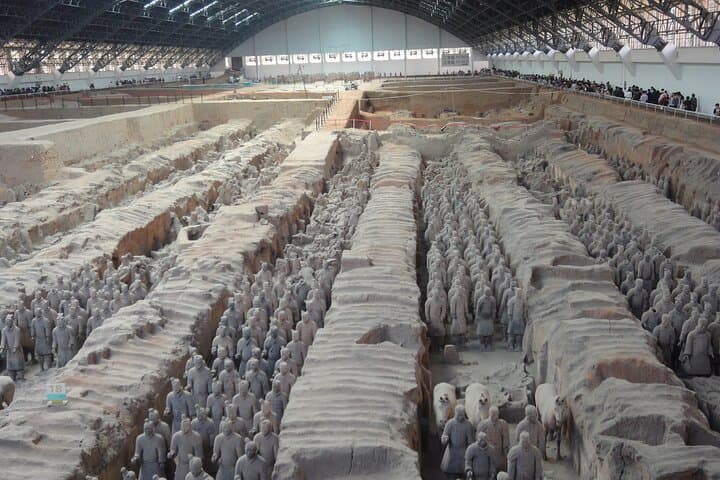
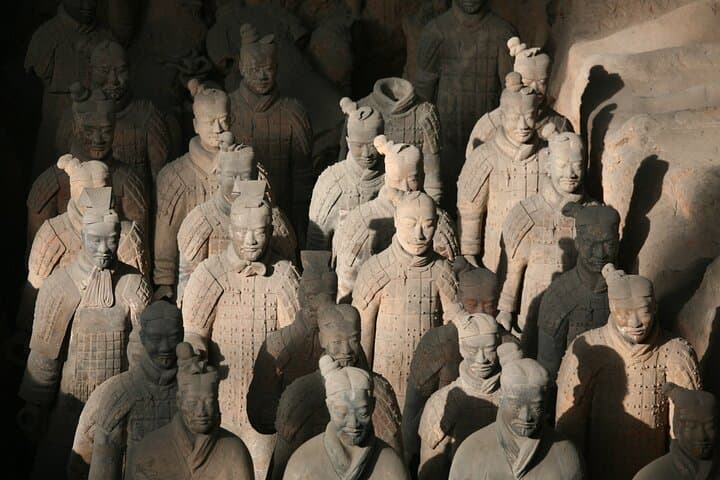
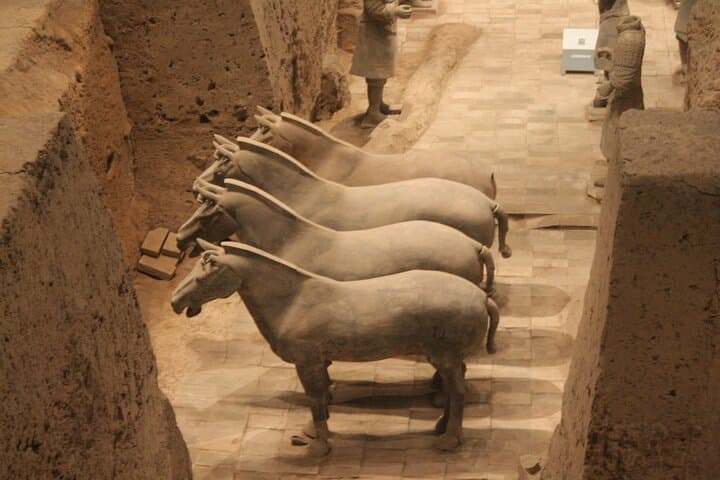
The day opens with the rattle of the subway and the first glimpse of Mount Li rising like a patient guard beyond Xi'an’s eastern edge. Visitors step off into a landscape where earth and empire meet: clay warriors frozen in motion, steam rising from ancient hot springs, and a guide who threads history between stops as naturally as the Wei River cuts the plain.
The day opens with the rattle of the subway and the first glimpse of Mount Li rising like a patient guard beyond Xi'an’s eastern edge. Visitors step off into a landscape where earth and empire meet: clay warriors frozen in motion, steam rising from ancient hot springs, and a guide who threads history between stops as naturally as the Wei River cuts the plain.
The Terracotta Army dates to the late third century BCE, created for China’s first emperor, Qin Shi Huang; the pits, workshops and recent exhibition reveal construction techniques and the scale of imperial ambition. Huaqing Pool, backed by Mount Li, spans dynastic layers from the Western Zhou through the Tang, when emperors and poets favored its thermal pools and red-walled halls.
Geology gives form to both sites: compact loess soil preserved the terracotta figures, while geothermal springs at Huaqing owe their warmth to subsurface heat channels—the pools still shimmer with the same mineral-fed steam that once drew emperors.
Practical guidance: this private full-day tour runs about 8–9 hours and uses public transit (subway plus tourist bus 613). Expect 2–3 hours at the Terracotta Museum and another 2–3 hours at Huaqing Pool; lunch is self-paid. Wear comfortable walking shoes, bring sun protection in summer and a warm layer in cooler months. Tickets and entrance fees are included; the guide handles transfers and navigation via subway lines 9 and 1.
For photographers, early or late light softens the pits; for history buffs, the guide’s commentary and the smaller exhibition rooms reward curiosity. Respect site rules—no touching the figures—and allow time to move between exhibits without rushing.