THE ADVENTURE COLLECTIVE® · Independent discovery and booking for outdoor travel

Fly from Chengdu to Xi'an for a concentrated cultural day: stand among the Terracotta Army, walk the Ming-era city wall, and taste the Muslim Quarter—all with round-trip logistics handled. This guide covers what to expect and how to prepare.
Fly from Chengdu to Xi'an for a concentrated cultural day: stand among the Terracotta Army, walk the Ming-era city wall, and taste the Muslim Quarter—all with round-trip logistics handled. This guide covers what to expect and how to prepare.
The plane touches down and Xi'an feels immediate: dust-sweet air off the Loess Plateau, a grid of low roofs, and then the quiet vastness of the Terracotta pits spread before you. On this focused day trip from Chengdu, travelers move fast and deliberately—arriving at the museum to meet rows of silent, life-sized figures frozen mid-formation, then climbing the broad parapet of Xi’an’s Ming-era city wall with the city unfolding beneath.
Verified experiences and guided adventures in the surrounding area.
Operated by Unique Beijing Tours · Xi'an, Shaanxi
The plane touches down and Xi'an feels immediate: dust-sweet air off the Loess Plateau, a grid of low roofs, and then the quiet vastness of the Terracotta pits spread before you. On this focused day trip from Chengdu, travelers move fast and deliberately—arriving at the museum to meet rows of silent, life-sized figures frozen mid-formation, then climbing the broad parapet of Xi’an’s Ming-era city wall with the city unfolding beneath.
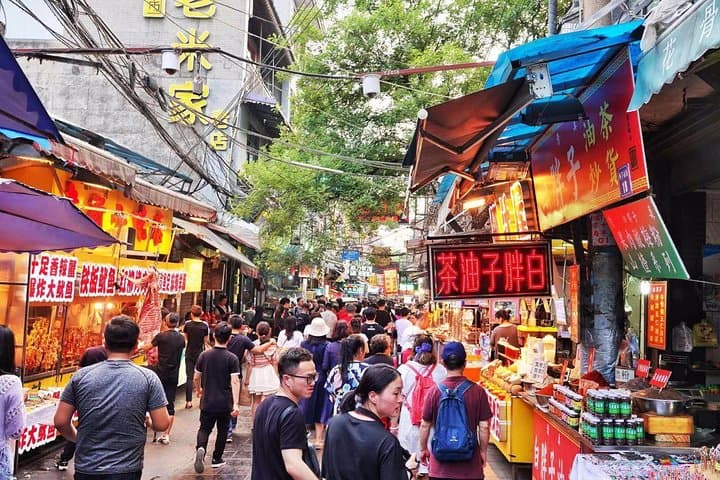
The Terracotta Army dates to the late 3rd century BCE, created for Emperor Qin Shi Huang and uncovered by farmers in 1974; it’s one of China’s most consequential archaeological finds. Xi’an itself served as the eastern terminus of the Silk Road and retains layers of history in its streets, gates, and the Muslim Quarter’s food stalls. Geologically, the region sits at the transition from Qinling foothills to the Yellow River basin, a landscape that shaped early Chinese capitals.
Practically, this is a logistics-first day: an early hotel pickup in Chengdu, a 1½-hour flight, guided time at the museum (allow 90–120 minutes to see the main pits), a sit-down lunch, and a 45–60 minute climb and walk atop the city wall. Expect paved museum paths, some uneven stone on the wall, and busy streets in the Muslim Quarter if you detour. Carry your passport (required for some ticketing), wear sturdy walking shoes, and reserve energy for quick walks between sites. Timing is the trip’s currency—arriving with a guide saves hours in transit and lines, turning a long travel day into a concentrated cultural expedition.
easy.
8–12 hours.
Suitable for travelers of average fitness; requires standing and walking for several hours.
Yes—this tour offers the option to end in Xi’an with drop-off at a local hotel; inform the operator when booking.
Round-trip economy plane tickets and the Terracotta Museum entrance fee are included in the tour price.
The itinerary is classified as physically easy—children and seniors can participate but expect a long day with transfers and museum walking.
Large checked luggage is not practical for a same-day flight; travel light or arrange hotel storage in Chengdu or Xi’an.
Xi'an was a capital for multiple Chinese dynasties and the eastern terminus of the Silk Road; the Terracotta Army was buried with Qin Shi Huang around 210 BCE.
The museum enforces strict conservation rules—no touching the artifacts, limited photography in some areas, and managed visitor flow to protect fragile archaeology.
Unique Beijing Tours operates guided outdoor trips and adventures with an emphasis on safety, stewardship, and memorable experiences.
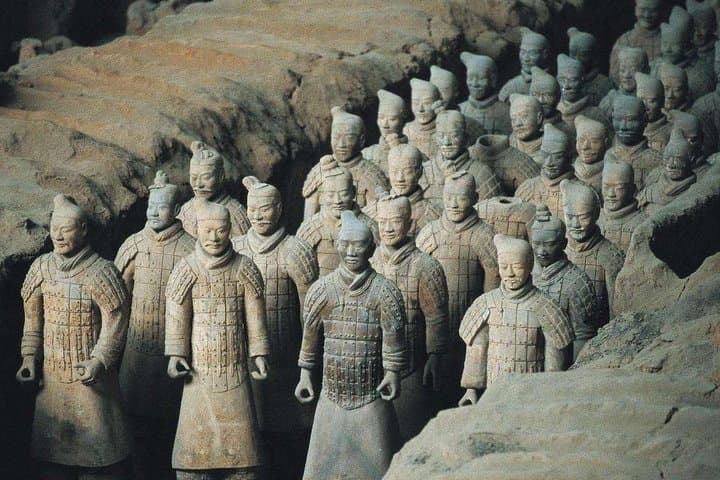
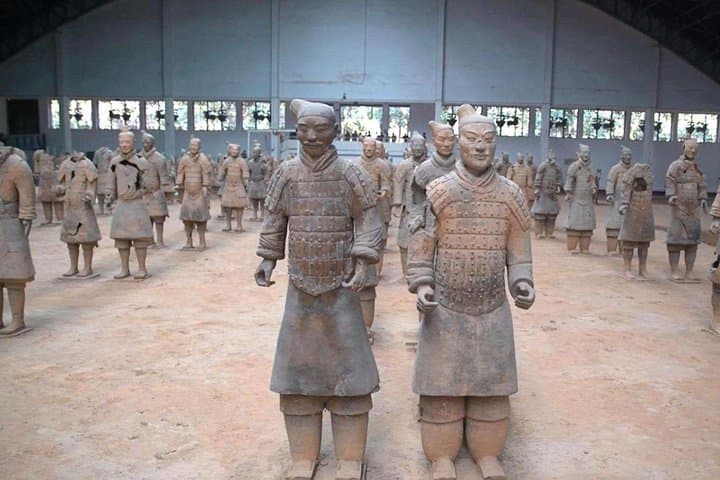
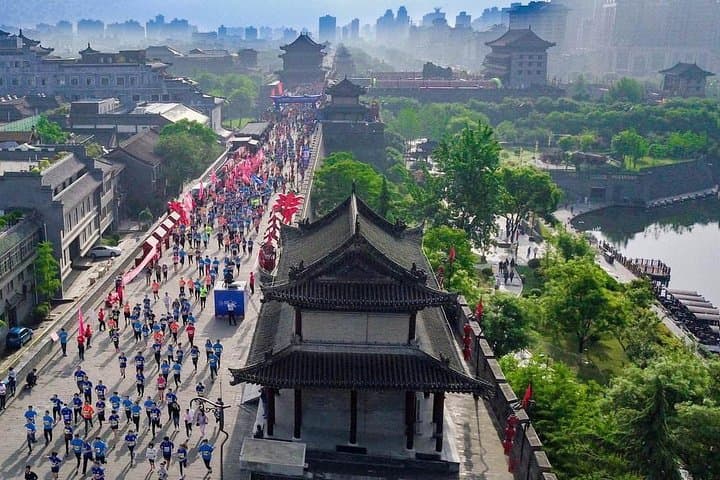
The plane touches down and Xi'an feels immediate: dust-sweet air off the Loess Plateau, a grid of low roofs, and then the quiet vastness of the Terracotta pits spread before you. On this focused day trip from Chengdu, travelers move fast and deliberately—arriving at the museum to meet rows of silent, life-sized figures frozen mid-formation, then climbing the broad parapet of Xi’an’s Ming-era city wall with the city unfolding beneath.
The plane touches down and Xi'an feels immediate: dust-sweet air off the Loess Plateau, a grid of low roofs, and then the quiet vastness of the Terracotta pits spread before you. On this focused day trip from Chengdu, travelers move fast and deliberately—arriving at the museum to meet rows of silent, life-sized figures frozen mid-formation, then climbing the broad parapet of Xi’an’s Ming-era city wall with the city unfolding beneath.
The Terracotta Army dates to the late 3rd century BCE, created for Emperor Qin Shi Huang and uncovered by farmers in 1974; it’s one of China’s most consequential archaeological finds. Xi’an itself served as the eastern terminus of the Silk Road and retains layers of history in its streets, gates, and the Muslim Quarter’s food stalls. Geologically, the region sits at the transition from Qinling foothills to the Yellow River basin, a landscape that shaped early Chinese capitals.
Practically, this is a logistics-first day: an early hotel pickup in Chengdu, a 1½-hour flight, guided time at the museum (allow 90–120 minutes to see the main pits), a sit-down lunch, and a 45–60 minute climb and walk atop the city wall. Expect paved museum paths, some uneven stone on the wall, and busy streets in the Muslim Quarter if you detour. Carry your passport (required for some ticketing), wear sturdy walking shoes, and reserve energy for quick walks between sites. Timing is the trip’s currency—arriving with a guide saves hours in transit and lines, turning a long travel day into a concentrated cultural expedition.