THE ADVENTURE COLLECTIVE® · Independent discovery and booking for outdoor travel

Make Xi'an reachable in a single day: fly from Shanghai to see the Terracotta Warriors and stroll the Ancient City Wall with a private guide. This concise tour packs the highlights with airport transfers handled for you.
Make Xi'an reachable in a single day: fly from Shanghai to see the Terracotta Warriors and stroll the Ancient City Wall with a private guide. This concise tour packs the highlights with airport transfers handled for you.
You step out of a Shanghai dawn into the compact hum of an airport; hours later the air in Shaanxi hits differently—drier, edged with the loess dust that shaped this plain—and the Terracotta Army waits in quiet rows.
Verified experiences and guided adventures in the surrounding area.
Operated by China Travel Service · Xi'an, Shaanxi
You step out of a Shanghai dawn into the compact hum of an airport; hours later the air in Shaanxi hits differently—drier, edged with the loess dust that shaped this plain—and the Terracotta Army waits in quiet rows.
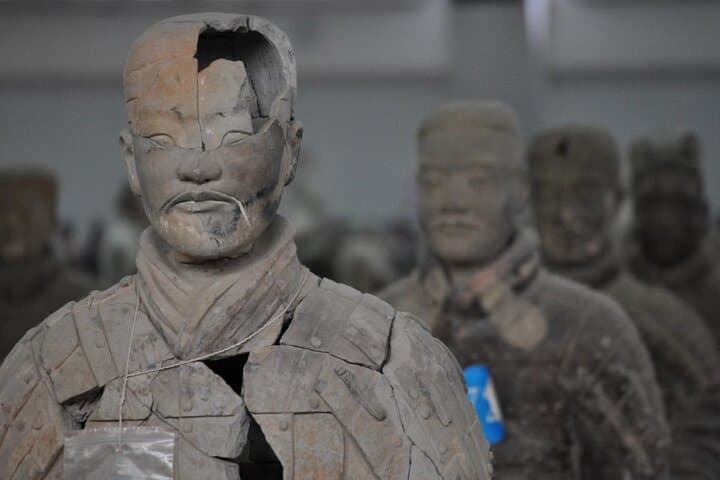
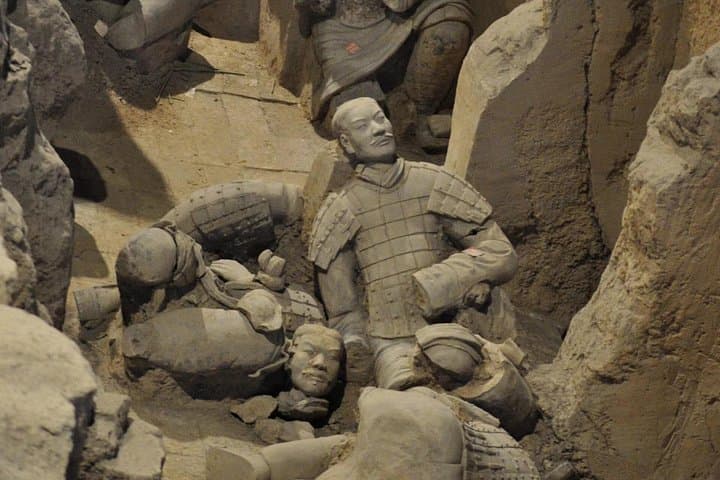
The itinerary is straightforward: an early flight to Xi'an, a guided visit to Pits 1–3 where life-size clay soldiers stand frozen in formation, then a walk along the Ancient City Wall before returning to Shanghai the same evening. The warriors date to Emperor Qin Shi Huang (3rd century BCE), unearthed by farmers in 1974; their individualized faces were preserved by the region’s dense loess soils and the deliberate scale of Qin’s funerary program. The nearby city wall is largely Ming-era stone and brick, offering broad views where modern Xi'an pushes up against fields and urban blocks.
Culturally, a quick stop in the Muslim Quarter gives a taste of Xi'an’s Silk Road legacy—roujiamo and hand-pulled noodles are good, fast options. Locally, expect efficient airport transfers and a guide who handles tickets and timing; this is a logistics-driven day more than a slow exploration.
Practical guidance: bring your passport (required for domestic flight booking), wear supportive shoes for uneven surfaces inside the pits and on the city wall, and carry a portable charger—phone cameras will run hot. Morning flights give you the clearest schedule buffer; allow extra time for security and road transfers between airport and sites. If you prefer a less rushed visit, consider an overnight in Xi'an instead of the return flight the same day.
easy.
8 hours.
Suitable for most fitness levels; able to walk and stand for up to three hours with short walking transfers between sites.
Yes—the tour includes round-trip economy flights between Shanghai and Xi'an plus airport transfers and local transportation in Xi'an.
The itinerary allows approximately three hours at the museum covering Pits 1–3 with guided commentary and time for photos.
The operator lists wheelchair accessibility, but museum areas include ramps and some uneven surfaces—contact the provider ahead to confirm specific needs.
You can note dietary requirements when booking; the guide can recommend and arrange meals in the Muslim Quarter if time permits.
The Terracotta Army was created for Qin Shi Huang (reigned 221–210 BCE) to accompany the first emperor in the afterlife; Xi'an served as a capital for multiple dynasties and was the eastern terminus of the Silk Road.
Visitor management and restricted display areas limit wear on fragile artifacts; follow signage and avoid flash photography where prohibited to reduce light and humidity stress.
China Travel Service operates guided outdoor trips and adventures with an emphasis on safety, stewardship, and memorable experiences.
You step out of a Shanghai dawn into the compact hum of an airport; hours later the air in Shaanxi hits differently—drier, edged with the loess dust that shaped this plain—and the Terracotta Army waits in quiet rows.
You step out of a Shanghai dawn into the compact hum of an airport; hours later the air in Shaanxi hits differently—drier, edged with the loess dust that shaped this plain—and the Terracotta Army waits in quiet rows.
The itinerary is straightforward: an early flight to Xi'an, a guided visit to Pits 1–3 where life-size clay soldiers stand frozen in formation, then a walk along the Ancient City Wall before returning to Shanghai the same evening. The warriors date to Emperor Qin Shi Huang (3rd century BCE), unearthed by farmers in 1974; their individualized faces were preserved by the region’s dense loess soils and the deliberate scale of Qin’s funerary program. The nearby city wall is largely Ming-era stone and brick, offering broad views where modern Xi'an pushes up against fields and urban blocks.
Culturally, a quick stop in the Muslim Quarter gives a taste of Xi'an’s Silk Road legacy—roujiamo and hand-pulled noodles are good, fast options. Locally, expect efficient airport transfers and a guide who handles tickets and timing; this is a logistics-driven day more than a slow exploration.
Practical guidance: bring your passport (required for domestic flight booking), wear supportive shoes for uneven surfaces inside the pits and on the city wall, and carry a portable charger—phone cameras will run hot. Morning flights give you the clearest schedule buffer; allow extra time for security and road transfers between airport and sites. If you prefer a less rushed visit, consider an overnight in Xi'an instead of the return flight the same day.