THE ADVENTURE COLLECTIVE® · Independent discovery and booking for outdoor travel

Walk Prague’s wartime streets from medieval cellars turned bomb shelters to the crypt where Operation Anthropoid ended. This 2–3 hour small-group tour blends underground spaces, private WWII artifacts, and the sites that mark the city’s resistance.
Walk Prague’s wartime streets from medieval cellars turned bomb shelters to the crypt where Operation Anthropoid ended. This 2–3 hour small-group tour blends underground spaces, private WWII artifacts, and the sites that mark the city’s resistance.
Standing beneath the shadow of the Powder Tower, the group moves through Prague’s stone arteries — streets still scarred, buildings still bearing patched facades where 1945 bombing tore through façades and lives.
Verified experiences and guided adventures in the surrounding area.
Operated by WWII in Prague Tour & Operation Anthropoid Museum · Prague, Prague
Standing beneath the shadow of the Powder Tower, the group moves through Prague’s stone arteries — streets still scarred, buildings still bearing patched facades where 1945 bombing tore through façades and lives.
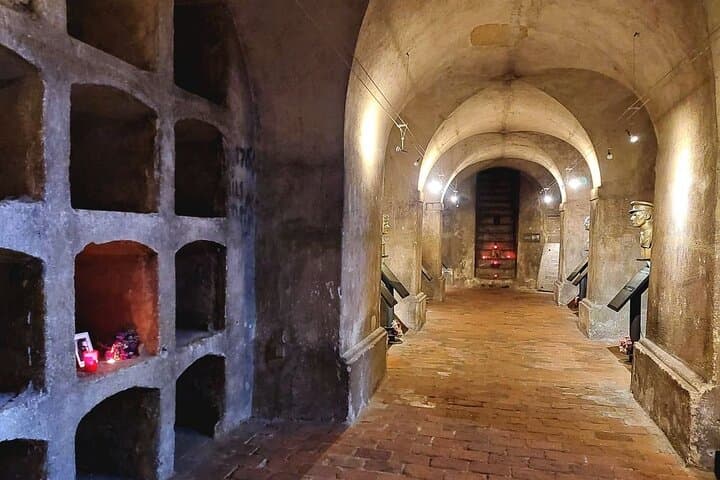
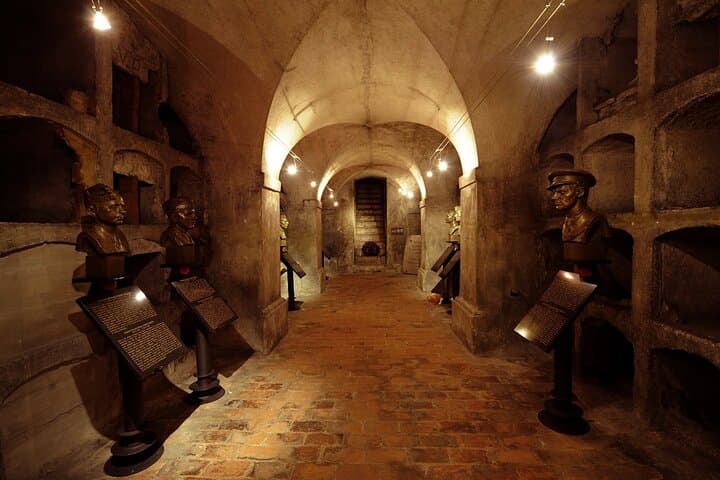
This small-group walking tour threads together medieval cellars and 20th-century violence: 12th-century underground chambers repurposed as air-raid shelters, a private collection of WWII artifacts, the route past former Nazi administrative houses, and the hushed crypt beneath Saints Cyril and Methodius where Czechoslovak paratroopers made their last stand during Operation Anthropoid.
Prague’s layered geology — limestone foundations and compacted urban fill — allowed medieval vaults to survive and later serve as shelters. The city’s wartime history is inseparable from Czech national identity: resistance networks, the Prague uprising, and the postwar memory politics that shaped the capital’s monuments and museums.
Practical guidance follows the narrative: tours last about 2–3 hours, mostly on paved streets and staircases with short underground passages; moderate mobility is sufficient but expect standing, narrow spaces, and low-light cellars. Public transport is convenient; many meeting points are near tram and metro stops. Observe museum rules in the crypt, keep voices low at memorial sites, and carry a validated transport ticket when included.
Photos are often allowed in public squares but restricted inside sensitive memorial spaces. Wear comfortable shoes and layers — Prague’s weather can shift quickly — and bring water for a focused, reflective walk through one of Europe’s most concentrated WWII histories.
easy.
2–3 hours.
Suitable for most fitness levels; participants should be able to stand and walk for up to three hours with occasional stairs.
Tours run about 2–3 hours and involve mostly paved walking, short stair sections, and brief underground passages—comfortable shoes recommended.
Photography rules vary; flash and tripod use may be prohibited in memorial rooms—follow the guide and posted signs.
The tour is described as physically easy, but cellars and the crypt have stairs and low ceilings; contact the operator if mobility assistance is needed.
The itinerary notes entrance to the medieval underground and the crypt/museum are included for parts of the tour—confirm at booking.
Prague’s resistance history peaks with Operation Anthropoid (1942), the assassination of SS-Obergruppenführer Reinhard Heydrich, and the subsequent siege that left sites like the Saints Cyril and Methodius crypt as poignant memorials.
These historic sites are fragile—stay on marked paths, avoid touching artifacts, and support conservation by following site rules and using licensed guides.
WWII in Prague Tour & Operation Anthropoid Museum operates guided outdoor trips and adventures with an emphasis on safety, stewardship, and memorable experiences.
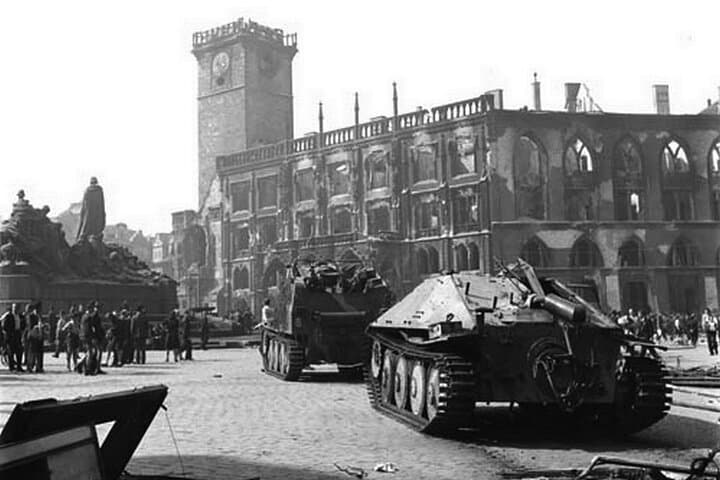
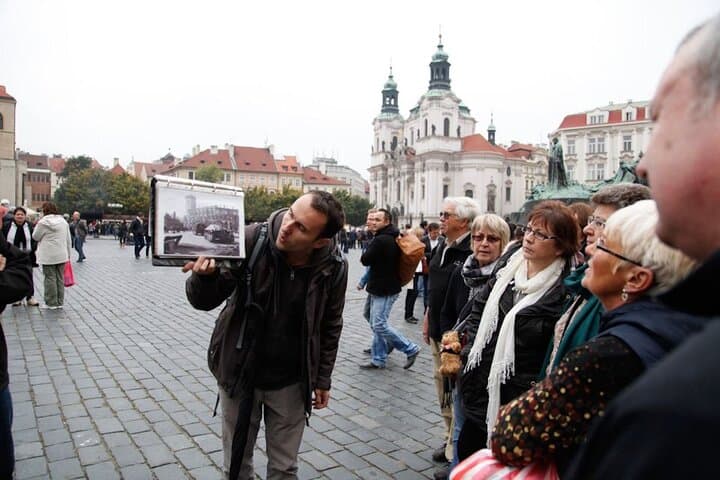
Standing beneath the shadow of the Powder Tower, the group moves through Prague’s stone arteries — streets still scarred, buildings still bearing patched facades where 1945 bombing tore through façades and lives.
Standing beneath the shadow of the Powder Tower, the group moves through Prague’s stone arteries — streets still scarred, buildings still bearing patched facades where 1945 bombing tore through façades and lives.
This small-group walking tour threads together medieval cellars and 20th-century violence: 12th-century underground chambers repurposed as air-raid shelters, a private collection of WWII artifacts, the route past former Nazi administrative houses, and the hushed crypt beneath Saints Cyril and Methodius where Czechoslovak paratroopers made their last stand during Operation Anthropoid.
Prague’s layered geology — limestone foundations and compacted urban fill — allowed medieval vaults to survive and later serve as shelters. The city’s wartime history is inseparable from Czech national identity: resistance networks, the Prague uprising, and the postwar memory politics that shaped the capital’s monuments and museums.
Practical guidance follows the narrative: tours last about 2–3 hours, mostly on paved streets and staircases with short underground passages; moderate mobility is sufficient but expect standing, narrow spaces, and low-light cellars. Public transport is convenient; many meeting points are near tram and metro stops. Observe museum rules in the crypt, keep voices low at memorial sites, and carry a validated transport ticket when included.
Photos are often allowed in public squares but restricted inside sensitive memorial spaces. Wear comfortable shoes and layers — Prague’s weather can shift quickly — and bring water for a focused, reflective walk through one of Europe’s most concentrated WWII histories.