THE ADVENTURE COLLECTIVE® · Independent discovery and booking for outdoor travel

Swap Chongqing’s skyline for deep limestone gorges on a full-day private tour to Wulong Karst. Hike valley paths beneath the Three Natural Bridges, explore Furong Cave, and return the same day with local lunch and hotel pickup included.
Swap Chongqing’s skyline for deep limestone gorges on a full-day private tour to Wulong Karst. Hike valley paths beneath the Three Natural Bridges, explore Furong Cave, and return the same day with local lunch and hotel pickup included.
Morning light slips down narrow limestone cliffs as a private car leaves Chongqing city behind, the urban hum replaced by river-cut valleys and limestone spires. By the time the vehicle threads into Wulong County, the landscape has been shaped by water’s patience: arches and sinkholes that read like a geological novel written in stone.
Verified experiences and guided adventures in the surrounding area.
Operated by happychinatours · Wulong, Chongqing
Morning light slips down narrow limestone cliffs as a private car leaves Chongqing city behind, the urban hum replaced by river-cut valleys and limestone spires. By the time the vehicle threads into Wulong County, the landscape has been shaped by water’s patience: arches and sinkholes that read like a geological novel written in stone.
Wulong Karst is part of the South China Karst UNESCO site (inscribed 2007) and showcases classic karst features — the Three Natural Bridges, Furong Cave and Houping tiankeng among them. The bridges are vast stone arches carved and then revealed by collapsing cave systems; in recent years film crews have used their dramatic scale for blockbuster backdrops, but the site’s history runs deeper. An ancient Tang-dynasty staging post near Qinglong Bridge hints at long-standing human routes across these gorges.
Visitors spend 2–3 hours on marked valley-bottom paths, threading between cliff faces and occasional wooden courtyards, with easy-to-moderate elevation changes and sections of uneven stone steps.
Practical edge: expect a roughly three-hour drive each way from downtown Chongqing and plan for humidity year-round. Wear sturdy shoes with grip, bring water and sun protection, and pack a light rain layer — sudden mountain showers are common. Mobility limitations, pregnancy or serious heart/spinal issues are discouraged.
A private guide and air-conditioned transfer compress logistics, leaving time to focus on canyon views and cave echoes. The experience is equal parts geology lesson and outdoor walk — nature daring you to look up.
moderate.
10 hours (approx.).
Moderate fitness—able to walk 2–3 hours over uneven terrain and climb steps.
Expect about a three-hour drive each way from downtown Chongqing in an air-conditioned private vehicle, depending on traffic.
This tour description notes guided services and transport; confirm whether entrance fees are included when booking as options vary.
The park has paved and carved paths but also uneven steps; children should be supervised and travelers with limited mobility may find some sections difficult.
Yes — the Three Natural Bridges area was featured in film productions and visitors can view many of the same spans seen on screen from valley trails.
Wulong’s bridges and caves sit within the South China Karst, a landscape long traversed by local trade routes; a nearby staging post dates to the Tang Dynasty (618–907).
The area is managed to protect karst formations and cave ecosystems; stick to marked trails and avoid touching cave formations or removing rock or plants.
happychinatours operates guided outdoor trips and adventures with an emphasis on safety, stewardship, and memorable experiences.
Morning light slips down narrow limestone cliffs as a private car leaves Chongqing city behind, the urban hum replaced by river-cut valleys and limestone spires. By the time the vehicle threads into Wulong County, the landscape has been shaped by water’s patience: arches and sinkholes that read like a geological novel written in stone.
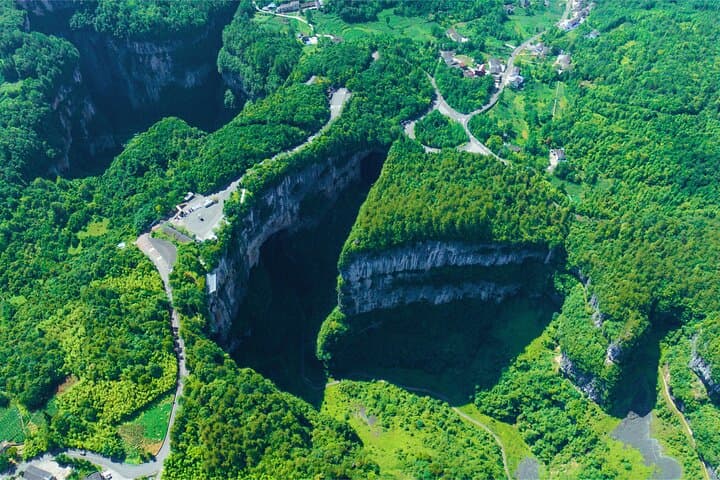
Morning light slips down narrow limestone cliffs as a private car leaves Chongqing city behind, the urban hum replaced by river-cut valleys and limestone spires. By the time the vehicle threads into Wulong County, the landscape has been shaped by water’s patience: arches and sinkholes that read like a geological novel written in stone.
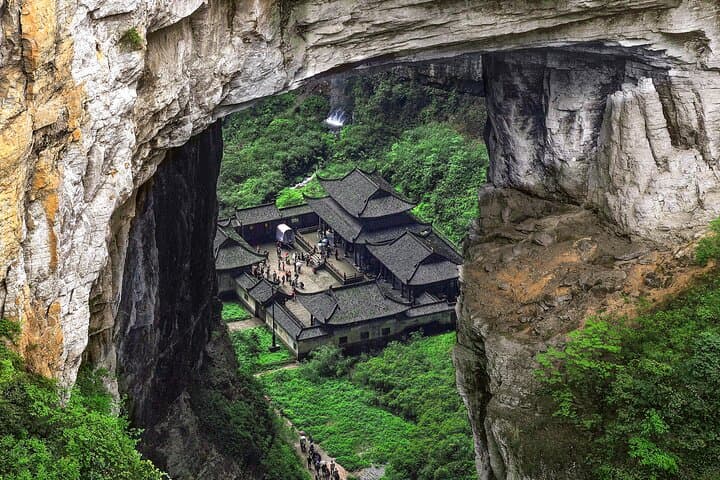
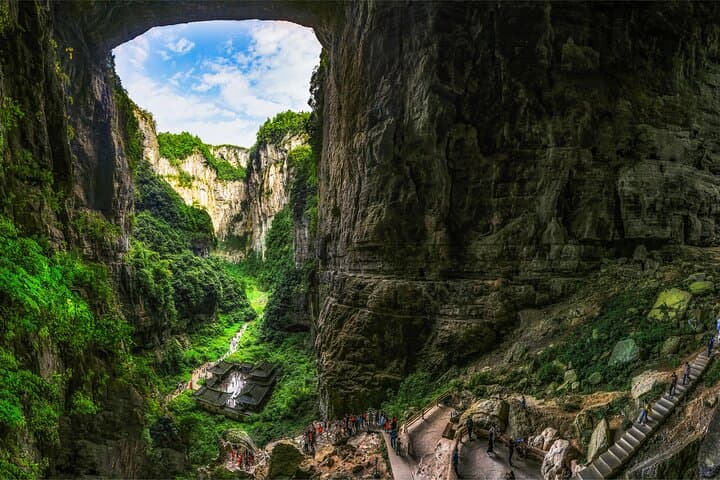
Wulong Karst is part of the South China Karst UNESCO site (inscribed 2007) and showcases classic karst features — the Three Natural Bridges, Furong Cave and Houping tiankeng among them. The bridges are vast stone arches carved and then revealed by collapsing cave systems; in recent years film crews have used their dramatic scale for blockbuster backdrops, but the site’s history runs deeper. An ancient Tang-dynasty staging post near Qinglong Bridge hints at long-standing human routes across these gorges.
Visitors spend 2–3 hours on marked valley-bottom paths, threading between cliff faces and occasional wooden courtyards, with easy-to-moderate elevation changes and sections of uneven stone steps.
Practical edge: expect a roughly three-hour drive each way from downtown Chongqing and plan for humidity year-round. Wear sturdy shoes with grip, bring water and sun protection, and pack a light rain layer — sudden mountain showers are common. Mobility limitations, pregnancy or serious heart/spinal issues are discouraged.
A private guide and air-conditioned transfer compress logistics, leaving time to focus on canyon views and cave echoes. The experience is equal parts geology lesson and outdoor walk — nature daring you to look up.