THE ADVENTURE COLLECTIVE® · Independent discovery and booking for outdoor travel

Cruise Wroclaw’s historic center in a private RETRO e‑bus: two hours of bridges, riverfront, Cathedral Island and Centennial Hall with an English driver‑guide. Ideal for travelers who want efficient, low‑impact city context and short on‑foot stops.
Cruise Wroclaw’s historic center in a private RETRO e‑bus: two hours of bridges, riverfront, Cathedral Island and Centennial Hall with an English driver‑guide. Ideal for travelers who want efficient, low‑impact city context and short on‑foot stops.
The RETRO e‑bus hums into Wroclaw’s Market Square and the city slips into view: cobbled rings of merchants, the curve of the Oder daring you downstream, and street façades that flip between Polish, German and Austro-Hungarian memory.
Verified experiences and guided adventures in the surrounding area.
Operated by WroclawCityTour.pl · Wroclaw, Lower Silesian Voivodeship
The RETRO e‑bus hums into Wroclaw’s Market Square and the city slips into view: cobbled rings of merchants, the curve of the Oder daring you downstream, and street façades that flip between Polish, German and Austro-Hungarian memory.
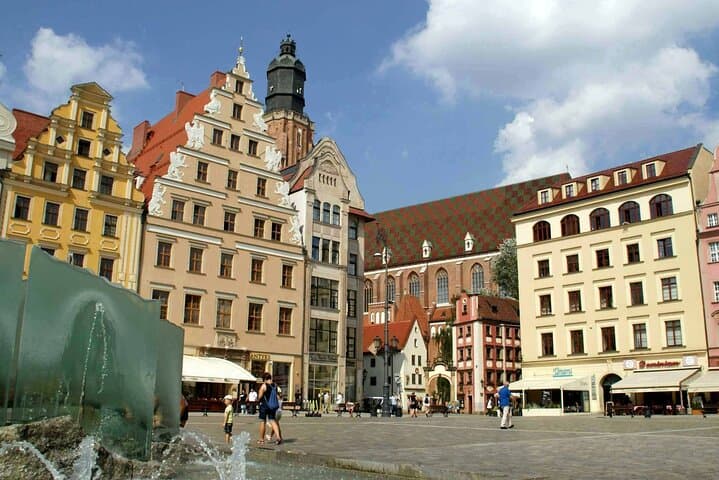
This two‑hour circuit moves deliberately through the layers of the city. Start at the Rynek to scan Gothic townhouses and the Old University’s Fechterbrunnen, then glide past the compact Jewish quarter and the White Stork Synagogue. The driver pauses on Cathedral Island so visitors can step off for a twenty‑minute look at St. John the Baptist’s vaulted interior and the merchants’ lanes beyond.
Geology and human history meet along the riverbanks: low terraces of the Odra shaped the medieval trade routes that turned Wroclaw into a crossroads of languages and architecture. The route continues over Friedensbrücke to the Kaiser Bridge, then opens onto the UNESCO‑listed Centennial Hall and the pergola’s multimedia fountain—water and light that charter modern civic pride.
Practical details are clear: the tour is private for up to seven guests, lasts two hours, and offers an English driver‑guide with audio options in other languages. Expect short on‑foot stops rather than long hikes—comfortable shoes, a wind layer, and a charged phone for photos are enough. Morning departures avoid afternoon crowds; evenings catch the pergola light show. Public transport and tram stops are nearby if you plan to extend your walk after the tour. The pace favors context over coverage: it’s an accessible, low‑impact way to sample Wroclaw’s bridges, churches and promenades without losing the city’s steady, civic rhythm.
easy.
2 hours.
Minimal walking; suitable for most fitness levels. Expect short disembarkations of 10–20 minutes for sights.
The tour begins at Wroclaw Market Square (Rynek) and returns there; specific meeting instructions are provided on booking confirmation.
The route is suitable for people with limited mobility, but wheelchair access varies by vehicle model — contact the operator before booking to confirm accommodations.
No — admission is generally not included; stops are timed (10–20 minutes) for exterior views and brief visits, so full museum entries may require extra time and fees.
An English driver‑guide is standard; audiovisual guides in other languages are offered depending on group needs.
Wroclaw’s streets reflect a layered past—Polish, Bohemian and German rule shaped its architecture, while the Centennial Hall symbolizes early 20th‑century civic ambition and is now a UNESCO site.
The tour’s electric vehicle lowers emissions in the historic center; visitors are encouraged to stay on marked paths and avoid disturbing riverbanks to protect riparian habitats.
WroclawCityTour.pl operates guided outdoor trips and adventures with an emphasis on safety, stewardship, and memorable experiences.
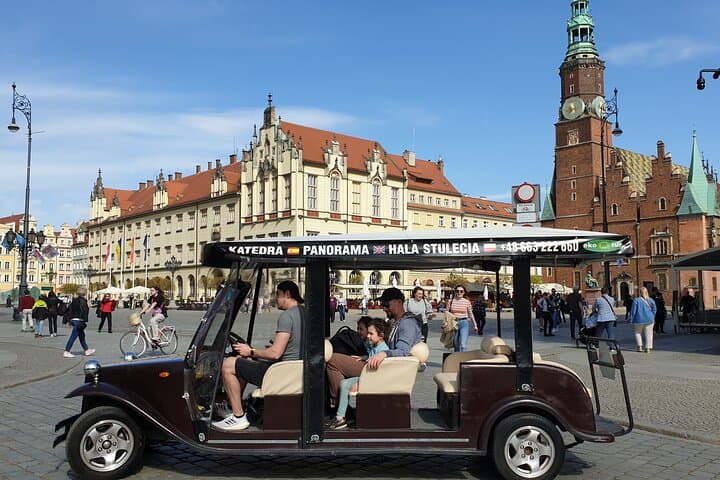
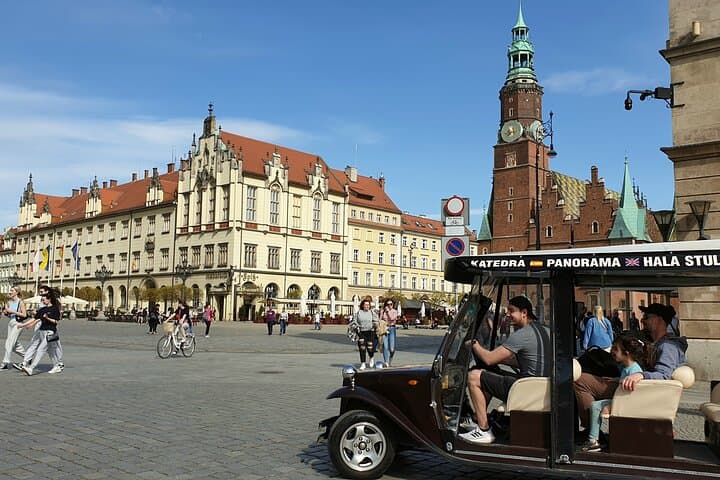
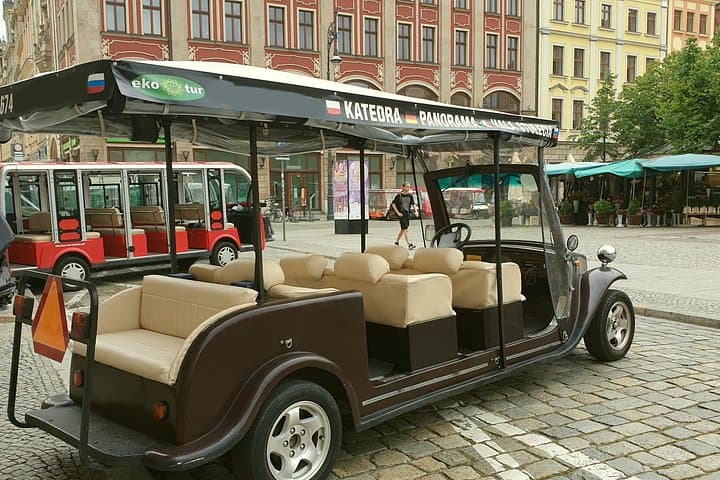
The RETRO e‑bus hums into Wroclaw’s Market Square and the city slips into view: cobbled rings of merchants, the curve of the Oder daring you downstream, and street façades that flip between Polish, German and Austro-Hungarian memory.
The RETRO e‑bus hums into Wroclaw’s Market Square and the city slips into view: cobbled rings of merchants, the curve of the Oder daring you downstream, and street façades that flip between Polish, German and Austro-Hungarian memory.
This two‑hour circuit moves deliberately through the layers of the city. Start at the Rynek to scan Gothic townhouses and the Old University’s Fechterbrunnen, then glide past the compact Jewish quarter and the White Stork Synagogue. The driver pauses on Cathedral Island so visitors can step off for a twenty‑minute look at St. John the Baptist’s vaulted interior and the merchants’ lanes beyond.
Geology and human history meet along the riverbanks: low terraces of the Odra shaped the medieval trade routes that turned Wroclaw into a crossroads of languages and architecture. The route continues over Friedensbrücke to the Kaiser Bridge, then opens onto the UNESCO‑listed Centennial Hall and the pergola’s multimedia fountain—water and light that charter modern civic pride.
Practical details are clear: the tour is private for up to seven guests, lasts two hours, and offers an English driver‑guide with audio options in other languages. Expect short on‑foot stops rather than long hikes—comfortable shoes, a wind layer, and a charged phone for photos are enough. Morning departures avoid afternoon crowds; evenings catch the pergola light show. Public transport and tram stops are nearby if you plan to extend your walk after the tour. The pace favors context over coverage: it’s an accessible, low‑impact way to sample Wroclaw’s bridges, churches and promenades without losing the city’s steady, civic rhythm.