THE ADVENTURE COLLECTIVE® · Independent discovery and booking for outdoor travel

Practice architectural photography around One World Trade Center, the Oculus and the 9/11 Memorial on a guided 2.5‑hour walking tour. Learn composition, lighting and crowd management while exploring Lower Manhattan’s rebuilt skyline.
Practice architectural photography around One World Trade Center, the Oculus and the 9/11 Memorial on a guided 2.5‑hour walking tour. Learn composition, lighting and crowd management while exploring Lower Manhattan’s rebuilt skyline.
You meet next to the fountain at Silverstein Family Park and the city immediately rearranges itself around your lens: reflective glass, angled steel, the curved ribs of the Oculus framing commuters like a living tableau. The tour moves at a steady urban cadence—through plazas, past the 9/11 Memorial pools, around One World Trade Center and into the Oculus PATH station—inviting you to read lines, planes and light.
Verified experiences and guided adventures in the surrounding area.
Operated by New York City Photo Safari · New York, NY
You meet next to the fountain at Silverstein Family Park and the city immediately rearranges itself around your lens: reflective glass, angled steel, the curved ribs of the Oculus framing commuters like a living tableau. The tour moves at a steady urban cadence—through plazas, past the 9/11 Memorial pools, around One World Trade Center and into the Oculus PATH station—inviting you to read lines, planes and light.
Lower Manhattan carries layered history: a colonial port, a nineteenth‑century commercial hub, and a twenty‑first‑century site of national remembrance and rebuilding. The new World Trade Center complex is a study in contemporary materials—glass skins, polished metals, deep recessed joints—which respond differently to dawn, high sun and wet pavement. Cultural notes: the Memorial demands quiet respect; transit flows through the Oculus connect decades of daily commuting to the site’s larger story.
Practically, expect roughly 1.5–2 miles of mostly flat, paved walking over 2–3 hours with many stops for instruction. The guide focuses on interior and exterior architectural photography: composition, anticipating light, reflections, dealing with crowds and using exposure to create mood. No Observatory entry is included.
Plan for changing conditions—wind tunnels between towers, reflective puddles after rain, and busy pedestrian flows. Bring a fast wide to standard zoom, two charged batteries, comfortable shoes and layered clothing. Shoot during early morning or late afternoon for softer shadows and fewer people. Respect the Memorial’s quiet zones and be ready to adapt compositions on the move; the city will test your ability to see order in engineered chaos.
moderate.
2–3 hours.
Moderate fitness; able to walk on paved city surfaces for up to 2 miles with periodic stops.
No—this tour focuses on exterior and interior architectural photography of public spaces and does not include Observatory admission.
Yes, many parts of the route are wheelchair accessible, but check with the operator for specific accessibility needs before booking.
Tripods may be restricted in busy public areas—ask the guide about tripod use during the tour.
Dress in layers and bring a compact rain shell; the tour operates in most weather, so plan for wind and rainy surfaces.
Lower Manhattan evolved from a colonial port to a global financial center; the rebuilt World Trade Center is both a memorial site and a study in contemporary architecture.
Respect the 9/11 Memorial’s quiet zones and stay on marked paths; limit tripods and avoid obstructing pedestrian flows to minimize impact.
New York City Photo Safari operates guided outdoor trips and adventures with an emphasis on safety, stewardship, and memorable experiences.


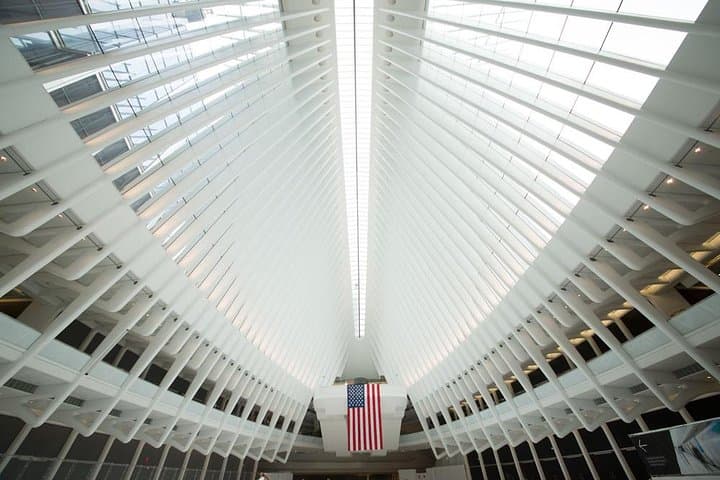
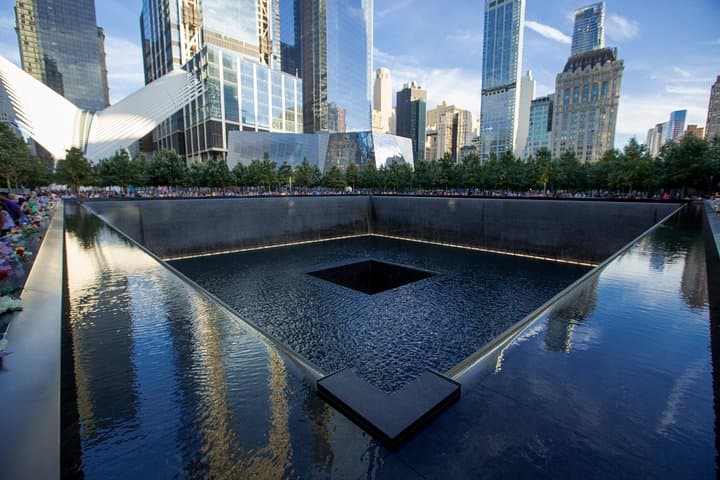
You meet next to the fountain at Silverstein Family Park and the city immediately rearranges itself around your lens: reflective glass, angled steel, the curved ribs of the Oculus framing commuters like a living tableau. The tour moves at a steady urban cadence—through plazas, past the 9/11 Memorial pools, around One World Trade Center and into the Oculus PATH station—inviting you to read lines, planes and light.
You meet next to the fountain at Silverstein Family Park and the city immediately rearranges itself around your lens: reflective glass, angled steel, the curved ribs of the Oculus framing commuters like a living tableau. The tour moves at a steady urban cadence—through plazas, past the 9/11 Memorial pools, around One World Trade Center and into the Oculus PATH station—inviting you to read lines, planes and light.
Lower Manhattan carries layered history: a colonial port, a nineteenth‑century commercial hub, and a twenty‑first‑century site of national remembrance and rebuilding. The new World Trade Center complex is a study in contemporary materials—glass skins, polished metals, deep recessed joints—which respond differently to dawn, high sun and wet pavement. Cultural notes: the Memorial demands quiet respect; transit flows through the Oculus connect decades of daily commuting to the site’s larger story.
Practically, expect roughly 1.5–2 miles of mostly flat, paved walking over 2–3 hours with many stops for instruction. The guide focuses on interior and exterior architectural photography: composition, anticipating light, reflections, dealing with crowds and using exposure to create mood. No Observatory entry is included.
Plan for changing conditions—wind tunnels between towers, reflective puddles after rain, and busy pedestrian flows. Bring a fast wide to standard zoom, two charged batteries, comfortable shoes and layered clothing. Shoot during early morning or late afternoon for softer shadows and fewer people. Respect the Memorial’s quiet zones and be ready to adapt compositions on the move; the city will test your ability to see order in engineered chaos.