THE ADVENTURE COLLECTIVE® · Independent discovery and booking for outdoor travel

Climb a stair-strewn ridge to Pokhara’s World Peace Pagoda for sweeping views of the Annapurna range and Phewa Lake. This short private tour pairs cultural insight with a brisk hilltop walk.
Climb a stair-strewn ridge to Pokhara’s World Peace Pagoda for sweeping views of the Annapurna range and Phewa Lake. This short private tour pairs cultural insight with a brisk hilltop walk.
A soft wind pushes across Phewa Lake as you step from the car and follow stone staircases up toward the white dome. The World Peace Pagoda sits 1,100 meters above sea level on Pumdi Bhumdi hill, its flared terraces framing unobstructed views of the Annapurna range to the north and Pokhara city below. Prayer flags flutter; the stupa’s clean lines cut against sky and mountain.
Verified experiences and guided adventures in the surrounding area.
Operated by Liberty Holidays · Pokhara, Gandaki Province
A soft wind pushes across Phewa Lake as you step from the car and follow stone staircases up toward the white dome. The World Peace Pagoda sits 1,100 meters above sea level on Pumdi Bhumdi hill, its flared terraces framing unobstructed views of the Annapurna range to the north and Pokhara city below. Prayer flags flutter; the stupa’s clean lines cut against sky and mountain.
Built by monks from the Japanese Nipponzan Myohoji order, the pagoda represents four key episodes in the Buddha’s life, each oriented to a different direction. Geologically, the hill is part of the Lesser Himalaya’s folded ridges—steep but stable slopes that reveal terraced farms and scrub forest. Local culture blends Newar and Gurung traditions; morning rituals and occasional pujas at the site offer a quiet window into devotional practice.
Expect a 10–15 minute climb from the road: stone steps and short dirt paths, occasional loose gravel. The summit is exposed—sun, wind, and sudden weather shifts are common. Bring water and a light layer; early morning or late afternoon visits give the best light for photos and cooler air.
Practical tips: use the hotel pickup included in many private tours to avoid navigating narrow roads; wear supportive shoes for the stair climb; be respectful around prayer areas. The visit pairs well with a walk along Phewa Lake or a stop at Gupteshwor Cave on the return. For a compact half-day outing, the pagoda delivers panoramic mountain scenery, cultural context, and a brisk outdoor stroll.
easy.
2–3 hours.
Suitable for travelers in average fitness; requires short uphill walking and stair climbing.
The private tour is typically 2.5–3 hours total including transport, with about 10–15 minutes of uphill walking to reach the stupa.
The climb is short but involves stairs; it's generally suitable for children over five and active older travelers, though those with mobility or heart/back issues should take care.
On clear days you’ll get excellent views of the Annapurna range; cloud cover or haze in monsoon season can limit visibility.
Most private tours include round-trip hotel pickup and drop-off from central Pokhara hotels as stated in the tour inclusions.
Constructed by Japanese Nipponzan Myohoji monks, the pagoda was built to symbolize peace and reflect four stages of Buddha’s life oriented toward key Buddhist sites.
Stay on marked paths to limit erosion on the hillside; treat the site as both a cultural monument and fragile viewpoint—pack out trash and avoid loud groups.
Liberty Holidays operates guided outdoor trips and adventures with an emphasis on safety, stewardship, and memorable experiences.
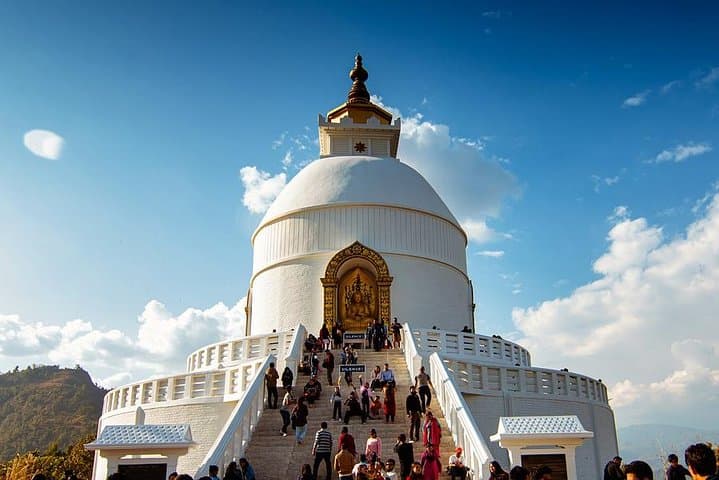
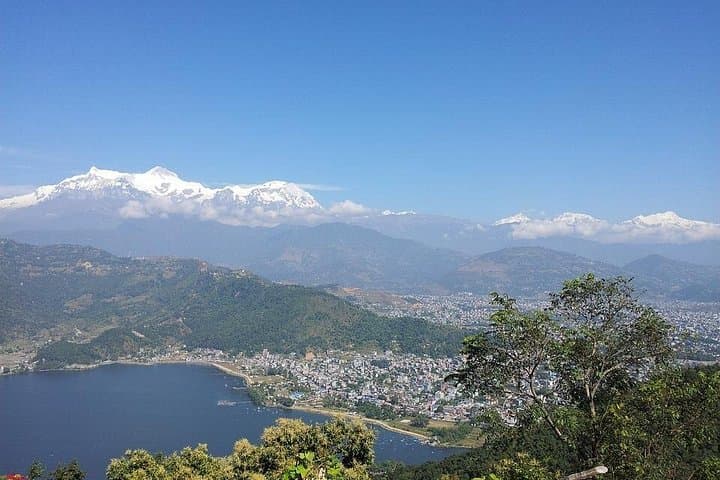


A soft wind pushes across Phewa Lake as you step from the car and follow stone staircases up toward the white dome. The World Peace Pagoda sits 1,100 meters above sea level on Pumdi Bhumdi hill, its flared terraces framing unobstructed views of the Annapurna range to the north and Pokhara city below. Prayer flags flutter; the stupa’s clean lines cut against sky and mountain.
A soft wind pushes across Phewa Lake as you step from the car and follow stone staircases up toward the white dome. The World Peace Pagoda sits 1,100 meters above sea level on Pumdi Bhumdi hill, its flared terraces framing unobstructed views of the Annapurna range to the north and Pokhara city below. Prayer flags flutter; the stupa’s clean lines cut against sky and mountain.
Built by monks from the Japanese Nipponzan Myohoji order, the pagoda represents four key episodes in the Buddha’s life, each oriented to a different direction. Geologically, the hill is part of the Lesser Himalaya’s folded ridges—steep but stable slopes that reveal terraced farms and scrub forest. Local culture blends Newar and Gurung traditions; morning rituals and occasional pujas at the site offer a quiet window into devotional practice.
Expect a 10–15 minute climb from the road: stone steps and short dirt paths, occasional loose gravel. The summit is exposed—sun, wind, and sudden weather shifts are common. Bring water and a light layer; early morning or late afternoon visits give the best light for photos and cooler air.
Practical tips: use the hotel pickup included in many private tours to avoid navigating narrow roads; wear supportive shoes for the stair climb; be respectful around prayer areas. The visit pairs well with a walk along Phewa Lake or a stop at Gupteshwor Cave on the return. For a compact half-day outing, the pagoda delivers panoramic mountain scenery, cultural context, and a brisk outdoor stroll.