THE ADVENTURE COLLECTIVE® · Independent discovery and booking for outdoor travel

Explore two millennia of women’s lives through objects at the British Museum on a focused two-hour guided walk. From ancient tablets and iconic sculptures to finds recovered by female archaeologists, this tour pairs close-looking with historical context.
Explore two millennia of women’s lives through objects at the British Museum on a focused two-hour guided walk. From ancient tablets and iconic sculptures to finds recovered by female archaeologists, this tour pairs close-looking with historical context.
Stand in the hush of the museum’s Great Court and hear stone and metal begin to speak. The guide leads a small group through cool galleries where carved eyes and inked lines mark women’s stories across continents and centuries—warriors carved in relief, an ancient tablet penned by a named woman, votive figures that once demanded protection. The space encourages slow reading: objects that survived fires, voyages and re-use press forward like witnesses.
Verified experiences and guided adventures in the surrounding area.
Operated by Women of London · London, England
Stand in the hush of the museum’s Great Court and hear stone and metal begin to speak. The guide leads a small group through cool galleries where carved eyes and inked lines mark women’s stories across continents and centuries—warriors carved in relief, an ancient tablet penned by a named woman, votive figures that once demanded protection. The space encourages slow reading: objects that survived fires, voyages and re-use press forward like witnesses.
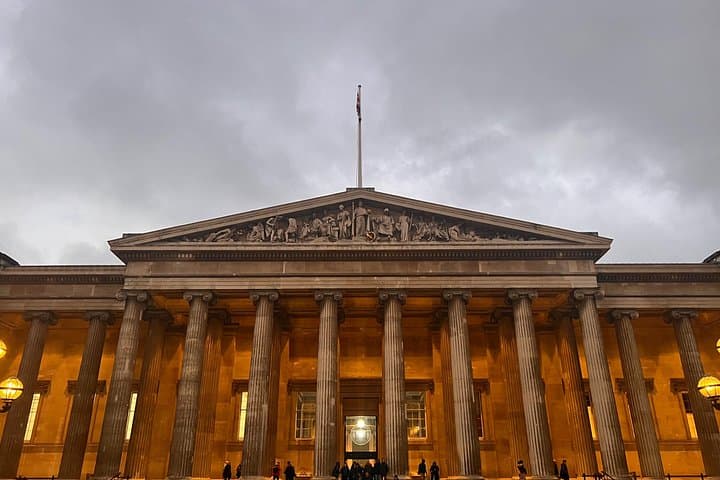
The British Museum itself was assembled from private collections in the 18th century, notably Sir Hans Sloane’s library and curios; its rooms map trade, empire and scholarly curiosity. Here you’ll move from Near Eastern stelae to classical sculpture and to objects recovered by early female archaeologists—each piece a lens on how different societies pictured power, piety and domestic life. Geology is literal in the stone and bronze—marbles quarried in Greece, clay baked in Mesopotamia—while cultural layers reveal shifting attitudes to gender and representation.
Expect close-looking rather than hiking: the itinerary emphasizes context and conversation over exhaustive coverage. Practicalities matter—arrive with a charged phone for photos where permitted, a small notebook, and time to linger at quieter displays like the Enlightenment Gallery. The tour is two hours, suitable for most fitness levels, and is wheelchair accessible. Public transport drops you nearby; traveling light speeds moves between rooms. Leave room in your schedule to revisit a favorite object or step into the courtyard café—the city hums just beyond the museum doors.
easy.
2 hours.
Suitable for people of most fitness levels; involves standing and walking on level floors for up to two hours.
The tour includes pre-booked museum entry as part of the booking—bring your mobile ticket or printed confirmation.
Yes; the tour notes wheelchair access and wheelchair-accessible surfaces throughout the public galleries.
The guided experience runs about 120 minutes with a shared-group size capped at roughly 10 participants.
Full refunds are available if you cancel at least 24 hours before the scheduled departure; check your booking confirmation for details.
The British Museum opened in 1759 from collections including Sir Hans Sloane’s holdings and was among the first national public museums free to all.
The museum follows strict conservation practices—avoid touching objects, follow signage, and consider visiting outside peak days to reduce wear; support the museum’s work by following photography and handling rules.
Women of London operates guided outdoor trips and adventures with an emphasis on safety, stewardship, and memorable experiences.
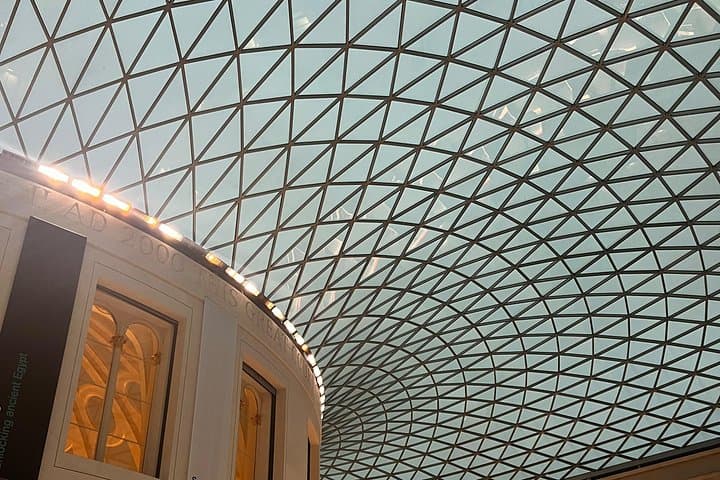
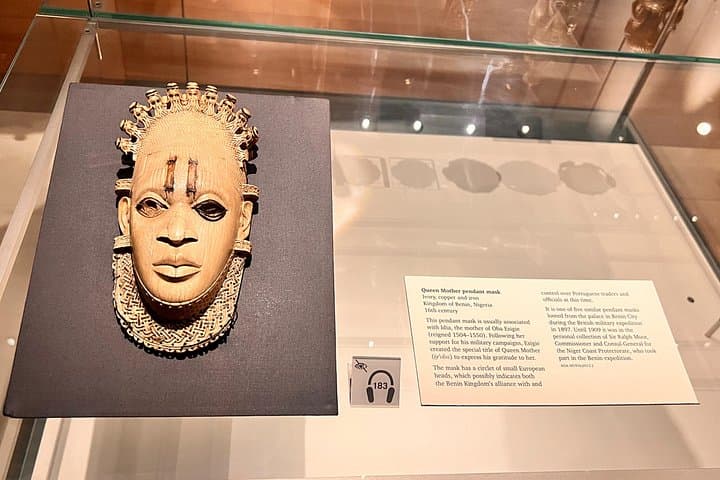
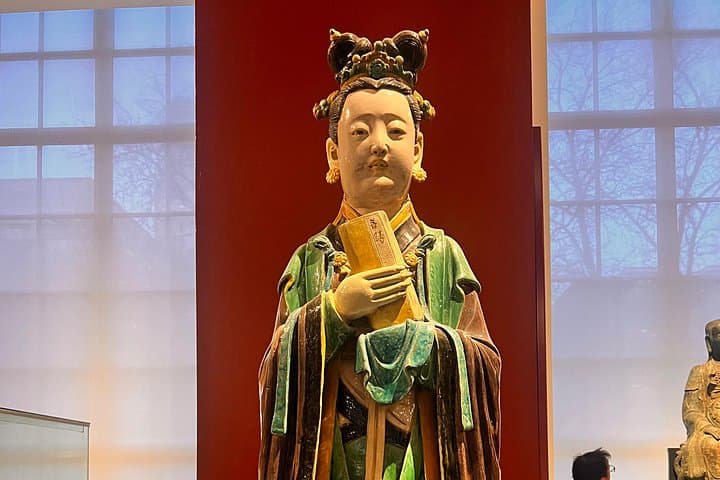
Stand in the hush of the museum’s Great Court and hear stone and metal begin to speak. The guide leads a small group through cool galleries where carved eyes and inked lines mark women’s stories across continents and centuries—warriors carved in relief, an ancient tablet penned by a named woman, votive figures that once demanded protection. The space encourages slow reading: objects that survived fires, voyages and re-use press forward like witnesses.
Stand in the hush of the museum’s Great Court and hear stone and metal begin to speak. The guide leads a small group through cool galleries where carved eyes and inked lines mark women’s stories across continents and centuries—warriors carved in relief, an ancient tablet penned by a named woman, votive figures that once demanded protection. The space encourages slow reading: objects that survived fires, voyages and re-use press forward like witnesses.
The British Museum itself was assembled from private collections in the 18th century, notably Sir Hans Sloane’s library and curios; its rooms map trade, empire and scholarly curiosity. Here you’ll move from Near Eastern stelae to classical sculpture and to objects recovered by early female archaeologists—each piece a lens on how different societies pictured power, piety and domestic life. Geology is literal in the stone and bronze—marbles quarried in Greece, clay baked in Mesopotamia—while cultural layers reveal shifting attitudes to gender and representation.
Expect close-looking rather than hiking: the itinerary emphasizes context and conversation over exhaustive coverage. Practicalities matter—arrive with a charged phone for photos where permitted, a small notebook, and time to linger at quieter displays like the Enlightenment Gallery. The tour is two hours, suitable for most fitness levels, and is wheelchair accessible. Public transport drops you nearby; traveling light speeds moves between rooms. Leave room in your schedule to revisit a favorite object or step into the courtyard café—the city hums just beyond the museum doors.