THE ADVENTURE COLLECTIVE® · Independent discovery and booking for outdoor travel

Stand with one foot in each hemisphere on a women‑led day tour to the Equator at Kayabwe. Learn the science, taste Ugandan cuisine, and support local women artisans on this accessible cultural outing.
Stand with one foot in each hemisphere on a women‑led day tour to the Equator at Kayabwe. Learn the science, taste Ugandan cuisine, and support local women artisans on this accessible cultural outing.
A dusty country road opens like a page as your van slips south from Kampala; banana groves lean in and the air smells of green plantain and warm earth. By the time you arrive at Kayabwe, the Equator line is a low-angled marker on the roadside where the sun and the ground seem to argue over which hemisphere you belong to. Local women guides lead the group with steady humor, setting up simple water experiments that split perceptions as neatly as the latitude line.
Verified experiences and guided adventures in the surrounding area.
We couldn't find other adventures in this immediate radius right now. Browse our directory for more options.
Browse all experiencesOperated by The Walking Explorer Uganda Adventures · Kayabwe, Mpigi District
A dusty country road opens like a page as your van slips south from Kampala; banana groves lean in and the air smells of green plantain and warm earth. By the time you arrive at Kayabwe, the Equator line is a low-angled marker on the roadside where the sun and the ground seem to argue over which hemisphere you belong to. Local women guides lead the group with steady humor, setting up simple water experiments that split perceptions as neatly as the latitude line.
This strip of Central Uganda sits on ancient crystalline basement rocks that slope gently toward Lake Victoria; the landscape’s geology is simple but honest, marked by fertile soils that sustain smallholdings and roadside markets. The modern story here is entwined with colonial surveying, post-independence travel, and the growing entrepreneurship of women’s cooperatives who now run eateries and craft stalls at the site.
Expect a mix of hands-on science demonstration, cultural exchange, and a hearty midday meal of matoke and luwombo at a local restaurant. Guides explain local customs, point out birdlife, and direct you to artisans selling woven goods and beadwork. Practicalities: plan for a five-hour round trip from Kampala, bring sun protection and cash for crafts, and time your visit outside the mid-afternoon rains during the long rainy season. The site is accessible and compact — ideal for travelers wanting an easy, education-rich half-day that supports women-led businesses and offers a clear, memorable line between north and south.
easy.
5 hours.
Suitable for all fitness levels; mostly short, flat walks and time spent standing for demonstrations
The tour runs about 5 hours round trip from Kampala and includes private transport, a guided visit to the Equator marker, a traditional lunch, bottled water, and time to shop at local craft stalls.
The operator lists the experience as wheelchair accessible; ground at the site is mostly flat but can be uneven—check pickup logistics in advance to ensure accessibility needs are met.
Yes — the Equator line at Kayabwe is marked and guides carry out simple water experiments and photo opportunities that let you position yourself north and south of the line.
There are basic restroom facilities at the site and a local restaurant serving traditional dishes like matoke and luwombo included in the tour; bring small change for snacks or additional purchases.
The Equator at Kayabwe became a popular roadside attraction after colonial-era surveys mapped latitude; today it’s also a local economic spot where women-led businesses have grown around tourism.
Visitors are encouraged to minimize plastic waste and support local vendors who use natural or recycled materials; responsible visitation helps sustain small-scale enterprises and reduce litter at the roadside site.
The Walking Explorer Uganda Adventures operates guided outdoor trips and adventures with an emphasis on safety, stewardship, and memorable experiences.

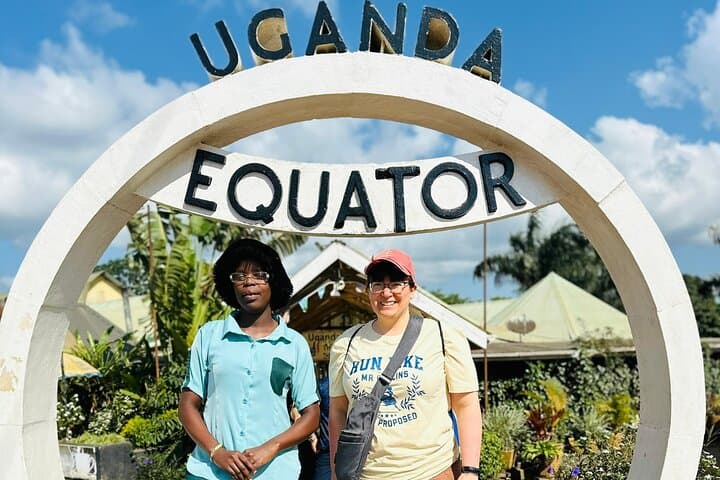

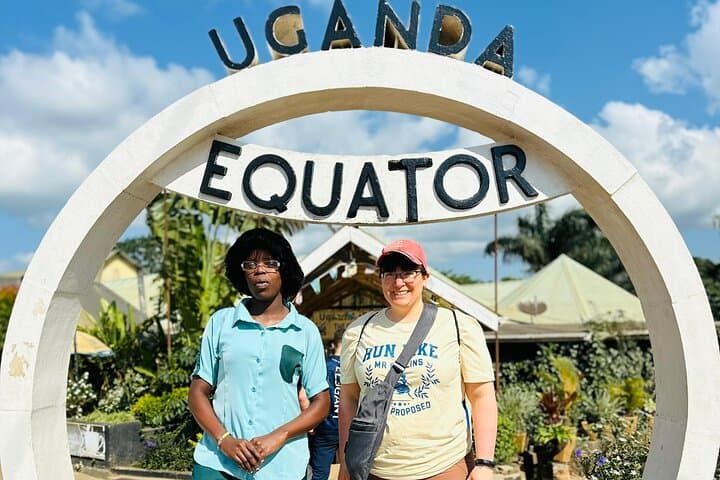
A dusty country road opens like a page as your van slips south from Kampala; banana groves lean in and the air smells of green plantain and warm earth. By the time you arrive at Kayabwe, the Equator line is a low-angled marker on the roadside where the sun and the ground seem to argue over which hemisphere you belong to. Local women guides lead the group with steady humor, setting up simple water experiments that split perceptions as neatly as the latitude line.
A dusty country road opens like a page as your van slips south from Kampala; banana groves lean in and the air smells of green plantain and warm earth. By the time you arrive at Kayabwe, the Equator line is a low-angled marker on the roadside where the sun and the ground seem to argue over which hemisphere you belong to. Local women guides lead the group with steady humor, setting up simple water experiments that split perceptions as neatly as the latitude line.
This strip of Central Uganda sits on ancient crystalline basement rocks that slope gently toward Lake Victoria; the landscape’s geology is simple but honest, marked by fertile soils that sustain smallholdings and roadside markets. The modern story here is entwined with colonial surveying, post-independence travel, and the growing entrepreneurship of women’s cooperatives who now run eateries and craft stalls at the site.
Expect a mix of hands-on science demonstration, cultural exchange, and a hearty midday meal of matoke and luwombo at a local restaurant. Guides explain local customs, point out birdlife, and direct you to artisans selling woven goods and beadwork. Practicalities: plan for a five-hour round trip from Kampala, bring sun protection and cash for crafts, and time your visit outside the mid-afternoon rains during the long rainy season. The site is accessible and compact — ideal for travelers wanting an easy, education-rich half-day that supports women-led businesses and offers a clear, memorable line between north and south.