THE ADVENTURE COLLECTIVE® · Independent discovery and booking for outdoor travel

A brisk, guided winter ascent of Jebel Toubkal from Marrakech: two days, one night at the refuge, and a summit push to North Africa’s highest peak. Expect snow, crampons, and panoramic High Atlas views.
A brisk, guided winter ascent of Jebel Toubkal from Marrakech: two days, one night at the refuge, and a summit push to North Africa’s highest peak. Expect snow, crampons, and panoramic High Atlas views.
On a cold pre-dawn the wind pushes across the High Atlas and the trail out of Imlil climbs into a winter world of packed snow, loose scree and exposed ridgelines. Participants are met in Marrakech and driven about an hour to Imlil (1,740 m), then follow mule tracks and stone switchbacks for 5–6 hours to the Toubkal Refuge at 3,207 m—roughly 1,460 m of elevation gain on day one.
Verified experiences and guided adventures in the surrounding area.
Operated by Smart Morocco Tours Excursions · Imlil, Marrakesh-Safi
On a cold pre-dawn the wind pushes across the High Atlas and the trail out of Imlil climbs into a winter world of packed snow, loose scree and exposed ridgelines. Participants are met in Marrakech and driven about an hour to Imlil (1,740 m), then follow mule tracks and stone switchbacks for 5–6 hours to the Toubkal Refuge at 3,207 m—roughly 1,460 m of elevation gain on day one.
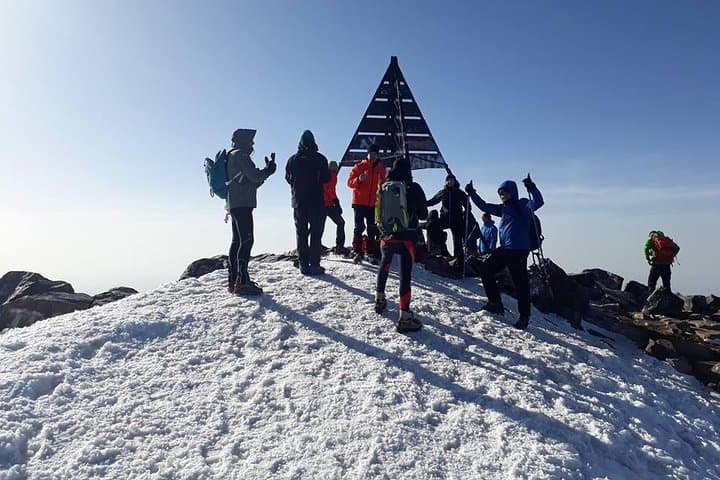
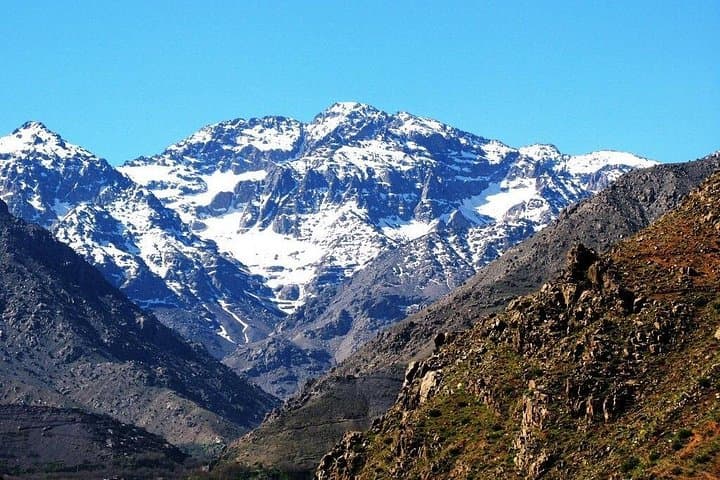
Jebel Toubkal (4,167 m) is the highest summit in North Africa; its flanks are composed of volcanic and high-grade metamorphic rock, shaped by glacial erosion in the Pleistocene. Local Berber villages—whose terraces and mule paths predate modern trails—offer the cultural backdrop, and the Sidi Chamharouch shrine provides a traditional mid-route stopping point. Guides often point out the agricultural terraces and old shepherd tracks that became today’s approach.
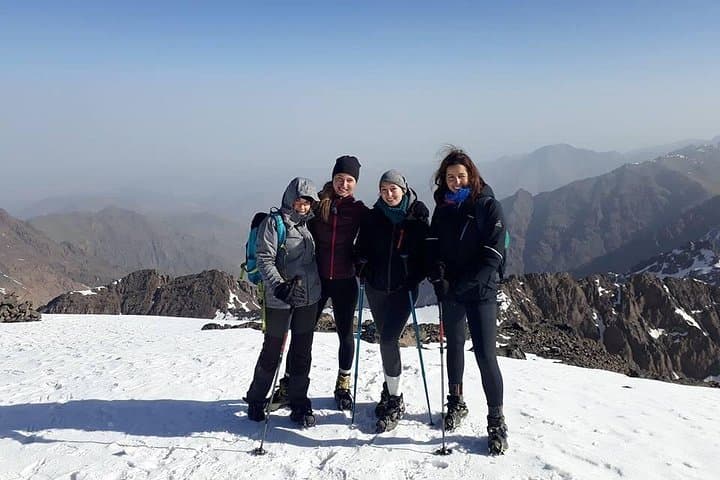
Winter ascents bring mixed conditions: hard-packed snow and icy steps near the ridge, plus loose rock lower down. From the refuge the summit push is typically 3–4 hours one way in winter conditions; expect steep bootpack, potential wind, and wide views over the Azzaden valleys and distant peaks when visibility holds.
Practical edge: this two-day program compresses a classic multi-day climb—pace conservatively for altitude, travel with a licensed guide, and assume crampons and an ice axe will be required between November and April. Bring insulated bottles (water freezes), layered clothing, a headlamp for early starts, and extra snacks. Confirm pickup times, emergency plans and what equipment the operator provides before you go.
challenging.
2 days.
Should have good cardiovascular fitness and experience with full-day hikes; comfortable carrying a daypack and walking on snow.
You should be in good aerobic shape and used to full days of hiking; the itinerary is brisk with long sections of sustained ascent—moderate to high fitness recommended.
Operators often provide some communal gear but confirm in advance; participants are commonly expected to bring or rent personal crampons and an ice axe.
Typical inclusions are transport from Marrakech, full board at the refuge, a local guide, mule support for luggage, and water—verify exact inclusions with the operator before booking.
Icy slopes, sudden weather changes, and altitude-related issues are the primary hazards—travel with an experienced guide and appropriate winter gear.
Toubkal’s routes follow centuries-old Berber mule tracks and shepherd paths; local communities around Imlil maintain traditional mountain hospitality.
Toubkal lies within Morocco’s mountain conservation efforts—stick to established trails, avoid campfires above the refuge, and pack out all waste to limit impact.
Smart Morocco Tours Excursions operates guided outdoor trips and adventures with an emphasis on safety, stewardship, and memorable experiences.
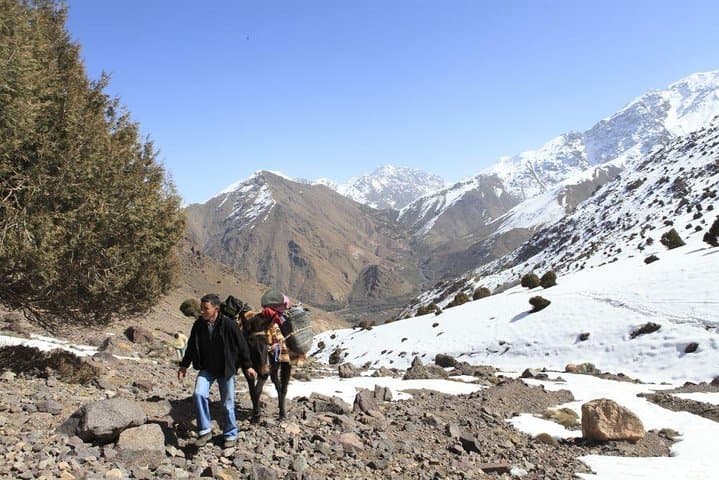
On a cold pre-dawn the wind pushes across the High Atlas and the trail out of Imlil climbs into a winter world of packed snow, loose scree and exposed ridgelines. Participants are met in Marrakech and driven about an hour to Imlil (1,740 m), then follow mule tracks and stone switchbacks for 5–6 hours to the Toubkal Refuge at 3,207 m—roughly 1,460 m of elevation gain on day one.
On a cold pre-dawn the wind pushes across the High Atlas and the trail out of Imlil climbs into a winter world of packed snow, loose scree and exposed ridgelines. Participants are met in Marrakech and driven about an hour to Imlil (1,740 m), then follow mule tracks and stone switchbacks for 5–6 hours to the Toubkal Refuge at 3,207 m—roughly 1,460 m of elevation gain on day one.
Jebel Toubkal (4,167 m) is the highest summit in North Africa; its flanks are composed of volcanic and high-grade metamorphic rock, shaped by glacial erosion in the Pleistocene. Local Berber villages—whose terraces and mule paths predate modern trails—offer the cultural backdrop, and the Sidi Chamharouch shrine provides a traditional mid-route stopping point. Guides often point out the agricultural terraces and old shepherd tracks that became today’s approach.
Winter ascents bring mixed conditions: hard-packed snow and icy steps near the ridge, plus loose rock lower down. From the refuge the summit push is typically 3–4 hours one way in winter conditions; expect steep bootpack, potential wind, and wide views over the Azzaden valleys and distant peaks when visibility holds.
Practical edge: this two-day program compresses a classic multi-day climb—pace conservatively for altitude, travel with a licensed guide, and assume crampons and an ice axe will be required between November and April. Bring insulated bottles (water freezes), layered clothing, a headlamp for early starts, and extra snacks. Confirm pickup times, emergency plans and what equipment the operator provides before you go.