THE ADVENTURE COLLECTIVE® · Independent discovery and booking for outdoor travel

Glide through the calm, icy channels east of Helsinki on a guided winter kayak tour that uses drysuits and sheltered routes. This 2–3 hour experience is beginner-friendly but demands warm layers and cold-water awareness — a quiet way to see seabirds, seals, and the archipelago’s exposed bedrock.
Glide through the calm, icy channels east of Helsinki on a guided winter kayak tour that uses drysuits and sheltered routes. This 2–3 hour experience is beginner-friendly but demands warm layers and cold-water awareness — a quiet way to see seabirds, seals, and the archipelago’s exposed bedrock.
A low, cold light hangs over the water as you push off from a sheltered jetty east of Helsinki; breath billows and the paddle cuts a clean arc through glassy, near-frozen channels. The Eastern Helsinki archipelago in winter is a stripped-back coast — rock, lichen, and open water threaded between small skerries — and the rhythm of your stroke becomes the dominant sound.
Verified experiences and guided adventures in the surrounding area.
Operated by Natura Viva · Helsinki, Uusimaa
A low, cold light hangs over the water as you push off from a sheltered jetty east of Helsinki; breath billows and the paddle cuts a clean arc through glassy, near-frozen channels. The Eastern Helsinki archipelago in winter is a stripped-back coast — rock, lichen, and open water threaded between small skerries — and the rhythm of your stroke becomes the dominant sound.
This coastline has long served fishermen, wartime lookouts and Helsinki families who use the islands year-round. Geologically it's ancient Baltic Shield bedrock scoured by ice, leaving low rocky islets and shallow bays that hold heat and break the worst of winter winds. Culturally the archipelago is local ground: weekend cottages, old boathouses and a tradition of respectful access to nature even in the cold months.
On a guided winter kayak tour you'll paddle stable sea kayaks while wearing supplied drysuits and neoprene footwear. Guides choose protected channels to limit exposure to currents and wind, teach basic strokes and cold-water awareness, and pause for hot juice and biscuits to warm hands and focus. Expect 2–3 hours on the water with time for steady paddling, short photo stops and listening for the cry of winter sea birds.
Practically: dress in warm, moisture-wicking layers under your drysuit, protect extremities with insulated mittens, and arrive via the Rastila metro connection. The tour is beginner-friendly but requires moderate fitness and comfort with cold conditions. In winter the sea tests attention and gear — but paddling these quiet channels is a direct way to experience Helsinki’s coastal winter with safety and local knowledge.
moderate.
2–3 hours.
Moderate cardiovascular fitness and the ability to kneel/sit and paddle for sustained periods; comfortable in cold conditions.
No — the tour is designed for beginners; guides cover basic strokes, entry/exit and cold-water procedures before launch.
Tours run in protected waters and guides monitor conditions; operators will cancel or change route for safety and offer refunds if cancelled per policy.
Operators supply a drysuit, life jacket, neoprene shoes and paddling mittens; you still need warm underlayers and a hat.
Not recommended for pregnant travelers or those with serious cardiovascular or spinal conditions; check age and health restrictions with the operator before booking.
The archipelago has a maritime history of fishing, small-scale shipbuilding and coastal cottages; many islets were used as seasonal bases by local families for decades.
Coastal habitats here are sensitive in winter — keep distance from roosting birds and seals, avoid landing on small rocky islets during bird breeding season, and follow guide instructions to minimize impact.
Natura Viva operates guided outdoor trips and adventures with an emphasis on safety, stewardship, and memorable experiences.
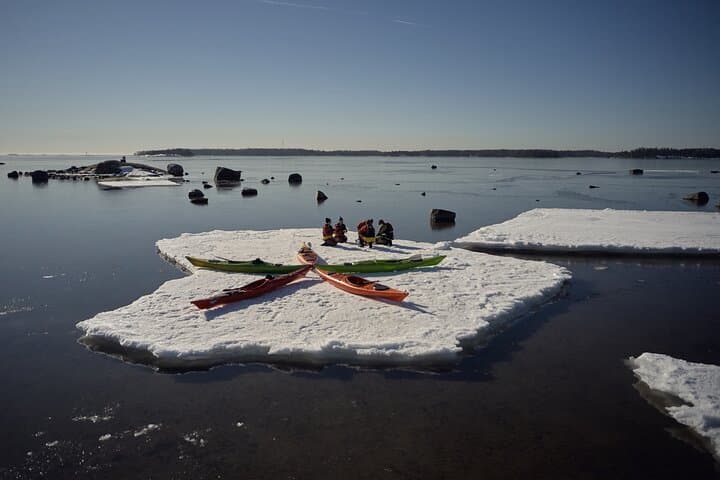



A low, cold light hangs over the water as you push off from a sheltered jetty east of Helsinki; breath billows and the paddle cuts a clean arc through glassy, near-frozen channels. The Eastern Helsinki archipelago in winter is a stripped-back coast — rock, lichen, and open water threaded between small skerries — and the rhythm of your stroke becomes the dominant sound.
A low, cold light hangs over the water as you push off from a sheltered jetty east of Helsinki; breath billows and the paddle cuts a clean arc through glassy, near-frozen channels. The Eastern Helsinki archipelago in winter is a stripped-back coast — rock, lichen, and open water threaded between small skerries — and the rhythm of your stroke becomes the dominant sound.
This coastline has long served fishermen, wartime lookouts and Helsinki families who use the islands year-round. Geologically it's ancient Baltic Shield bedrock scoured by ice, leaving low rocky islets and shallow bays that hold heat and break the worst of winter winds. Culturally the archipelago is local ground: weekend cottages, old boathouses and a tradition of respectful access to nature even in the cold months.
On a guided winter kayak tour you'll paddle stable sea kayaks while wearing supplied drysuits and neoprene footwear. Guides choose protected channels to limit exposure to currents and wind, teach basic strokes and cold-water awareness, and pause for hot juice and biscuits to warm hands and focus. Expect 2–3 hours on the water with time for steady paddling, short photo stops and listening for the cry of winter sea birds.
Practically: dress in warm, moisture-wicking layers under your drysuit, protect extremities with insulated mittens, and arrive via the Rastila metro connection. The tour is beginner-friendly but requires moderate fitness and comfort with cold conditions. In winter the sea tests attention and gear — but paddling these quiet channels is a direct way to experience Helsinki’s coastal winter with safety and local knowledge.