THE ADVENTURE COLLECTIVE® · Independent discovery and booking for outdoor travel

Two winter days of accessible mountain hikes, sweeping views over Lake Sevan, and medieval monasteries in forested Dilijan—compact, cultural, and suited to hikers with steady footing.
Two winter days of accessible mountain hikes, sweeping views over Lake Sevan, and medieval monasteries in forested Dilijan—compact, cultural, and suited to hikers with steady footing.
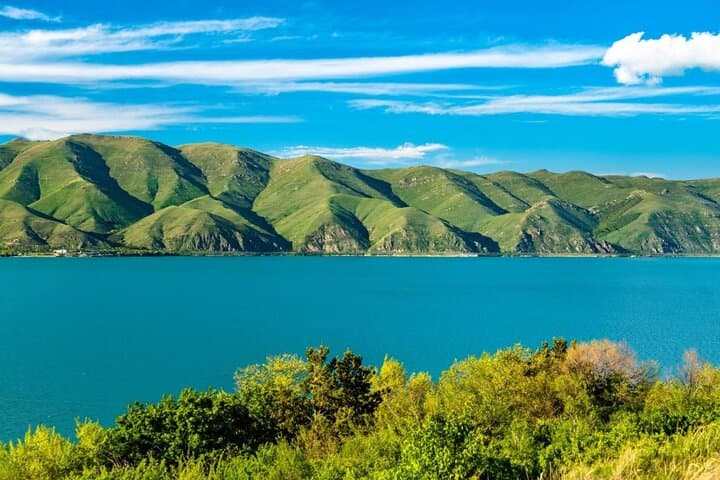
A cold light slides across Lake Sevan as the minivan pulls into Tsovagyugh; steam rises from the shore and the lake splits into two glassy hemispheres beneath Mt. Artanish. The first morning is spent on the slopes—pine-scented switchbacks give way to open ridgelines where the two parts of Sevan sit like separate basins, a view earned after about 7 km and roughly 600 m of ascent.
Verified experiences and guided adventures in the surrounding area.
Operated by Armland Adventure Club · Sevan, Gegharkunik Province
A cold light slides across Lake Sevan as the minivan pulls into Tsovagyugh; steam rises from the shore and the lake splits into two glassy hemispheres beneath Mt. Artanish. The first morning is spent on the slopes—pine-scented switchbacks give way to open ridgelines where the two parts of Sevan sit like separate basins, a view earned after about 7 km and roughly 600 m of ascent.
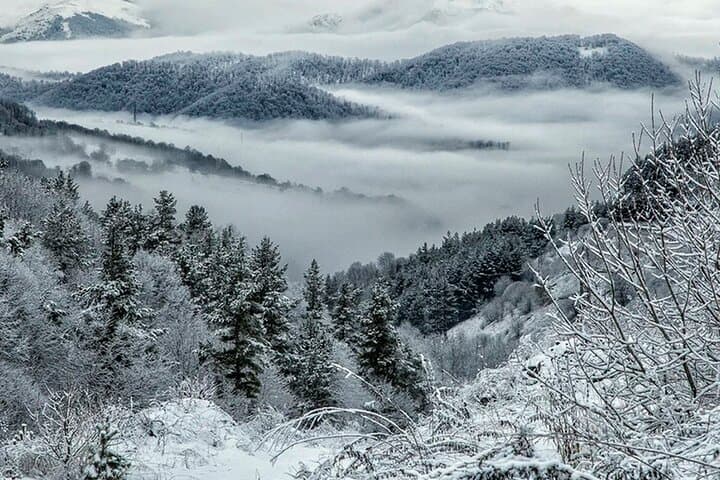
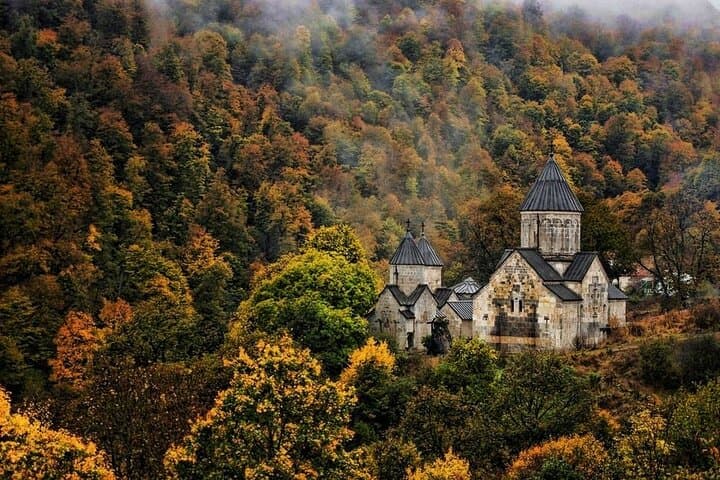
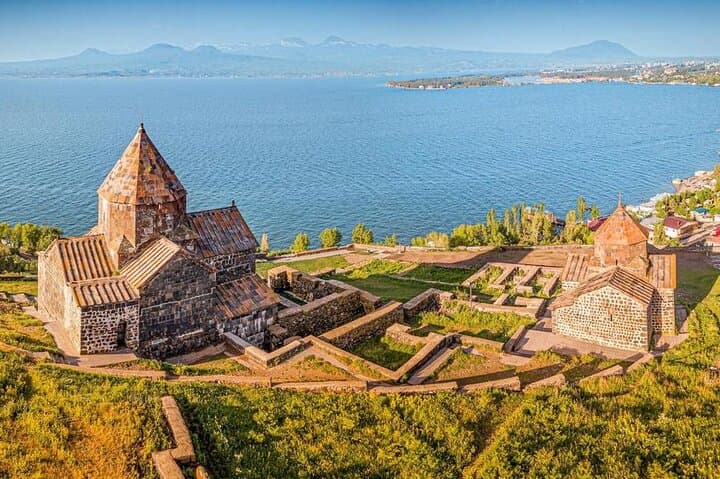
This short winter circuit pairs geological drama with medieval architecture. Sevanavank (9th century) perches on the peninsula, its stone simple against the white air. The basalt walls of the Girl's Fortress farther north take on a bluish cast and stand like an ancient guard above narrow valleys; that hike runs ~10 km with 400 m of gain through forest and basalt outcrops. Haghartsin Monastery (10th–13th c.) in Dilijan brings layered history—stone churches and monastic courtyards threaded by mountain streams.
Expect rocky paths, compacted snow or ice in winter, and forested sections where the trees seem to nudge you along. Practical notes: the climbs are moderate but steady—good footwear and traction are essential. Days are short in winter; start early to use daylight and plan lunches on summits. Hydrate and carry extra insulating layers; temperatures can swing sharply between shore winds at Sevan and sheltered valleys around Dilijan.
Local flavors include tsovagyugh fish (Ishkhan) and hearty stews in Dilijan’s hotels. Guides provide transport, hotel nights, and cultural interpretation—this is a compact, winter-friendly introduction to Armenia’s high lake and forested heart.
moderate.
2 days.
Moderate cardiovascular fitness for sustained ascents (600 m and 400 m gain) and comfortable hiking for 3–6 hours per day.
Both hikes are described as accessible but moderately strenuous: Mt. Artanish is ~7 km with 600 m gain, and the Girl’s Fortress ~10 km with 400 m gain—steady walking and basic fitness required.
No advanced skills are required, but familiarity with winter conditions and use of traction devices is highly recommended.
Overnight stays are in high-quality hotels in Dilijan with restaurants and hot-water amenities suited to winter travelers.
Yes—an air-conditioned vehicle and guide transport are included for transfers between Yerevan, Sevan, and Dilijan.
Sevanavank dates to the 9th century and became a monastic and cultural center; Haghartsin reflects 10th–13th century Armenian ecclesiastical architecture.
Lake Sevan faces water-level and pollution challenges—respect shoreline rules and avoid littering; stick to established trails to protect alpine vegetation.
Armland Adventure Club operates guided outdoor trips and adventures with an emphasis on safety, stewardship, and memorable experiences.
A cold light slides across Lake Sevan as the minivan pulls into Tsovagyugh; steam rises from the shore and the lake splits into two glassy hemispheres beneath Mt. Artanish. The first morning is spent on the slopes—pine-scented switchbacks give way to open ridgelines where the two parts of Sevan sit like separate basins, a view earned after about 7 km and roughly 600 m of ascent.
A cold light slides across Lake Sevan as the minivan pulls into Tsovagyugh; steam rises from the shore and the lake splits into two glassy hemispheres beneath Mt. Artanish. The first morning is spent on the slopes—pine-scented switchbacks give way to open ridgelines where the two parts of Sevan sit like separate basins, a view earned after about 7 km and roughly 600 m of ascent.
This short winter circuit pairs geological drama with medieval architecture. Sevanavank (9th century) perches on the peninsula, its stone simple against the white air. The basalt walls of the Girl's Fortress farther north take on a bluish cast and stand like an ancient guard above narrow valleys; that hike runs ~10 km with 400 m of gain through forest and basalt outcrops. Haghartsin Monastery (10th–13th c.) in Dilijan brings layered history—stone churches and monastic courtyards threaded by mountain streams.
Expect rocky paths, compacted snow or ice in winter, and forested sections where the trees seem to nudge you along. Practical notes: the climbs are moderate but steady—good footwear and traction are essential. Days are short in winter; start early to use daylight and plan lunches on summits. Hydrate and carry extra insulating layers; temperatures can swing sharply between shore winds at Sevan and sheltered valleys around Dilijan.
Local flavors include tsovagyugh fish (Ishkhan) and hearty stews in Dilijan’s hotels. Guides provide transport, hotel nights, and cultural interpretation—this is a compact, winter-friendly introduction to Armenia’s high lake and forested heart.