THE ADVENTURE COLLECTIVE® · Independent discovery and booking for outdoor travel

Scale Mt Ryten in winter for sweeping views over Kvalvika Beach and the jagged Lofoten skyline. This guided snowshoe hike (543 m summit) mixes manageable technical instruction with a demanding uphill and unforgettable coastal panoramas.
Scale Mt Ryten in winter for sweeping views over Kvalvika Beach and the jagged Lofoten skyline. This guided snowshoe hike (543 m summit) mixes manageable technical instruction with a demanding uphill and unforgettable coastal panoramas.
You begin in a cold hush—salted wind off the Norwegian Sea, a low sun slanting between crags—while the van climbs toward the broad gravel lot that serves as the gateway to Ryten and Kvalvika Beach.
Verified experiences and guided adventures in the surrounding area.
Operated by Guide to Lofoten · Fredvang, Nordland
You begin in a cold hush—salted wind off the Norwegian Sea, a low sun slanting between crags—while the van climbs toward the broad gravel lot that serves as the gateway to Ryten and Kvalvika Beach.
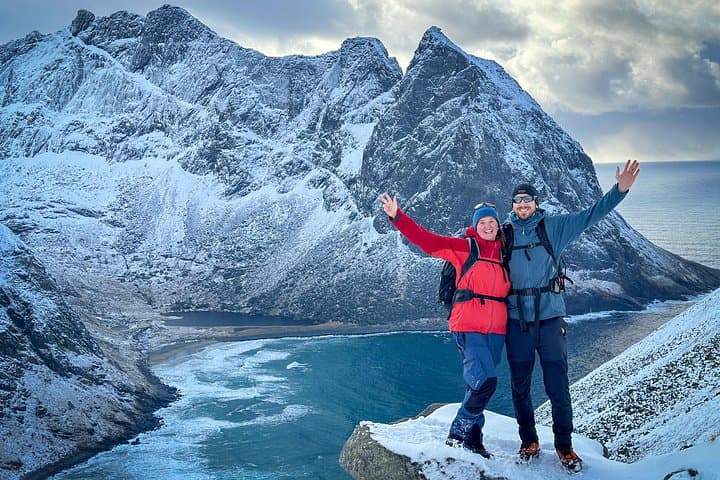
The climb to Ryten (543 m) is physically honest: over 500 m of ascent across snowfields, coastal heath, and rocky ribbing. Geologically, Ryten is a sharp outcrop of ancient gneiss, carved by ice and sea; from the summit the beach below cuts a bright crescent against pebbled black sand and the jagged silhouettes of Moskenes and Flakstad islands frame the horizon.
This corner of Lofoten sits inside the broader cultural landscape of cod fisheries and seasonal settlements—small fishing hamlets, simple boathouses and summers that once hauled stock ashore. In winter the islands slow; your guide fills silence with practical lore about routes, local weather quirks and safe travel across packed and soft snow.
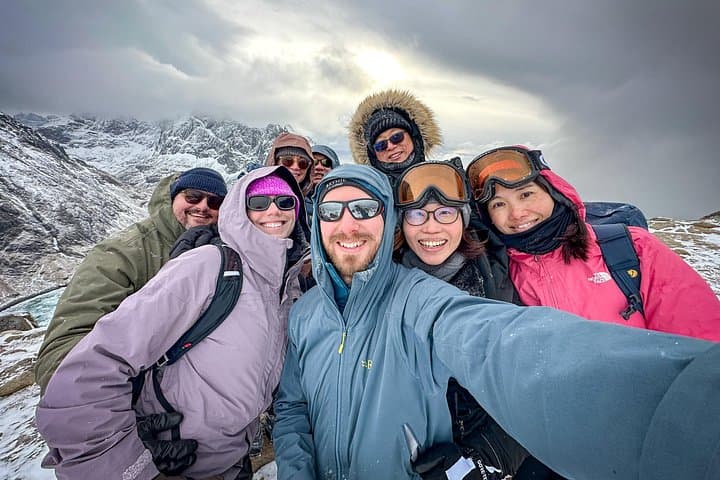
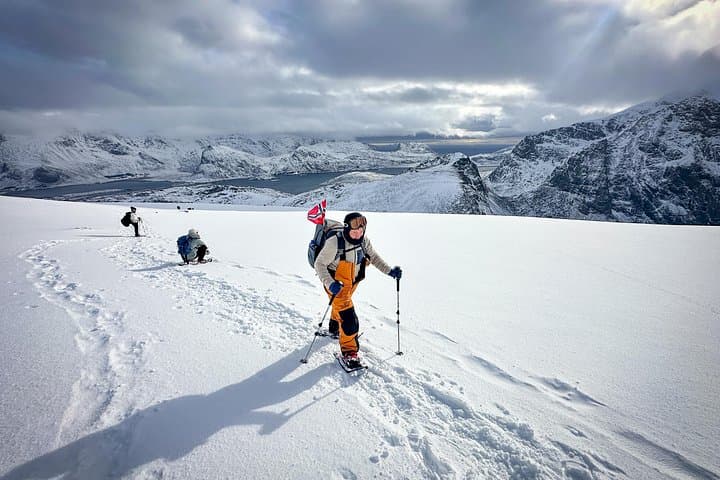
Practically speaking, expect 5–6 hours out, guided instruction in snowshoeing and microspike use, and frequent stops for photos and hot drinks. The guide carries group safety kit and provides footwear additions; you should bring layered insulation, waterproof boots, sunglasses and a daypack with hydration. Daylight in winter is limited—plan around short windows of good light—and parking at the trailhead requires a small fee. The route carries little avalanche risk on the standard line, but weather changes fast: respect the guide’s decisions and add time for slow-paced descents in deep snow.
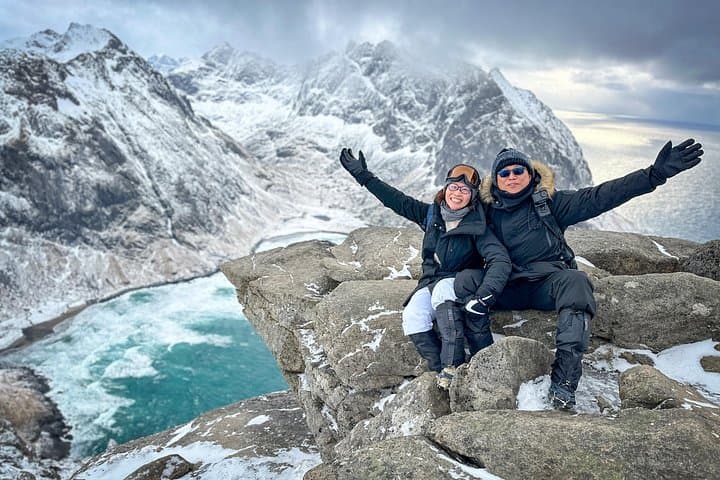
When you reach the ridge, wind and sea claim the view; the climb earns a look back toward fjords and forward to a wide, cold shoreline few winter visitors get to hold.
challenging.
5–6 hours.
Good cardiovascular fitness; comfortable with sustained uphill travel in snow and carrying a daypack.
No—guides provide instruction on snowshoes, microspikes and pole use so beginners can participate comfortably.
Temperatures vary widely with wind chill; dress in breathable layers, bring an insulating mid-layer and a waterproof outer shell to manage both perspiration and wind exposure.
The standard Ryten line used for this tour is chosen for its low avalanche risk, but guides monitor conditions and may alter the route if safety concerns arise.
Tours may be canceled for severe weather; cancel at least 24 hours prior for a full refund per the operator’s policy and check pickup confirmations on the day.
Ryten and nearby shores sit within Lofotodden’s traditional fishing landscape—these islands were central to seasonal cod fisheries that shaped coastal settlements.
Stick to established trails and pack out waste; winter vegetation is fragile and parking fees help support local trail upkeep and access management.
Guide to Lofoten operates guided outdoor trips and adventures with an emphasis on safety, stewardship, and memorable experiences.
You begin in a cold hush—salted wind off the Norwegian Sea, a low sun slanting between crags—while the van climbs toward the broad gravel lot that serves as the gateway to Ryten and Kvalvika Beach.
You begin in a cold hush—salted wind off the Norwegian Sea, a low sun slanting between crags—while the van climbs toward the broad gravel lot that serves as the gateway to Ryten and Kvalvika Beach.
The climb to Ryten (543 m) is physically honest: over 500 m of ascent across snowfields, coastal heath, and rocky ribbing. Geologically, Ryten is a sharp outcrop of ancient gneiss, carved by ice and sea; from the summit the beach below cuts a bright crescent against pebbled black sand and the jagged silhouettes of Moskenes and Flakstad islands frame the horizon.
This corner of Lofoten sits inside the broader cultural landscape of cod fisheries and seasonal settlements—small fishing hamlets, simple boathouses and summers that once hauled stock ashore. In winter the islands slow; your guide fills silence with practical lore about routes, local weather quirks and safe travel across packed and soft snow.
Practically speaking, expect 5–6 hours out, guided instruction in snowshoeing and microspike use, and frequent stops for photos and hot drinks. The guide carries group safety kit and provides footwear additions; you should bring layered insulation, waterproof boots, sunglasses and a daypack with hydration. Daylight in winter is limited—plan around short windows of good light—and parking at the trailhead requires a small fee. The route carries little avalanche risk on the standard line, but weather changes fast: respect the guide’s decisions and add time for slow-paced descents in deep snow.
When you reach the ridge, wind and sea claim the view; the climb earns a look back toward fjords and forward to a wide, cold shoreline few winter visitors get to hold.