THE ADVENTURE COLLECTIVE® · Independent discovery and booking for outdoor travel

Spend a quiet winter day exploring Pravčická brána and the Bastei stone bridge on a guided small-group tour from Prague. Snow reduces crowds and sharpens the sandstone forms — ideal for hikers who want dramatic views without the summer crush.
Spend a quiet winter day exploring Pravčická brána and the Bastei stone bridge on a guided small-group tour from Prague. Snow reduces crowds and sharpens the sandstone forms — ideal for hikers who want dramatic views without the summer crush.
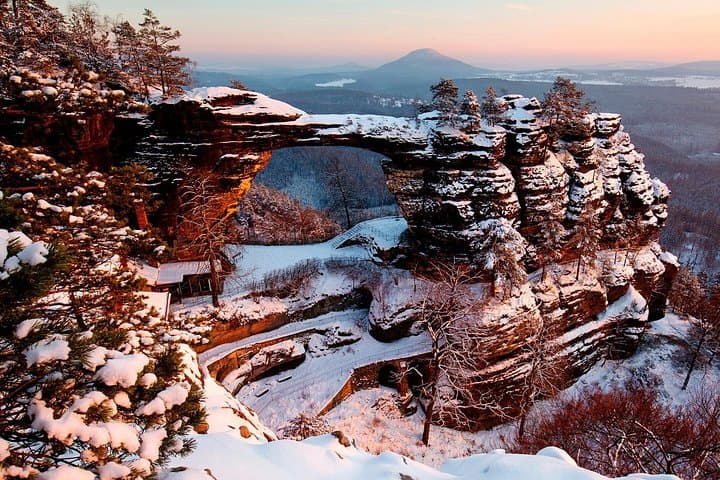
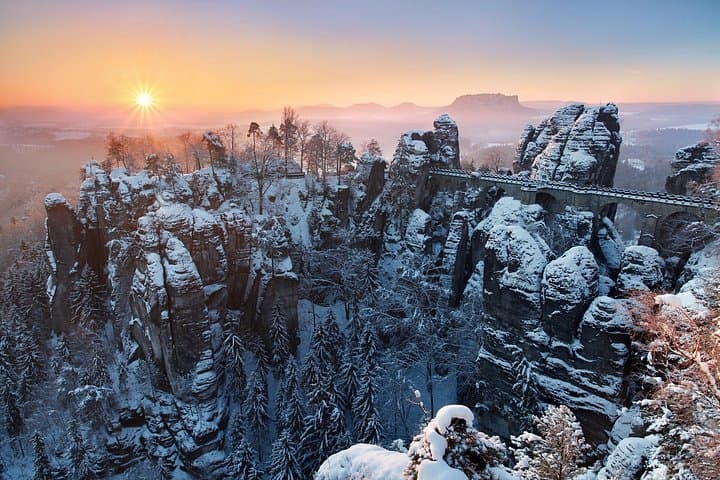
You step out of the minivan and cold air snaps at your cheeks; pines stand like dark columns and the trail crunches underfoot as you make for the ice-scored rim above the valley. In winter the sandstone cliffs of Bohemian–Saxon Switzerland sharpen into clean lines, and the two landmarks — Pravčická brána’s vast natural arch and the jagged Bastei bridge over the Elbe — feel almost private, their usual summer traffic smoothed away by snow.
Verified experiences and guided adventures in the surrounding area.
Operated by Northern Hikes · Hrensko, Ústí nad Labem Region
You step out of the minivan and cold air snaps at your cheeks; pines stand like dark columns and the trail crunches underfoot as you make for the ice-scored rim above the valley. In winter the sandstone cliffs of Bohemian–Saxon Switzerland sharpen into clean lines, and the two landmarks — Pravčická brána’s vast natural arch and the jagged Bastei bridge over the Elbe — feel almost private, their usual summer traffic smoothed away by snow.
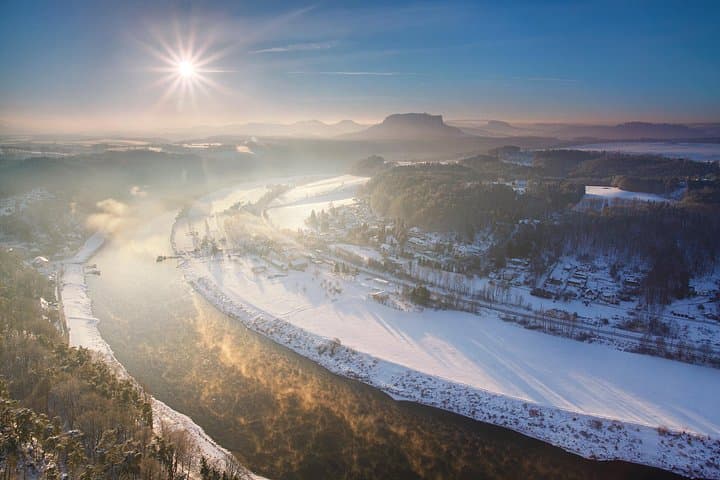
These rock monuments were carved from Cretaceous sandstone, their layers telling of ancient rivers and tidal flats. Pravčická brána is Europe’s largest sandstone arch; across the border the Bastei sits above a deep Elbe gorge where medieval builders added a stone walkway to link viewpoints. Local towns like Děčín and Bad Schandau grew around river trade, spas and forest industries, giving the landscape a layered human history that sits easily beside its geology.
Practically: expect 10–11 hours door-to-door from Prague with hotel pickup, guided walks of variable steepness and some short stone steps. Trails can be icy — microspikes or crampons are often useful — and temperatures swing; dress in warm, breathable layers and water-resistant footwear. Photography windows are best mid-afternoon when low winter sun picks out the canyon walls. Bring a passport for the short border crossing into Germany, and plan for an á la carte lunch at a local guesthouse. The tour balances effortless transport with on-foot exploration, letting you cover both Czech and German highlights in a single day while minimizing driving stress.
moderate.
10–11 hours.
Moderate endurance for multiple short hikes and uneven footing; able to stand and walk up to 3–5 miles total with elevation changes.
No — snow depends on winter conditions; the tour operates year-round and offers the season’s best scenery whether snowy or clear.
Pickup is from your Prague accommodation; exact time is provided the day before and ranges between roughly 7:45–8:30 a.m.
Yes — park admissions, an á la carte lunch (one main course and drink) with vegetarian/vegan options are included.
Yes — walks to the main viewpoints are short but include uneven terrain and steps; a moderate fitness level is recommended.
The sandstone landscape formed in the Cretaceous; human structures like the Bastei’s medieval fortifications and riverside spa towns grew up along the Elbe, linking Czech and German cultural landscapes.
The Czech and Saxon parks coordinate trail management and visitor limits; stick to marked routes, carry out waste and avoid venturing onto fragile sandstone ledges.
Northern Hikes operates guided outdoor trips and adventures with an emphasis on safety, stewardship, and memorable experiences.
You step out of the minivan and cold air snaps at your cheeks; pines stand like dark columns and the trail crunches underfoot as you make for the ice-scored rim above the valley. In winter the sandstone cliffs of Bohemian–Saxon Switzerland sharpen into clean lines, and the two landmarks — Pravčická brána’s vast natural arch and the jagged Bastei bridge over the Elbe — feel almost private, their usual summer traffic smoothed away by snow.
You step out of the minivan and cold air snaps at your cheeks; pines stand like dark columns and the trail crunches underfoot as you make for the ice-scored rim above the valley. In winter the sandstone cliffs of Bohemian–Saxon Switzerland sharpen into clean lines, and the two landmarks — Pravčická brána’s vast natural arch and the jagged Bastei bridge over the Elbe — feel almost private, their usual summer traffic smoothed away by snow.
These rock monuments were carved from Cretaceous sandstone, their layers telling of ancient rivers and tidal flats. Pravčická brána is Europe’s largest sandstone arch; across the border the Bastei sits above a deep Elbe gorge where medieval builders added a stone walkway to link viewpoints. Local towns like Děčín and Bad Schandau grew around river trade, spas and forest industries, giving the landscape a layered human history that sits easily beside its geology.
Practically: expect 10–11 hours door-to-door from Prague with hotel pickup, guided walks of variable steepness and some short stone steps. Trails can be icy — microspikes or crampons are often useful — and temperatures swing; dress in warm, breathable layers and water-resistant footwear. Photography windows are best mid-afternoon when low winter sun picks out the canyon walls. Bring a passport for the short border crossing into Germany, and plan for an á la carte lunch at a local guesthouse. The tour balances effortless transport with on-foot exploration, letting you cover both Czech and German highlights in a single day while minimizing driving stress.