THE ADVENTURE COLLECTIVE® · Independent discovery and booking for outdoor travel

Walk a 1.5-mile trail of more than one million lights across 18 acres of illuminated displays, bonfires, and an eight-lane snow tubing run. This outdoor holiday event blends high-tech light shows with old-fashioned winter treats — plan for lines, layers, and early booking.
Walk a 1.5-mile trail of more than one million lights across 18 acres of illuminated displays, bonfires, and an eight-lane snow tubing run. This outdoor holiday event blends high-tech light shows with old-fashioned winter treats — plan for lines, layers, and early booking.
Streetlights fade and a forest of LEDs takes over — you step onto a 1.5-mile trail where over a million lights flicker across trees and clearing, and the air smells faintly of wood smoke from scattered bonfires. The route winds through an 18-acre outdoor display, past a 52-foot programmable tree and beneath a 200-foot light canopy that pulses to music. An eight-lane snow tubing run injects carnival energy; popcorn, hot chocolate and s’mores stalls keep hands warm between runs.
Verified experiences and guided adventures in the surrounding area.
Streetlights fade and a forest of LEDs takes over — you step onto a 1.5-mile trail where over a million lights flicker across trees and clearing, and the air smells faintly of wood smoke from scattered bonfires. The route winds through an 18-acre outdoor display, past a 52-foot programmable tree and beneath a 200-foot light canopy that pulses to music. An eight-lane snow tubing run injects carnival energy; popcorn, hot chocolate and s’mores stalls keep hands warm between runs.
The idea of public light festivals in the D.C. area traces to holiday parades and botanical garden displays that grew in scale through the late 20th century; today technical advances allow synchronized, large-format shows. Geologically the route sits on Piedmont parkland — rolling, wooded terrain carved by streams — so expect gently undulating paths rather than flat asphalt. Culturally, the event merges suburban holiday fair traditions with larger metropolitan crowds from DC, Arlington and Baltimore.
Practically: plan for cold evenings, timed entry, and a 90–120 minute visit if you move steadily through the trail; add time for food, tubing lines and bonfires. Wear waterproof footwear and an insulated outer layer, and bring a small pack for snacks and a reusable cup. Public transit options and free parking are available, but weekends fill fast — midweek visits or early-evening slots reduce wait times. Follow staff directions at bonfires and tubing lanes; lights are low-impact but respect plant beds and stay on designated paths. With the right timing and layers, the experience reads like a walkable holiday spectacle engineered for winter play.
easy.
2–2.5 hours.
Suitable for most fitness levels; expect 1.5 miles of walking with short standing queues for attractions
Yes — the route is designed to be stroller- and wheelchair-accessible, though some temporary surface conditions may be uneven; check event accessibility notes before arrival.
Events typically use timed-entry or set session lengths; confirm your entry window on your ticket to avoid lines and missed sessions.
Outside food policies vary; small snacks are usually fine but many visitors purchase from onsite vendors who offer seasonal items and hot beverages.
Tubing access may be included or offered as an add-on depending on the ticket type; verify details when booking to avoid surprises.
Large-scale winter illumination events in the D.C. region evolved from botanical garden light traditions and suburban holiday fairs, expanding with LED technology and synchronized lighting systems.
Organizers increasingly use energy-efficient LEDs and encourage public transit or carpooling to reduce event carbon footprint; follow waste-station guidance and don’t leave litter.
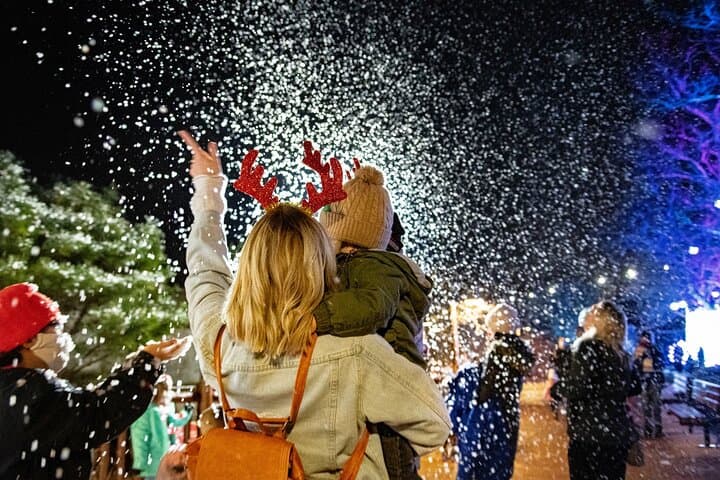
Streetlights fade and a forest of LEDs takes over — you step onto a 1.5-mile trail where over a million lights flicker across trees and clearing, and the air smells faintly of wood smoke from scattered bonfires. The route winds through an 18-acre outdoor display, past a 52-foot programmable tree and beneath a 200-foot light canopy that pulses to music. An eight-lane snow tubing run injects carnival energy; popcorn, hot chocolate and s’mores stalls keep hands warm between runs.
Streetlights fade and a forest of LEDs takes over — you step onto a 1.5-mile trail where over a million lights flicker across trees and clearing, and the air smells faintly of wood smoke from scattered bonfires. The route winds through an 18-acre outdoor display, past a 52-foot programmable tree and beneath a 200-foot light canopy that pulses to music. An eight-lane snow tubing run injects carnival energy; popcorn, hot chocolate and s’mores stalls keep hands warm between runs.
The idea of public light festivals in the D.C. area traces to holiday parades and botanical garden displays that grew in scale through the late 20th century; today technical advances allow synchronized, large-format shows. Geologically the route sits on Piedmont parkland — rolling, wooded terrain carved by streams — so expect gently undulating paths rather than flat asphalt. Culturally, the event merges suburban holiday fair traditions with larger metropolitan crowds from DC, Arlington and Baltimore.
Practically: plan for cold evenings, timed entry, and a 90–120 minute visit if you move steadily through the trail; add time for food, tubing lines and bonfires. Wear waterproof footwear and an insulated outer layer, and bring a small pack for snacks and a reusable cup. Public transit options and free parking are available, but weekends fill fast — midweek visits or early-evening slots reduce wait times. Follow staff directions at bonfires and tubing lanes; lights are low-impact but respect plant beds and stay on designated paths. With the right timing and layers, the experience reads like a walkable holiday spectacle engineered for winter play.