THE ADVENTURE COLLECTIVE® · Independent discovery and booking for outdoor travel

Walk the old theatre district of Winnipeg with a GPS-guided audio tour on your smartphone. Self-paced, accessible, and rich with stories about vaudeville, film shoots and architectural history.
Walk the old theatre district of Winnipeg with a GPS-guided audio tour on your smartphone. Self-paced, accessible, and rich with stories about vaudeville, film shoots and architectural history.
You step off Portage Avenue and the city exhales: brick facades, large stage doors, and posters that still hint at old marquees. The smartphone in your pocket becomes the guide—GPS pings, a narrator's voice, and a trivia prompt that nudges you to look up and read the city like a script.
Verified experiences and guided adventures in the surrounding area.
Operated by Tripvia Tours · Winnipeg, Manitoba
You step off Portage Avenue and the city exhales: brick facades, large stage doors, and posters that still hint at old marquees. The smartphone in your pocket becomes the guide—GPS pings, a narrator's voice, and a trivia prompt that nudges you to look up and read the city like a script.
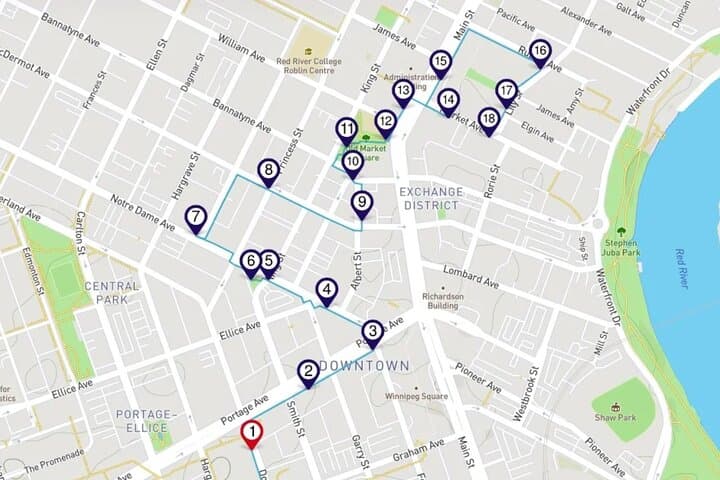
This 2.5 km, one-way audio walk threads through Winnipeg’s historic theatre quarter and the Exchange District. Once a hub of vaudeville and early Canadian cinema, the area’s turn-of-the-century warehouses and ornate theatres—like the Burton Cummings and the Pantages—tell a pragmatic story of lumber, grain, and show business. Geology here is flat prairie; what shapes the terrain is human: brick, limestone, and the slow reshaping of streets into film sets.
Culturally, you’ll hear about the Fringe Festival, local film shoots, and the working artists who repurposed warehouses into studios. The narration highlights plaques, fire histories, and the odd cinematic cameo filmed on these streets.
Practically, this tour is self-paced: download on Wi‑Fi, keep your phone charged, and allow 60–120 minutes depending on stops. The route is wheelchair- and stroller-accessible and navigates mostly flat sidewalks with frequent crosswalks. Best times are mid-morning or late afternoon to avoid heavy traffic and catch natural light on façades.
Bring headphones, wear sturdy shoes, and leave enough battery for pictures and map use. The experience is less about elevation and more about attention: listen closely and let the city’s theatrical past start speaking to you.
easy.
60–120 minutes.
Minimal fitness required; suitable for most mobility levels with frequent stops
No—download the audio and map over Wi‑Fi before you start; GPS works offline on most devices.
Yes, the route and surfaces are listed as wheelchair accessible with flat sidewalks and curb cuts.
Allow 60–120 minutes depending on how often you stop for sites, photos or a coffee break.
Yes—the audio is self‑paced; commentary triggers by GPS so you can stop and resume at any point.
The Exchange District and theatre quarter grew with Winnipeg’s early 20th-century boom—warehouses, vaudeville houses and early film production shaped the urban core.
Heritage restoration is active here; visitors are encouraged to respect private property and support local businesses to sustain preservation efforts.
Tripvia Tours operates guided outdoor trips and adventures with an emphasis on safety, stewardship, and memorable experiences.
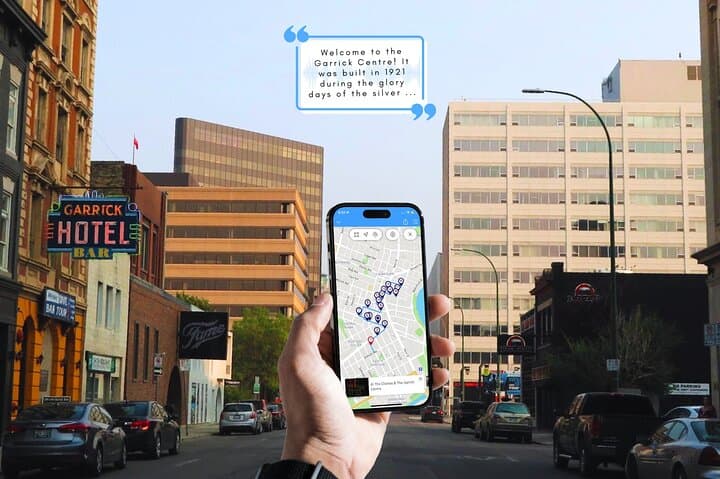

You step off Portage Avenue and the city exhales: brick facades, large stage doors, and posters that still hint at old marquees. The smartphone in your pocket becomes the guide—GPS pings, a narrator's voice, and a trivia prompt that nudges you to look up and read the city like a script.
You step off Portage Avenue and the city exhales: brick facades, large stage doors, and posters that still hint at old marquees. The smartphone in your pocket becomes the guide—GPS pings, a narrator's voice, and a trivia prompt that nudges you to look up and read the city like a script.
This 2.5 km, one-way audio walk threads through Winnipeg’s historic theatre quarter and the Exchange District. Once a hub of vaudeville and early Canadian cinema, the area’s turn-of-the-century warehouses and ornate theatres—like the Burton Cummings and the Pantages—tell a pragmatic story of lumber, grain, and show business. Geology here is flat prairie; what shapes the terrain is human: brick, limestone, and the slow reshaping of streets into film sets.
Culturally, you’ll hear about the Fringe Festival, local film shoots, and the working artists who repurposed warehouses into studios. The narration highlights plaques, fire histories, and the odd cinematic cameo filmed on these streets.
Practically, this tour is self-paced: download on Wi‑Fi, keep your phone charged, and allow 60–120 minutes depending on stops. The route is wheelchair- and stroller-accessible and navigates mostly flat sidewalks with frequent crosswalks. Best times are mid-morning or late afternoon to avoid heavy traffic and catch natural light on façades.
Bring headphones, wear sturdy shoes, and leave enough battery for pictures and map use. The experience is less about elevation and more about attention: listen closely and let the city’s theatrical past start speaking to you.