THE ADVENTURE COLLECTIVE® · Independent discovery and booking for outdoor travel

A fast coastal transfer to Hazards Beach with an easy 30-minute bushwalk to the iconic Wineglass Bay beach. Perfect for travelers who want crystal waters and white sand without the steep climb to the lookout.
A fast coastal transfer to Hazards Beach with an easy 30-minute bushwalk to the iconic Wineglass Bay beach. Perfect for travelers who want crystal waters and white sand without the steep climb to the lookout.
The boat eases away from Coles Bay and the granite coastline of Great Oyster Bay rolls past like a slow-moving bruise of stone and surf. Sea spray dots the gunwale; the Hazards rise ahead, their orange lichen daring the ocean to erode them. You land at Hazards Beach, step onto warm sand and follow the Isthmus Track — thirty minutes over compacted sand and low scrub — toward Wineglass Bay’s crescent of white.
Verified experiences and guided adventures in the surrounding area.
Operated by Pennicott Wilderness Journeys · Coles Bay, Tasmania
The boat eases away from Coles Bay and the granite coastline of Great Oyster Bay rolls past like a slow-moving bruise of stone and surf. Sea spray dots the gunwale; the Hazards rise ahead, their orange lichen daring the ocean to erode them. You land at Hazards Beach, step onto warm sand and follow the Isthmus Track — thirty minutes over compacted sand and low scrub — toward Wineglass Bay’s crescent of white.
This strand of coastline is carved from pale granite laid down during Tasmania’s Permian and Devonian upheavals, shaped by glaciers and coastal currents. Aboriginal Tasmanian people managed shellfish and coastal resources here for millennia; more recent history records European sealing and later conservation efforts that formed Freycinet National Park in 1916. The area’s clear water and exposed rock create habitat for seabirds and marsupials, and local guides often point out feeding patterns and geologic outcrops as part of the narration.
Practically, the experience is a coastal transfer plus an easy bushwalk: expect roughly 2 km each way on sandy, sometimes uneven track, with limited shade. Bring sun protection, a filled water bottle, and a lightweight picnic to enjoy on the beach. A parks pass is required for Freycinet National Park; the boat schedule dictates how long you can relax ashore, so time your return walk to meet the Aqua Express.
This half- or full-day combo is ideal for travellers who want a relaxed coastal cruise and beach time without the steep lookout climb — sensory, accessible, and governed by tides, wind and a strict boat timetable.
easy.
4–7 hours.
Basic fitness — able to walk 2 km each way over sandy and uneven track and stand on a moving boat.
Yes — a Freycinet National Park pass is required; buy it online or at park entry before boarding the boat.
The Isthmus Track is about 2 km and typically takes around 30 minutes one-way on compact sand and track.
Yes, the Freycinet Aqua Express provides on-board restroom facilities for passengers.
Yes — the full-day schedule allows more time ashore (pick-up around 3:30pm) compared with the half-day option; always confirm exact times when booking.
Freycinet National Park was declared in 1916 to protect the unique coastal landscapes; European sealing and later tourism shaped the bay’s modern use.
Stick to marked tracks and carry out all rubbish — dune vegetation is fragile and recovery is slow; boat operators follow wildlife guidelines to minimize disturbance.
Pennicott Wilderness Journeys operates guided outdoor trips and adventures with an emphasis on safety, stewardship, and memorable experiences.
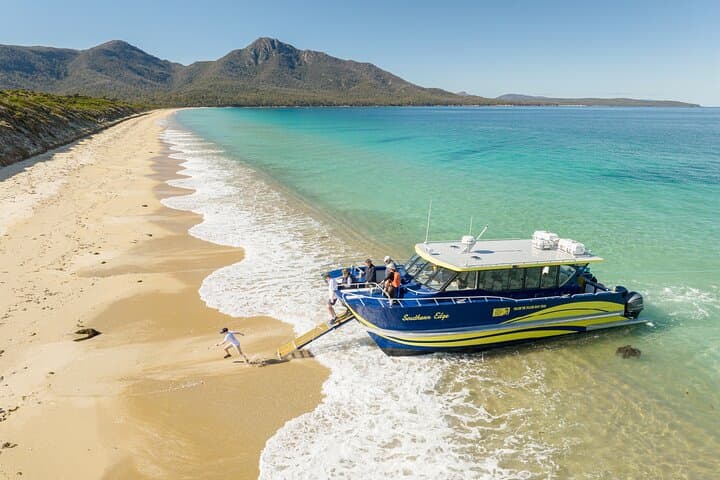
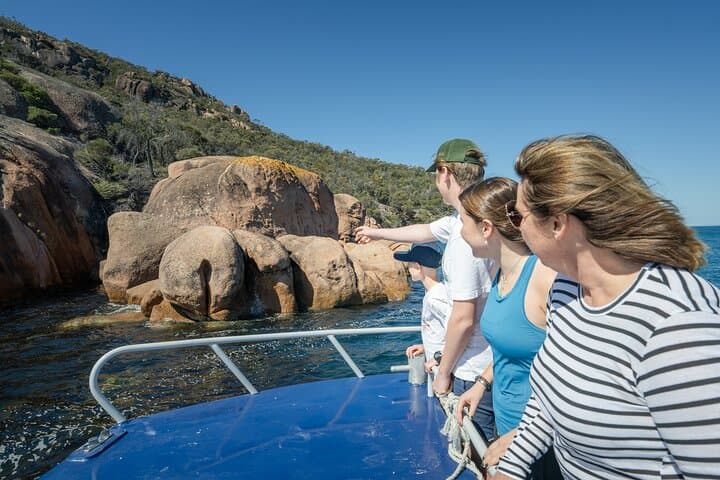
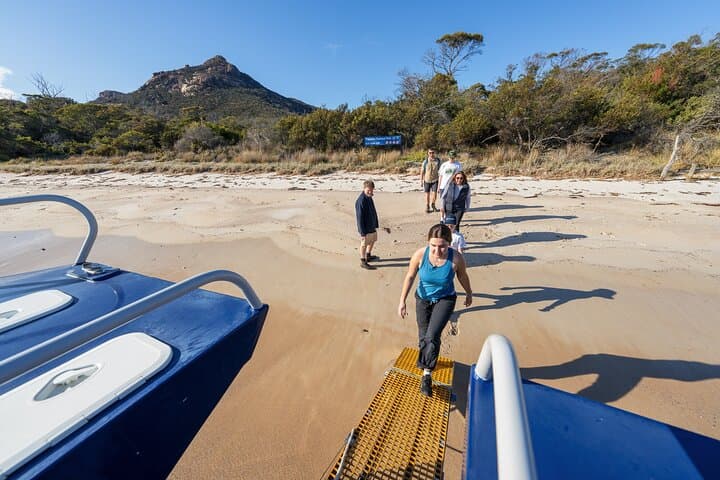
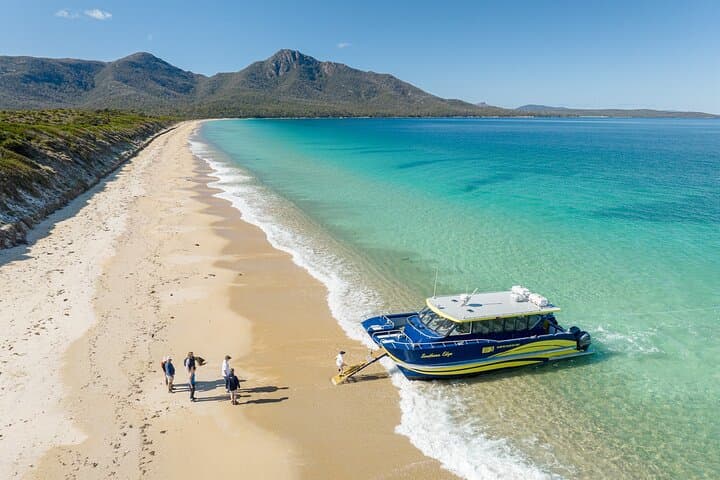
The boat eases away from Coles Bay and the granite coastline of Great Oyster Bay rolls past like a slow-moving bruise of stone and surf. Sea spray dots the gunwale; the Hazards rise ahead, their orange lichen daring the ocean to erode them. You land at Hazards Beach, step onto warm sand and follow the Isthmus Track — thirty minutes over compacted sand and low scrub — toward Wineglass Bay’s crescent of white.
The boat eases away from Coles Bay and the granite coastline of Great Oyster Bay rolls past like a slow-moving bruise of stone and surf. Sea spray dots the gunwale; the Hazards rise ahead, their orange lichen daring the ocean to erode them. You land at Hazards Beach, step onto warm sand and follow the Isthmus Track — thirty minutes over compacted sand and low scrub — toward Wineglass Bay’s crescent of white.
This strand of coastline is carved from pale granite laid down during Tasmania’s Permian and Devonian upheavals, shaped by glaciers and coastal currents. Aboriginal Tasmanian people managed shellfish and coastal resources here for millennia; more recent history records European sealing and later conservation efforts that formed Freycinet National Park in 1916. The area’s clear water and exposed rock create habitat for seabirds and marsupials, and local guides often point out feeding patterns and geologic outcrops as part of the narration.
Practically, the experience is a coastal transfer plus an easy bushwalk: expect roughly 2 km each way on sandy, sometimes uneven track, with limited shade. Bring sun protection, a filled water bottle, and a lightweight picnic to enjoy on the beach. A parks pass is required for Freycinet National Park; the boat schedule dictates how long you can relax ashore, so time your return walk to meet the Aqua Express.
This half- or full-day combo is ideal for travellers who want a relaxed coastal cruise and beach time without the steep lookout climb — sensory, accessible, and governed by tides, wind and a strict boat timetable.