THE ADVENTURE COLLECTIVE® · Independent discovery and booking for outdoor travel

A three-hour scenic flight from Hobart combines aerial views of Wineglass Bay and Freycinet with a guided landing and walk on Maria Island, capped by a Tasmanian seafood picnic. Expect dramatic coastal geology, close wildlife encounters, and practical guidance for a short but memorable outing.
A three-hour scenic flight from Hobart combines aerial views of Wineglass Bay and Freycinet with a guided landing and walk on Maria Island, capped by a Tasmanian seafood picnic. Expect dramatic coastal geology, close wildlife encounters, and practical guidance for a short but memorable outing.
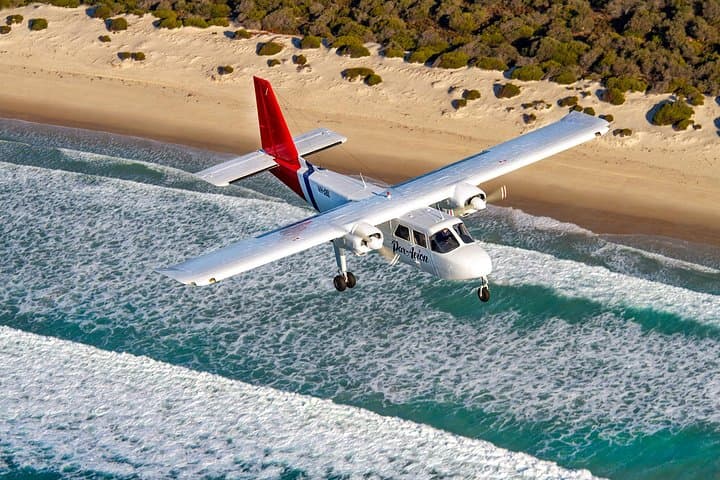
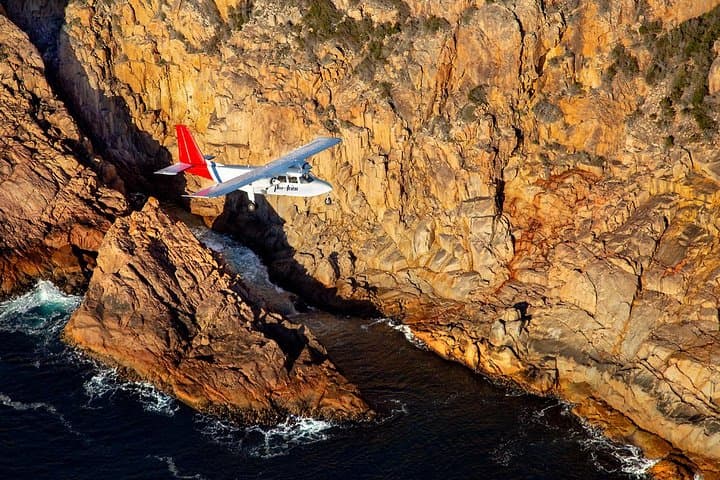
You lift from Hobart and the coastline unfolds beneath you: the Freycinet Peninsula’s pink granite ribs, Wineglass Bay’s crescent of white sand, then the slow approach to Maria Island where waves nudge ancient cliffs.
Verified experiences and guided adventures in the surrounding area.
Operated by Par Avion · Triabunna, Tasmania
You lift from Hobart and the coastline unfolds beneath you: the Freycinet Peninsula’s pink granite ribs, Wineglass Bay’s crescent of white sand, then the slow approach to Maria Island where waves nudge ancient cliffs.
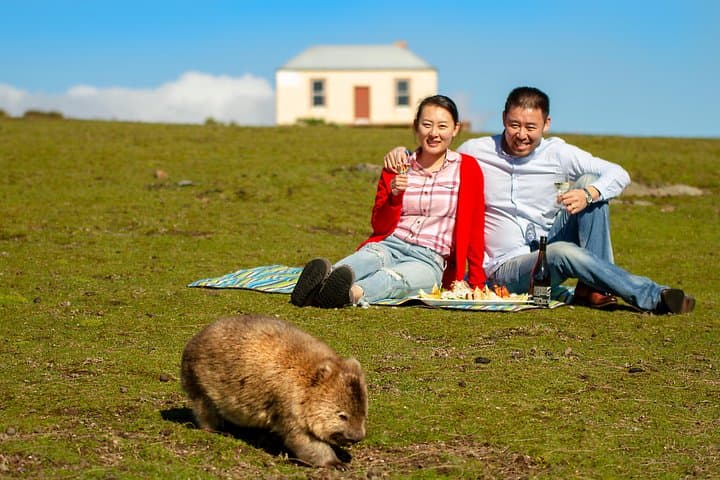
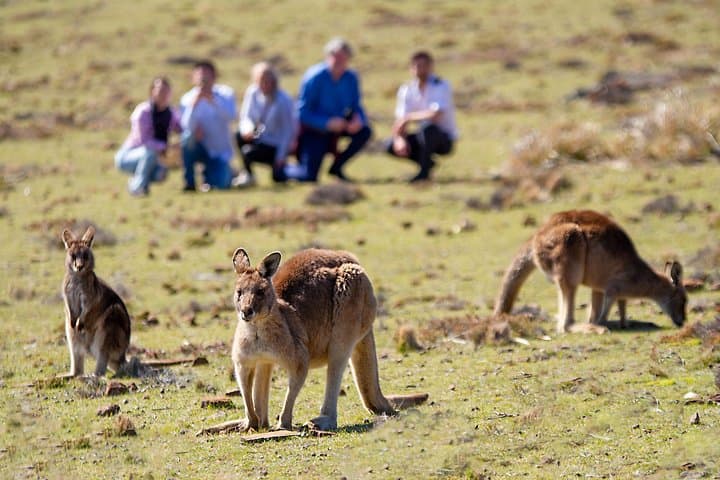
The flight portion frames Tasmania’s east coast geology — eroded granite outcrops, longshore bars and fossil-bearing limestone cliffs on Maria Island — before a gentle landing. On the ground a guide leads a short walk through blue and white gum forest, past convict-era ruins and to the Fossil Cliffs, where striated shell beds speak to a shallow Pleistocene sea. Wildlife here moves without hurry: kangaroos browse open grasslands, wombats pad the scrub, and seabirds wheel above the marine reserve.
Culturally, Maria Island carries layers: Aboriginal visitation, a convict probation station, and 19th-century industrial remnants, all set within a national park established for those values. The tour blends aerial spectacle with a hands-on island visit and a seafood picnic showcasing Tasmanian oysters, scallops and a local wine pairing.
Practically, expect a short but content-rich outing — roughly three hours door-to-door in the air-and-land rhythm. Wear wind-resistant layers and enclosed shoes for rocky beaches and fossil sites. Bring motion-sickness prevention if you’re sensitive to small aircraft, and binoculars for wildlife viewing. Respect marked boundaries around nesting birds and do not feed animals; the guide will outline Leave No Trace procedures before you disembark.
This is a compact adventure: high-angle views that demand a camera, and an island walk that rewards slow eyes and steady boots.
easy.
3 hours.
Suitable for most fitness levels; involves short, easy guided walks on uneven terrain
The tour requires a minimum of two guests; single travelers should check for shared-flight availability or wait for a second booking.
Children are welcome but infants must sit on an adult’s lap during the flight; advise the operator at booking for meal and seating arrangements.
Devils are present but elusive; common sightings include kangaroos, wombats and a variety of seabirds, while devils are rare and mostly nocturnal.
Flights may be cancelled for poor weather or insufficient passengers; the supplier typically offers refunds if cancelled 24+ hours beforehand or reschedules when possible.
Maria Island was used as an Aboriginal hunting ground, later a convict probation station and 19th-century industrial site; these layers remain visible in ruins and landscape modifications.
Maria Island is a protected national park and marine reserve — visitors are asked to stick to paths, avoid disturbing wildlife and carry out all waste to minimise impact.
Par Avion operates guided outdoor trips and adventures with an emphasis on safety, stewardship, and memorable experiences.
You lift from Hobart and the coastline unfolds beneath you: the Freycinet Peninsula’s pink granite ribs, Wineglass Bay’s crescent of white sand, then the slow approach to Maria Island where waves nudge ancient cliffs.
You lift from Hobart and the coastline unfolds beneath you: the Freycinet Peninsula’s pink granite ribs, Wineglass Bay’s crescent of white sand, then the slow approach to Maria Island where waves nudge ancient cliffs.
The flight portion frames Tasmania’s east coast geology — eroded granite outcrops, longshore bars and fossil-bearing limestone cliffs on Maria Island — before a gentle landing. On the ground a guide leads a short walk through blue and white gum forest, past convict-era ruins and to the Fossil Cliffs, where striated shell beds speak to a shallow Pleistocene sea. Wildlife here moves without hurry: kangaroos browse open grasslands, wombats pad the scrub, and seabirds wheel above the marine reserve.
Culturally, Maria Island carries layers: Aboriginal visitation, a convict probation station, and 19th-century industrial remnants, all set within a national park established for those values. The tour blends aerial spectacle with a hands-on island visit and a seafood picnic showcasing Tasmanian oysters, scallops and a local wine pairing.
Practically, expect a short but content-rich outing — roughly three hours door-to-door in the air-and-land rhythm. Wear wind-resistant layers and enclosed shoes for rocky beaches and fossil sites. Bring motion-sickness prevention if you’re sensitive to small aircraft, and binoculars for wildlife viewing. Respect marked boundaries around nesting birds and do not feed animals; the guide will outline Leave No Trace procedures before you disembark.
This is a compact adventure: high-angle views that demand a camera, and an island walk that rewards slow eyes and steady boots.