THE ADVENTURE COLLECTIVE® · Independent discovery and booking for outdoor travel

Leave Madrid for La Mancha’s broad vineyards where windmills stalk the skyline and local wineries open cellars for tastings. This 10-hour tour pairs two wineries with a regional lunch and a stop at historic Don Quixote windmills.
Leave Madrid for La Mancha’s broad vineyards where windmills stalk the skyline and local wineries open cellars for tastings. This 10-hour tour pairs two wineries with a regional lunch and a stop at historic Don Quixote windmills.
The road out of Madrid flattens and the horizon opens into fields that seem to push the sky away — dry, pale vineyards interrupted by the white caps of traditional windmills. On this full-day outing you move between two contrasting rhythms: the deliberate, mechanical sweep of the windmills that inspired Cervantes, and the measured patience of La Mancha’s winemakers, whose vines have learned to thrive on the plateau's chalky soils.
Verified experiences and guided adventures in the surrounding area.
Operated by Winebus · Consuegra, Castile-La Mancha
The road out of Madrid flattens and the horizon opens into fields that seem to push the sky away — dry, pale vineyards interrupted by the white caps of traditional windmills. On this full-day outing you move between two contrasting rhythms: the deliberate, mechanical sweep of the windmills that inspired Cervantes, and the measured patience of La Mancha’s winemakers, whose vines have learned to thrive on the plateau's chalky soils.
La Mancha holds the largest contiguous vineyard area on Earth and a layered history: Roman and Moorish agricultural systems, medieval manor farms, and 17th‑century literature that fixed these mills in the European imagination. Geologically the plain is a high, semiarid plateau with limestone and clay that gives local Tempranillo and Garnacha wines a lean, mineral-driven profile. Culturally expect straightforward regional cuisine—manchego cheese, hearty stews—served in family-run restaurants.
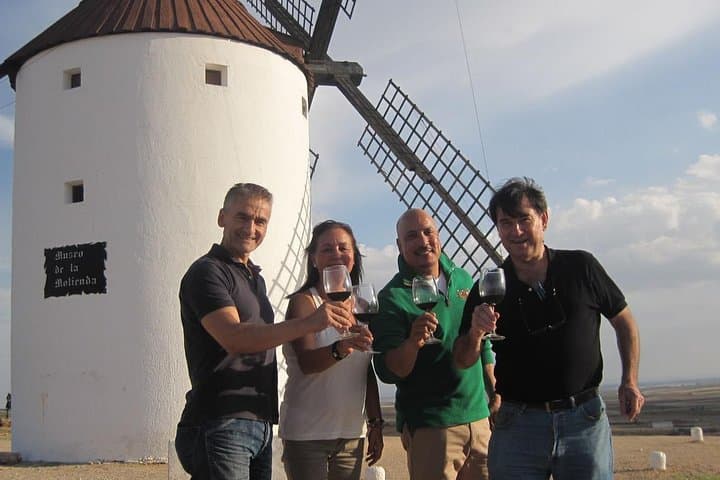
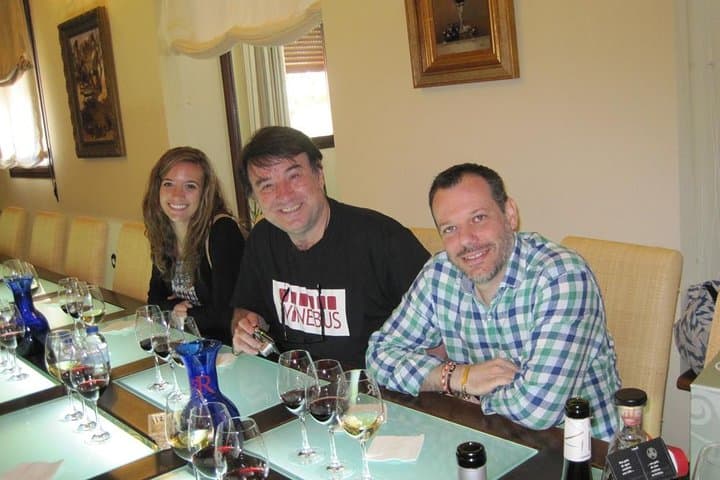
The tour typically includes a guided winery visit, two tastings, and a sit-down lunch—ample time to compare styles and ask producers about oak regimes and irrigation. Afternoons often include a stop at a windmill site in Consuegra or Campo de Criptana for short walks and photography.
Practical guidance: bring sun protection and a light wind layer for exposed hilltops; bring water between tastings. The day is low-impact physically but long—plan transportation back to Madrid and moderate your tastings if you need to drive. Book ahead in summer; shoulder seasons offer cooler vineyard visits and crisper whites.
easy.
10 hours.
Suitable for most fitness levels; minimal walking on uneven terrain and short climbs to windmill viewpoints.
This is a roughly 10-hour tour departing Madrid; it typically includes transport, visits to one or two wineries, wine tastings, lunch, and a stop at the windmills.
Yes—the day mainly involves sightseeing and short walks; non-drinkers can enjoy the cultural stops and food, though the tasting portion is focused on wine.
No—round-trip transport is usually provided, but confirm pickup/drop-off details when booking and allow time for traffic on return.
The legal drinking age in Spain is 18; operators require participants to meet this age for wine tastings.
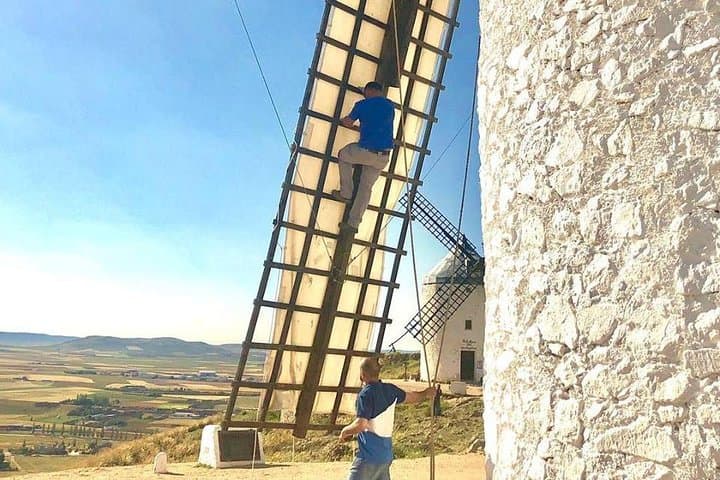
La Mancha’s landscape is tied to agrarian traditions and immortalized by Miguel de Cervantes’ Don Quixote; windmills here were once vital for grain milling.
The dryland vineyards support steppe bird species; sustainable wine practices and low-impact tourism help protect fragile soils and bird habitats.
Winebus operates guided outdoor trips and adventures with an emphasis on safety, stewardship, and memorable experiences.
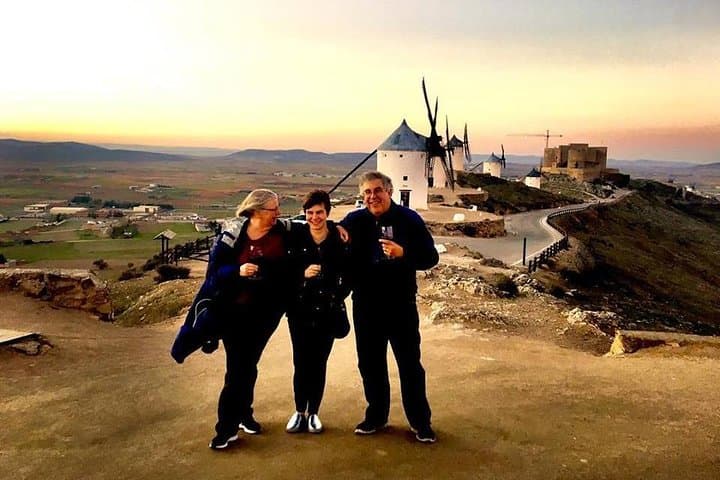
The road out of Madrid flattens and the horizon opens into fields that seem to push the sky away — dry, pale vineyards interrupted by the white caps of traditional windmills. On this full-day outing you move between two contrasting rhythms: the deliberate, mechanical sweep of the windmills that inspired Cervantes, and the measured patience of La Mancha’s winemakers, whose vines have learned to thrive on the plateau's chalky soils.
The road out of Madrid flattens and the horizon opens into fields that seem to push the sky away — dry, pale vineyards interrupted by the white caps of traditional windmills. On this full-day outing you move between two contrasting rhythms: the deliberate, mechanical sweep of the windmills that inspired Cervantes, and the measured patience of La Mancha’s winemakers, whose vines have learned to thrive on the plateau's chalky soils.
La Mancha holds the largest contiguous vineyard area on Earth and a layered history: Roman and Moorish agricultural systems, medieval manor farms, and 17th‑century literature that fixed these mills in the European imagination. Geologically the plain is a high, semiarid plateau with limestone and clay that gives local Tempranillo and Garnacha wines a lean, mineral-driven profile. Culturally expect straightforward regional cuisine—manchego cheese, hearty stews—served in family-run restaurants.
The tour typically includes a guided winery visit, two tastings, and a sit-down lunch—ample time to compare styles and ask producers about oak regimes and irrigation. Afternoons often include a stop at a windmill site in Consuegra or Campo de Criptana for short walks and photography.
Practical guidance: bring sun protection and a light wind layer for exposed hilltops; bring water between tastings. The day is low-impact physically but long—plan transportation back to Madrid and moderate your tastings if you need to drive. Book ahead in summer; shoulder seasons offer cooler vineyard visits and crisper whites.