THE ADVENTURE COLLECTIVE® · Independent discovery and booking for outdoor travel

Step into Colonial Williamsburg after dark on the Williamsburg West Tour, a walking ghost tour built around the first ever photo‑study of ghosts. Guides show original images at each stop and point out exact locations so you can take your own photos and learn the history behind the hauntings.
Step into Colonial Williamsburg after dark on the Williamsburg West Tour, a walking ghost tour built around the first ever photo‑study of ghosts. Guides show original images at each stop and point out exact locations so you can take your own photos and learn the history behind the hauntings.
Night falls along Duke of Gloucester Street and the gas lamps take on a steady, watchful glow — this is where the Williamsburg West Tour begins, at the Cheese Shop in Merchants Square. Guides open a laptop and reveal the actual historic photographs that inspired the route; each image anchors a story and a specific doorway or stairwell, turning familiar brick facades into places with edges and memory.
Verified experiences and guided adventures in the surrounding area.
Night falls along Duke of Gloucester Street and the gas lamps take on a steady, watchful glow — this is where the Williamsburg West Tour begins, at the Cheese Shop in Merchants Square. Guides open a laptop and reveal the actual historic photographs that inspired the route; each image anchors a story and a specific doorway or stairwell, turning familiar brick facades into places with edges and memory.
The walk winds through Colonial Williamsburg’s restored 18th‑century core. Founded as Virginia’s colonial capital, the town sits on the Atlantic Coastal Plain, its low, flat streets built over tidal soils and centuries of civic life. The tour mixes architectural notes — Georgian façades, narrow alleyways, the Peyton Randolph House — with oral histories from interpreters, security staff, and the author whose photo-study first cataloged the hauntings.
Expect a blend of history and show-and-tell: guides point to window frames, mantels and cellars where the photos were taken, invite guest photography, and let travelers choose stops by interest, so no two walks are identical. The mood is contemplative and occasionally eerie rather than sensational.
Practical guidance: it’s an urban walking tour lasting about 90–100 minutes over mostly paved streets and a few uneven flagstones. Wear comfortable walking shoes, bring a camera or smartphone (guides encourage taking photos), and pack a small headlamp or flashlight for better framing. Tours run in variable light; arrive early to find parking or public transit options in Merchants Square. Be respectful of historic interiors and patrons — these are working museum sites with living-history programming.
easy.
1.5–1.75 hours.
Light walking ability; able to stand and walk on uneven surfaces for up to 2 hours.
Yes — families are welcome, but content can be spooky and the tour involves walking for up to 100 minutes; parental discretion advised.
Absolutely — guides display original photos on a tablet and encourage participants to take photos at the exact locations identified.
The tour starts at the Cheese Shop in Merchants Square and finishes at the Peyton Randolph House, with flexible stops selected by the group.
Much of Colonial Williamsburg has uneven surfaces and some interiors have limited accessibility; contact the operator ahead of time to discuss accommodations.
Colonial Williamsburg preserves the 18th‑century capital of Virginia; Peyton Randolph, featured on this route, was the first president of the Continental Congress and his house is a focal point of local ghost lore.
This is a preserved historic district — stick to marked paths, avoid touching fragile surfaces, and follow guide instructions to minimize wear on original materials.
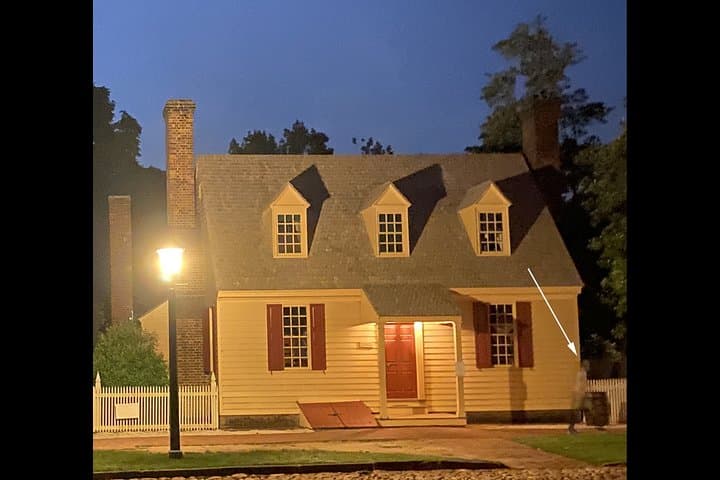
Night falls along Duke of Gloucester Street and the gas lamps take on a steady, watchful glow — this is where the Williamsburg West Tour begins, at the Cheese Shop in Merchants Square. Guides open a laptop and reveal the actual historic photographs that inspired the route; each image anchors a story and a specific doorway or stairwell, turning familiar brick facades into places with edges and memory.
Night falls along Duke of Gloucester Street and the gas lamps take on a steady, watchful glow — this is where the Williamsburg West Tour begins, at the Cheese Shop in Merchants Square. Guides open a laptop and reveal the actual historic photographs that inspired the route; each image anchors a story and a specific doorway or stairwell, turning familiar brick facades into places with edges and memory.
The walk winds through Colonial Williamsburg’s restored 18th‑century core. Founded as Virginia’s colonial capital, the town sits on the Atlantic Coastal Plain, its low, flat streets built over tidal soils and centuries of civic life. The tour mixes architectural notes — Georgian façades, narrow alleyways, the Peyton Randolph House — with oral histories from interpreters, security staff, and the author whose photo-study first cataloged the hauntings.
Expect a blend of history and show-and-tell: guides point to window frames, mantels and cellars where the photos were taken, invite guest photography, and let travelers choose stops by interest, so no two walks are identical. The mood is contemplative and occasionally eerie rather than sensational.
Practical guidance: it’s an urban walking tour lasting about 90–100 minutes over mostly paved streets and a few uneven flagstones. Wear comfortable walking shoes, bring a camera or smartphone (guides encourage taking photos), and pack a small headlamp or flashlight for better framing. Tours run in variable light; arrive early to find parking or public transit options in Merchants Square. Be respectful of historic interiors and patrons — these are working museum sites with living-history programming.