THE ADVENTURE COLLECTIVE® · Independent discovery and booking for outdoor travel

Drive from Jaipur into the scrub and boulder-strewn hills of Ranthambore for a full‑day private safari that pairs wildlife viewing with a visit to a 10th‑century hill fort. Learn when to go, what to bring and how the park’s history shapes the experience.
Drive from Jaipur into the scrub and boulder-strewn hills of Ranthambore for a full‑day private safari that pairs wildlife viewing with a visit to a 10th‑century hill fort. Learn when to go, what to bring and how the park’s history shapes the experience.
Before dawn the jeep idles at the edge of a dry lakebed and the forest exhales — dust lifts, birds quarrel and the scrub seems to hold its breath. You ride in a compact convoy toward granite outcrops crowned by a 10th‑century fort; a faint silhouette of Ranthambore Fort watches over the plain like an old guard.
Verified experiences and guided adventures in the surrounding area.
Operated by TF Holidays India · Sawai Madhopur, Rajasthan
Before dawn the jeep idles at the edge of a dry lakebed and the forest exhales — dust lifts, birds quarrel and the scrub seems to hold its breath. You ride in a compact convoy toward granite outcrops crowned by a 10th‑century fort; a faint silhouette of Ranthambore Fort watches over the plain like an old guard.
Ranthambore was once a royal hunting ground and today is a focal point of India’s tiger conservation story. The park’s terrain is a mix of teak and scrub forest, rocky hills and seasonal lakes such as Padam Talao, where water lilies gather and marsh crocodiles sun themselves. Geologically the area is dominated by Vindhyan and Aravalli outcrops that give rise to abrupt cliffs and lookout points.
Culturally the park sits near Sawai Madhopur, a market town that serves as gateway to local cuisine and Rajasthani hospitality. Expect structured safaris in open or covered jeeps, strict park regulations, and a rhythm set by wildlife movement — mornings and late afternoons are when the forest stirs.
Practical guide: this private tour from Jaipur runs 7–8 hours with hotel pickup; vehicles may be shared up to six people. Carry high‑SPF sun protection, a lightweight layer for early chill, and binoculars; cameras with zoom lenses are recommended. Follow your guide’s instructions, stay seated in the jeep, and keep noise low — tigers and leopards rely on concealment and can appear with little warning. Timing your visit between October and April raises chances of sightings while keeping temperatures comfortable.
easy.
7–8 hours.
Light activity level; most time is seated in a jeep with short walks at viewpoints if permitted.
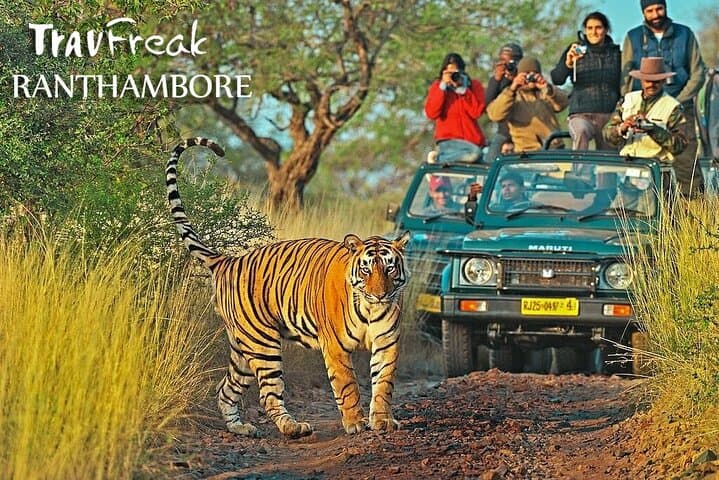
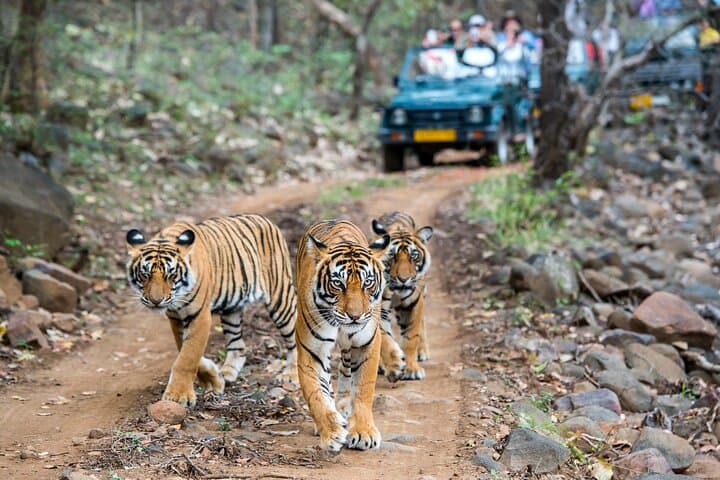
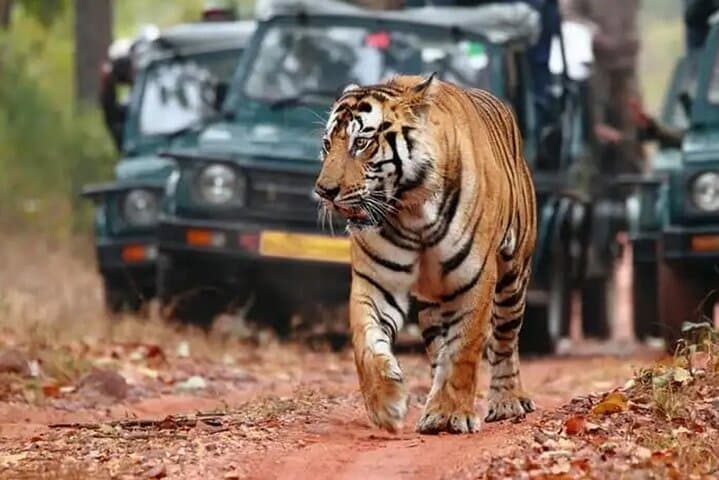
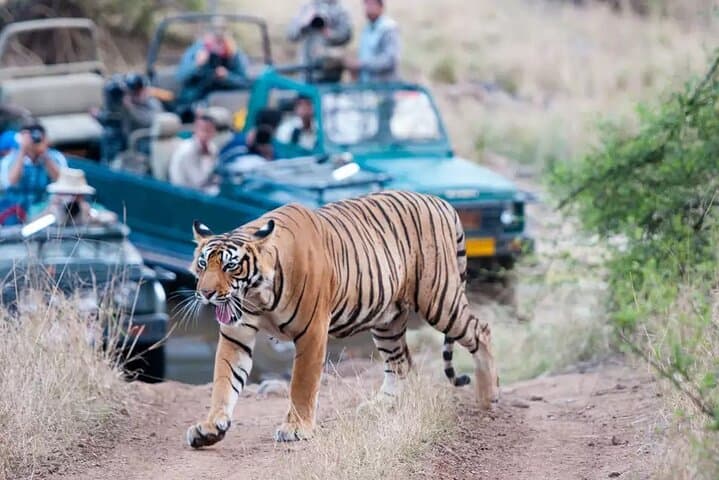
Tiger sightings are possible but not guaranteed; sightings depend on season, luck and animal movement—mornings and late afternoons offer the best odds.
This tour picks up from Jaipur hotels and lasts about 7–8 hours including travel time to Ranthambore and drives inside the park.
Confirm at booking—many operators include entry and jeep charges, but always verify permit inclusion and hand over required passport details in advance.
October to April offers cooler temperatures and greater visibility; summers are hotter and wildlife may concentrate near waterholes, while monsoon months see restricted access.
Ranthambore’s fort dates to the 10th century; the reserve later became a royal hunting ground before being designated a national park and a key site in India’s Project Tiger efforts.
The park operates with regulated jeep quotas, strict visitor routes and anti‑poaching patrols—visitors should minimize noise, avoid litter and follow guidance to reduce disturbance.
TF Holidays India operates guided outdoor trips and adventures with an emphasis on safety, stewardship, and memorable experiences.
Before dawn the jeep idles at the edge of a dry lakebed and the forest exhales — dust lifts, birds quarrel and the scrub seems to hold its breath. You ride in a compact convoy toward granite outcrops crowned by a 10th‑century fort; a faint silhouette of Ranthambore Fort watches over the plain like an old guard.
Before dawn the jeep idles at the edge of a dry lakebed and the forest exhales — dust lifts, birds quarrel and the scrub seems to hold its breath. You ride in a compact convoy toward granite outcrops crowned by a 10th‑century fort; a faint silhouette of Ranthambore Fort watches over the plain like an old guard.
Ranthambore was once a royal hunting ground and today is a focal point of India’s tiger conservation story. The park’s terrain is a mix of teak and scrub forest, rocky hills and seasonal lakes such as Padam Talao, where water lilies gather and marsh crocodiles sun themselves. Geologically the area is dominated by Vindhyan and Aravalli outcrops that give rise to abrupt cliffs and lookout points.
Culturally the park sits near Sawai Madhopur, a market town that serves as gateway to local cuisine and Rajasthani hospitality. Expect structured safaris in open or covered jeeps, strict park regulations, and a rhythm set by wildlife movement — mornings and late afternoons are when the forest stirs.
Practical guide: this private tour from Jaipur runs 7–8 hours with hotel pickup; vehicles may be shared up to six people. Carry high‑SPF sun protection, a lightweight layer for early chill, and binoculars; cameras with zoom lenses are recommended. Follow your guide’s instructions, stay seated in the jeep, and keep noise low — tigers and leopards rely on concealment and can appear with little warning. Timing your visit between October and April raises chances of sightings while keeping temperatures comfortable.