THE ADVENTURE COLLECTIVE® · Independent discovery and booking for outdoor travel

Ride e-bikes from Anantara Iko through sugarcane fields to volcanic cliffs and secluded beaches. This 2.5-hour guided route blends coastal views, working farmland, and natural pools with brief history at Mare aux Songes.
Ride e-bikes from Anantara Iko through sugarcane fields to volcanic cliffs and secluded beaches. This 2.5-hour guided route blends coastal views, working farmland, and natural pools with brief history at Mare aux Songes.
You meet your guide outside Anantara Iko as the ocean wind pushes inland, and the first pedal stroke threads you into a landscape where sugarcane rows give way to raw coastline.
Verified experiences and guided adventures in the surrounding area.
Operated by Yanature · Bel Ombre, Savanne District
You meet your guide outside Anantara Iko as the ocean wind pushes inland, and the first pedal stroke threads you into a landscape where sugarcane rows give way to raw coastline.
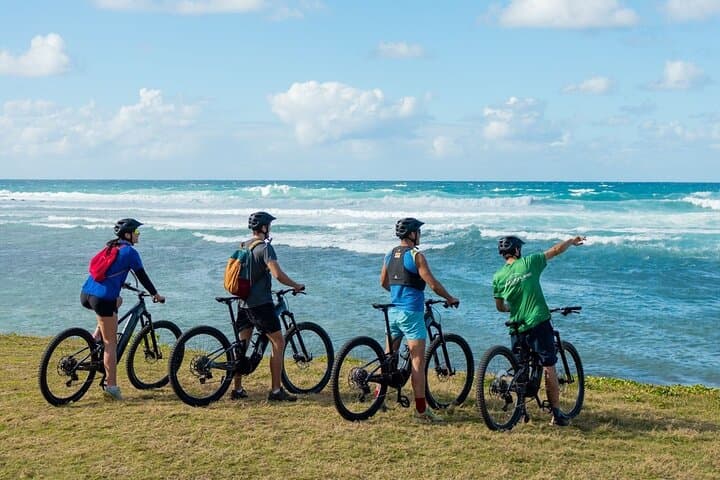
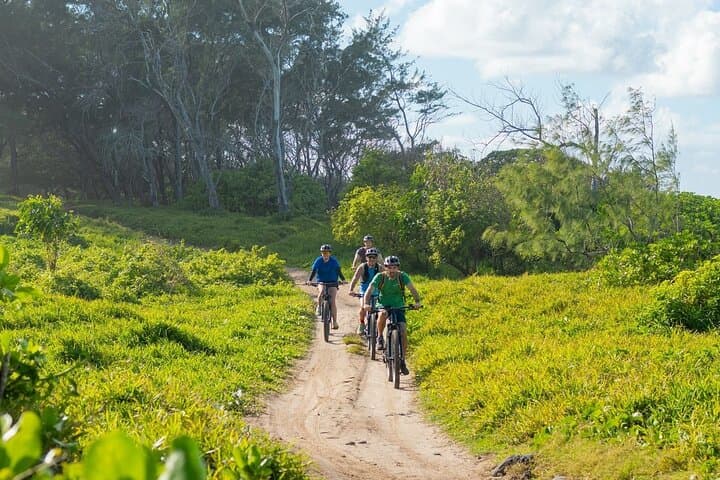
The route shifts between hard-packed farm tracks and narrow singletrack that runs along cliffs dropping to the Indian Ocean. Volcanic outcrops shape small coves at Le Bouchon, where natural pools gather like dark mirrors at low tide, and the Pont Suspendu arches over jagged rock, daring you to stop for the view. Inland, the Royal Palm pockets and Mare aux Songes recall deeper history—this marshy fen is where 19th‑century explorers found the earliest Dodo remains, a sobering link to Mauritius’s lost ecosystems.
Culturally the ride passes working landscapes: sugarcane cutters, grazing cows and goats, and small coastal hamlets where local life is measured by tides and harvests. Geologically the south is older basalt and scoria; the cliffs bear the scars of past eruptions and constant wave abrasion, which is why the seaside views are so sudden and clean.
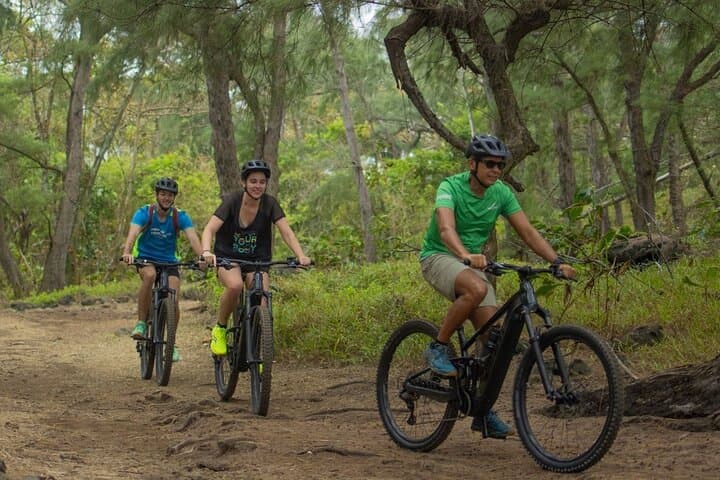
Practically: helmets and e-bikes are provided, but expect sustained climbs and rough surfaces—electric assist amplifies range, not replace attention. Start early to avoid midday heat, bring a hydration pack, and secure cameras against spray. Respect livestock and follow your guide on tide-sensitive stretches. Two to three hours on this route gives you a concentrated sense of Mauritius’s wild south—salt, sweat, and sudden blue horizons—without the crowds.
challenging.
2–3 hours.
Good cardiovascular fitness and off‑road cycling comfort; able to manage short climbs and rough terrain.
Yes—the electric mountain bikes provide pedal assist to help with climbs, but riders still need to pedal and manage balance on uneven terrain.
Operators usually require a minimum age and ask for height to fit the bike; confirm during booking since bikes and helmets must fit safely.
Confident riders with basic off-road handling are recommended; total novices may find some technical sections challenging despite e-assist.
The itinerary includes La Cambuse and Le Bouchon for photos and tide‑dependent pools; swimming depends on conditions and the guide’s safety assessment.
Mare aux Songes near the route is historically important—the first Dodo remains were recovered from this marsh in the 19th century, linking the ride to Mauritius’s deeper natural history.
Stick to trails and avoid trampling coastal vegetation; local guides support responsible tourism and help minimize disturbance to fragile shore habitats.
Yanature operates guided outdoor trips and adventures with an emphasis on safety, stewardship, and memorable experiences.

You meet your guide outside Anantara Iko as the ocean wind pushes inland, and the first pedal stroke threads you into a landscape where sugarcane rows give way to raw coastline.
You meet your guide outside Anantara Iko as the ocean wind pushes inland, and the first pedal stroke threads you into a landscape where sugarcane rows give way to raw coastline.
The route shifts between hard-packed farm tracks and narrow singletrack that runs along cliffs dropping to the Indian Ocean. Volcanic outcrops shape small coves at Le Bouchon, where natural pools gather like dark mirrors at low tide, and the Pont Suspendu arches over jagged rock, daring you to stop for the view. Inland, the Royal Palm pockets and Mare aux Songes recall deeper history—this marshy fen is where 19th‑century explorers found the earliest Dodo remains, a sobering link to Mauritius’s lost ecosystems.
Culturally the ride passes working landscapes: sugarcane cutters, grazing cows and goats, and small coastal hamlets where local life is measured by tides and harvests. Geologically the south is older basalt and scoria; the cliffs bear the scars of past eruptions and constant wave abrasion, which is why the seaside views are so sudden and clean.
Practically: helmets and e-bikes are provided, but expect sustained climbs and rough surfaces—electric assist amplifies range, not replace attention. Start early to avoid midday heat, bring a hydration pack, and secure cameras against spray. Respect livestock and follow your guide on tide-sensitive stretches. Two to three hours on this route gives you a concentrated sense of Mauritius’s wild south—salt, sweat, and sudden blue horizons—without the crowds.