THE ADVENTURE COLLECTIVE® · Independent discovery and booking for outdoor travel

Melouri Cave near Kutaisi offers an uncompromising caving experience — no lights, no paths, just raw limestone passages and underground rivers. Small groups, full kit, and routes matched to ability make it a true subterranean adventure for prepared travelers.
Melouri Cave near Kutaisi offers an uncompromising caving experience — no lights, no paths, just raw limestone passages and underground rivers. Small groups, full kit, and routes matched to ability make it a true subterranean adventure for prepared travelers.
You push past the last stand of beeches, the forest closing like a curtain, and the world above narrows to the hush of footsteps and the faint drip of water. A 15-minute hike from the road delivers you to Melouri’s raw mouth — no handrails, no spotlights — only the beam of your headlamp cutting into ancient darkness.
Verified experiences and guided adventures in the surrounding area.
Operated by Wild Caving in Georgia · Kutaisi, Imereti
You push past the last stand of beeches, the forest closing like a curtain, and the world above narrows to the hush of footsteps and the faint drip of water. A 15-minute hike from the road delivers you to Melouri’s raw mouth — no handrails, no spotlights — only the beam of your headlamp cutting into ancient darkness.
Melouri sits in Imereti’s karst landscape: limestone folded by time into underground canyons, narrow crawls and chambers that together exceed seven kilometres of passage. Locals know this region for its thermal springs and Soviet-era spa towns in nearby Tskaltubo and Kutaisi; the cave system is part of the same hydrological network that shaped those springs.
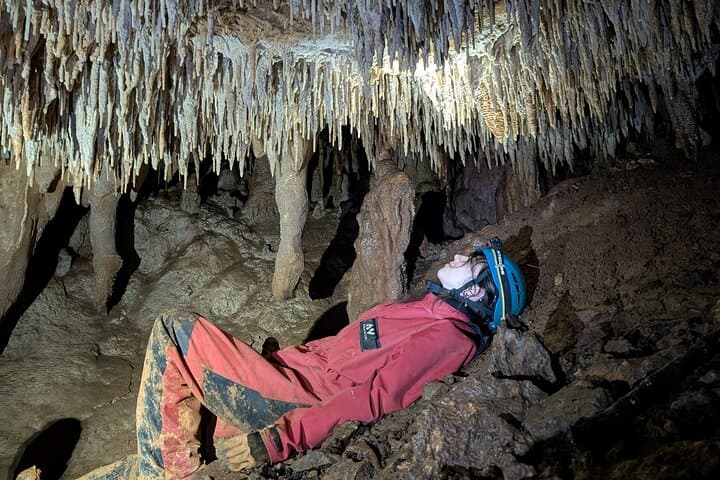
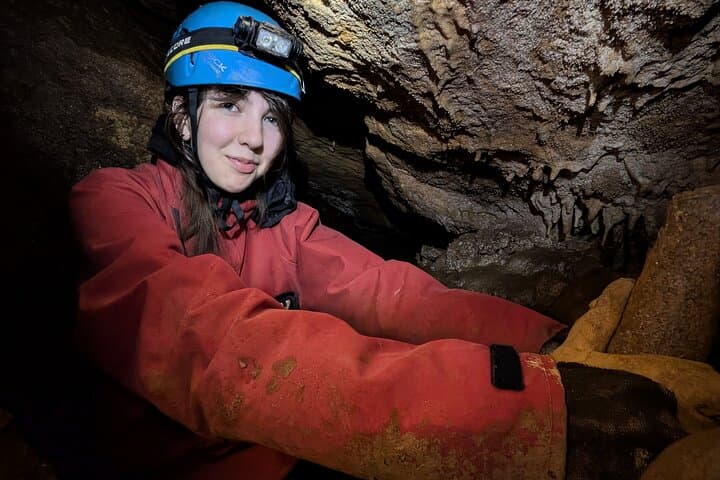
Expect cold, wet rock underfoot, tight squeezes and roomy caverns where stalactites and flowstone still grow untouched. Guides adapt routes to group ability, balancing leisurely walking sections with short technical moves and occasional vertical pitches. Small groups and provided kits (suit, boots, helmet, headlamp, gloves) mean the trip leans on careful technique rather than advanced rope work.
Plan practically: wear moisture-wicking layers, bring spare batteries and a simple first-aid kit, and hydrate before entry — caves are deceptive in their exertion. The experience rewards patience: shafts that funnel sound, subterranean rivers that seem to push you onward, and a cathedral of stone that feels alive.
Not recommended for those with serious heart or spinal problems, or for pregnant travelers. With proper preparation Melouri is a rare, hands-on glimpse into Georgia’s underground — equal parts geology lesson and visceral adventure.
moderate.
5–6 hours.
Moderate fitness: comfortable walking, scrambling, and short squeezes; not suitable for those with serious cardio or back issues.
The full activity lasts about 5–6 hours and includes walking, short scrambles and some narrow sections; participants should have moderate fitness and be comfortable with confined spaces.
No — guides tailor the route to group experience, supplying equipment and instruction; experienced cavers can be led into more challenging passages.
Yes — but use camera lights sparingly to avoid disturbing others and conserve battery; consider a compact camera with low-light capability or a headlamp diffuser.
Policies vary by operator; groups are small and sections can be technical — check minimum age with the tour provider and disclose height/weight during booking.
The Imereti karst was formed in limestone over millions of years; nearby spa towns grew during the Soviet era, fed by the same underground water systems that hollowed Melouri.
Cave formations are fragile—avoid touching speleothems, pack out waste, and follow guide instructions to protect delicate subterranean ecosystems.
Wild Caving in Georgia operates guided outdoor trips and adventures with an emphasis on safety, stewardship, and memorable experiences.


You push past the last stand of beeches, the forest closing like a curtain, and the world above narrows to the hush of footsteps and the faint drip of water. A 15-minute hike from the road delivers you to Melouri’s raw mouth — no handrails, no spotlights — only the beam of your headlamp cutting into ancient darkness.
You push past the last stand of beeches, the forest closing like a curtain, and the world above narrows to the hush of footsteps and the faint drip of water. A 15-minute hike from the road delivers you to Melouri’s raw mouth — no handrails, no spotlights — only the beam of your headlamp cutting into ancient darkness.
Melouri sits in Imereti’s karst landscape: limestone folded by time into underground canyons, narrow crawls and chambers that together exceed seven kilometres of passage. Locals know this region for its thermal springs and Soviet-era spa towns in nearby Tskaltubo and Kutaisi; the cave system is part of the same hydrological network that shaped those springs.
Expect cold, wet rock underfoot, tight squeezes and roomy caverns where stalactites and flowstone still grow untouched. Guides adapt routes to group ability, balancing leisurely walking sections with short technical moves and occasional vertical pitches. Small groups and provided kits (suit, boots, helmet, headlamp, gloves) mean the trip leans on careful technique rather than advanced rope work.
Plan practically: wear moisture-wicking layers, bring spare batteries and a simple first-aid kit, and hydrate before entry — caves are deceptive in their exertion. The experience rewards patience: shafts that funnel sound, subterranean rivers that seem to push you onward, and a cathedral of stone that feels alive.
Not recommended for those with serious heart or spinal problems, or for pregnant travelers. With proper preparation Melouri is a rare, hands-on glimpse into Georgia’s underground — equal parts geology lesson and visceral adventure.